Sumatra
The world's sixth-largest island, Sumatra aligns active volcanoes, wild orangutans of Gunung Leuser, Batak Lake Toba, and the matrilineal societies of Minangkabau.
Sumatra is the world's sixth-largest island, traversed north to south by the Barisan range, a chain of active volcanoes peaking at 3,805 meters at Kerinci. This spine separates a narrow western coast, exposed to the Indian Ocean, from a vast eastern plain covered in oil palm and rubber plantations. For our English-speaking team based in Jakarta, organizing a journey to Sumatra demands more coordination than Java or Bali: distances are long, domestic flights concentrated on Medan, Padang, and Pekanbaru, and road conditions vary by province. Yet this very logistical rigor preserves the island from mass tourism.
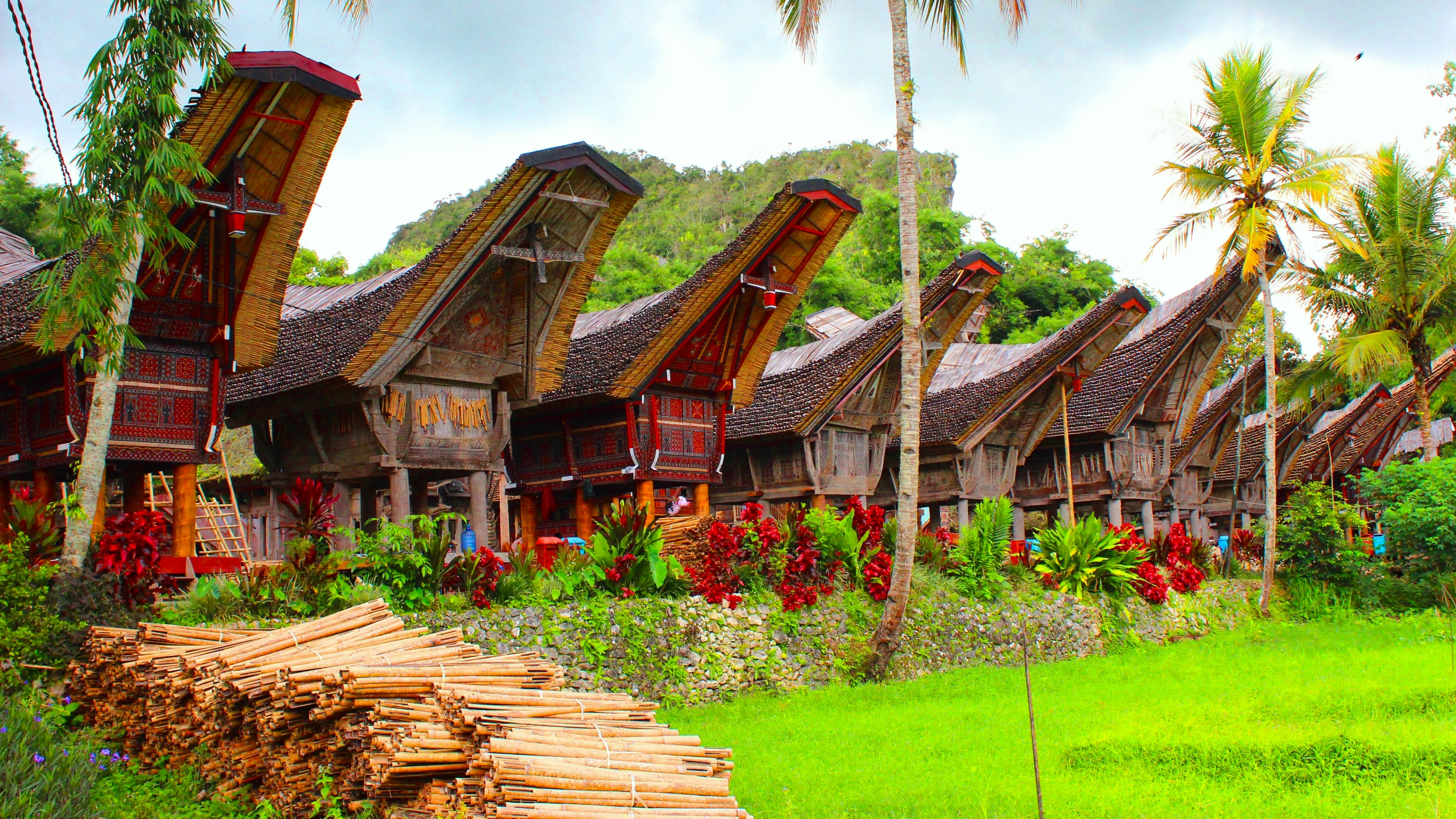
Sumatra's human diversity is as striking as its geography. In the north, Aceh province enforces Islamic law and retains an identity forged by centuries of trade with India and the Arabian Peninsula. Further south, around Lake Toba, the Batak inhabit villages with traditional saddle-roofed houses, painted in red, black, and white motifs. On Samosir, the island at the lake's center, the royal tombs of Tomok and the village of Ambarita speak to a society that long resisted Islamization. Further still south, in the Minangkabau highlands around Bukittinggi, lies a matrilineal society where family homes and land pass from mother to daughter. Padang cuisine, originating from this region, ranks among Indonesia's most complex: buffalo rendang simmered for hours, cassava leaf gulai, sambal lado mudo.
Sumatra's fauna remains a primary draw. Gunung Leuser National Park in the north is one of only two places on earth where wild orangutans are still observed, alongside Borneo. The village of Bukit Lawang, four hours by road from Medan, serves as the gateway for rainforest treks lasting one to three days. The local guides we work with are former members of the rehabilitation center that closed in 2002, and their reading of the jungle is precise. Further south, Kerinci Seblat Park harbors Sumatran tigers with a population estimated at around 400 individuals, while Way Kambas Park, near Bandar Lampung, protects Sumatra's last rhinoceros and elephants in a conservation sanctuary.
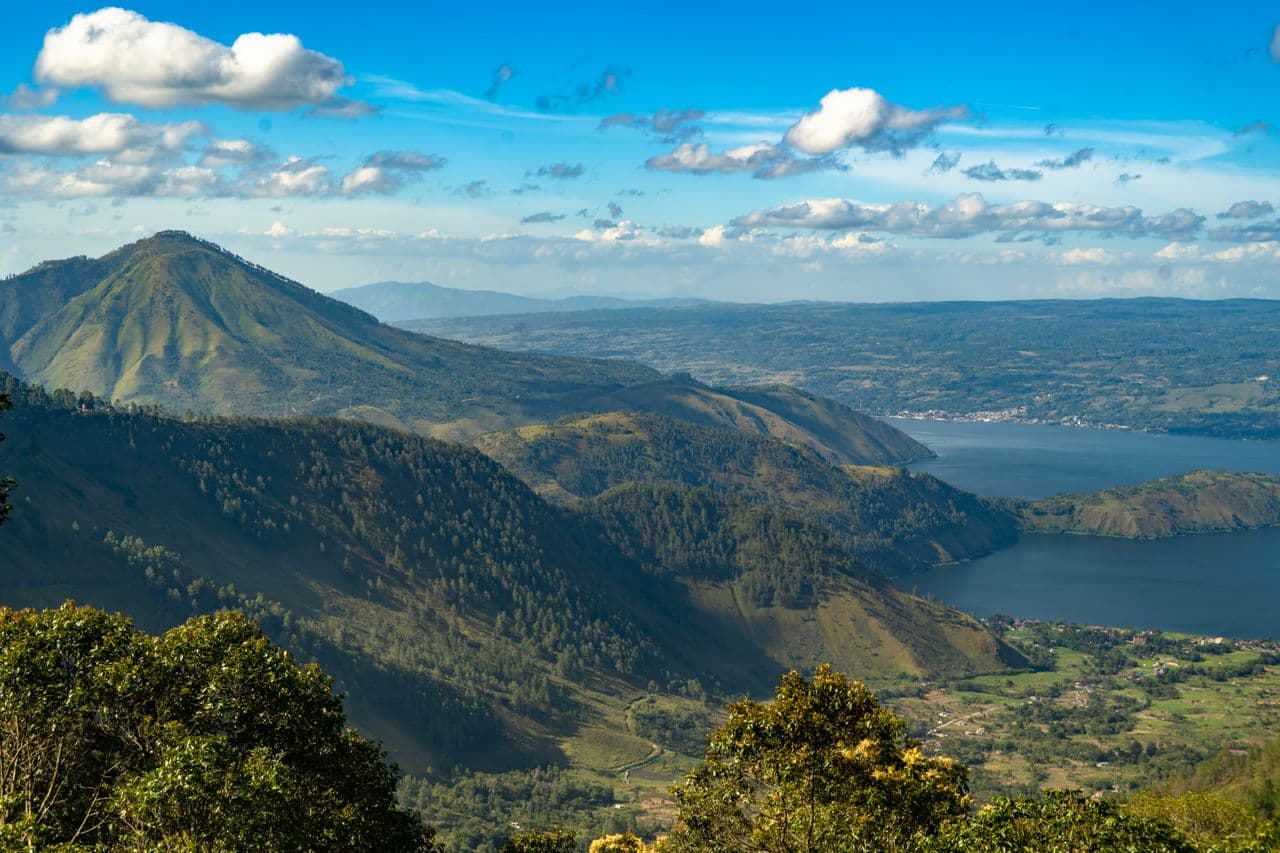
Lake Toba forms the island's other major anchor. Formed by the most violent volcanic eruption of the past 25 million years, occurring 74,000 years ago, it occupies a caldera 100 kilometers long by 30 kilometers wide. The island of Samosir at its center is nearly the size of Singapore. At 900 meters altitude, the site enjoys a temperate climate: daytime temperatures of 20 to 25 degrees Celsius, cool evenings. People come to slow down, rent a scooter, trace the shorelines via Tuktuk, Tomok, Ambarita, and understand Batak culture through village museums and sculpted burial grounds.
Offshore islands complete the picture. Pulau Weh, north of Aceh, offers pristine dive sites on the Iboih coral reef, with regular manta ray passages between February and April. The Mentawai islands to the west harbor a hunter-gatherer society whose shamans still bear traditional tattoos. Access requires an overnight boat from Padang and specific logistics we arrange on request, for a minimum of five to seven days.
Sumatra is not an island for ticking boxes. It is terrain for travelers who accept long journeys, sometimes rustic accommodations, and who seek an Indonesia less polished than Bali, rawer in both landscape and human encounter.
To Discover
Orangutan trek at Bukit Lawang. Two-day walk through Gunung Leuser forest with overnight camp near the Bohorok river. Spot orangutans high in the canopy, sometimes within ten meters, accompanied by the song of gibbons at dawn.
Lake Toba and Batak culture. Three nights on the Tuktuk peninsula in Samosir, exploring the island by scooter, visiting the royal tombs of Tomok and the judgment stones of Ambarita, and tasting saksang, a Batak dish of meat stewed in its own blood.
Minangkabau highlands. Base yourself in Bukittinggi, at 930 meters altitude, to explore Sianok Canyon, traditional villages of Pariangan and Balimbing, and learn Padang cooking in a local home.
Diving at Pulau Weh. Volcanic island at Indonesia's ground zero, accessible by ferry from Banda Aceh. Dive sites at Batee Tokong and Sophie Rickmers, a 130-meter wreck resting at 55 meters depth.
Mentawai, forest immersion. Five days by canoe and on foot through Siberut forest with a sikerei clan. Learn sagou production, blow-gun hunting with poison darts, and spend nights in uma, traditional longhouses on stilts.
When to Go
Sumatra is Indonesia's wettest island. The relative dry season extends from May to September in the northern half (Medan, Bukit Lawang, Lake Toba), with temperatures of 22 to 31 degrees Celsius in lowlands and 18 to 25 degrees around Lake Toba. Monsoon rains concentrate from October to March, peaking in November and December when some Gunung Leuser park trails become impassable. On the west coast and Mentawai islands, the rain regime is reversed and more pronounced: the best windows for diving at Pulau Weh run from February to April and October to November, outside heavy swells.
Altitude changes the equation. Around Berastagi (1,300 meters) and on the Kerinci slopes, expect cool evenings at 15 degrees Celsius and misty mornings even in the dry season. Avoid: January and February for any itinerary combining Gunung Leuser and the Medan-Toba route, due to regular landslides on the Trans-Sumatra highway.
Practical Tips
Plan 10 to 14 days for a coherent northern-Sumatra circuit (Medan, Bukit Lawang, Berastagi, Lake Toba), and 16 to 20 days if you add the Minangkabau highlands or Mentawai. The main entry point remains Kualanamu Airport in Medan, well-connected to Kuala Lumpur, Singapore, and Jakarta. For southern itineraries, Padang Airport serves Bukittinggi in two hours by road and provides access to Mentawai.
Sumatra combines well with Java, in a logical west-to-east sequence: a flight from Padang to Jakarta or Medan to Yogyakarta allows you to move from one island to another. The combination with Bali works for those wanting to conclude with a more restful phase after long Sumatran journeys. We advise against chaining Sumatra with Sulawesi or Raja Ampat on the same trip under three weeks: internal distances become disproportionate. Accommodation comfort varies widely: quite good at Lake Toba and Bukittinggi, basic but clean at Bukit Lawang and Mentawai. This is a destination for walkers, wildlife enthusiasts, and travelers already familiar with Southeast Asia, less so for families with young children or those seeking easy beach relaxation.