Mount Kerinci
Mount Kerinci
Indonesia's highest volcano, Mount Kerinci rises to 3,805 m in the heart of Sumatra. Demanding trek, rare wildlife and panoramic views of the Indian Ocean.
Standing at 3,805 meters above sea level, Mount Kerinci has rightly earned its title as "Indonesia's highest volcano". A sleeping giant in central Sumatra, it dominates Jambi Province and attracts trekkers seeking an authentic summit experience, far from Indonesia's most crowded trails. The ascent demands genuine preparation, but the reward justifies every hour of walking: panoramic views of Kerinci Seblat National Park's forests, crater lakes, and in the distance, the blue expanse of the Indian Ocean.
Mount Kerinci at a glance
- Altitude: 3,805 m, Indonesia's highest volcano
- Location: central Sumatra, Jambi Province, Kerinci Seblat National Park
- Starting point: Kersik Tuo village, south of the volcano
- Trek duration: 3 days / 2 nights to the summit, 2 days / 1 night to Camp II
- Difficulty: hard, good physical fitness required
- Best period: dry season, May to September
- Status: active volcano, last eruption in April 2009
A bit of history
Studies conducted in 1973 around Kerinci revealed traces of human presence dating back 10,000 years BCE. Bronze Age artifacts were also discovered on the site, along with some marks of Buddhist culture and remains of an ancient Chinese civilization. The Kerinci region, isolated by its mountains, long functioned as a world apart in the heart of Sumatra.
Mount Kerinci also ranks among the archipelago's most active volcanoes. Its first and most violent eruption occurred in 1838. Since then, it has experienced some thirty eruptions. Fortunately, the explosions remain moderate: they barely reach level 2 on the Volcanic Explosivity Index. The last eruption occurred in April 2009. The summit remains under surveillance, but the ascent stays open outside alert periods.
The legend of the dragon Calungga
This volcano is also surrounded by stories and legends, the most famous being that of a boy transformed into a dragon. The tale goes that once, at the foot of Mount Kerinci, there lived two orphaned twin brothers, Calupat and Calungga. With hunting gear left by their parents, they tracked game to survive.
One day, hunting alone in the forest, Calungga found a giant egg. He wanted to bring it to his brother, but on the way, he could not resist the urge to eat it. Seized then by incredible thirst, he drank the entire river until it dried up. Exhausted, he lay down for a nap and, gradually, transformed into a dragon. Legend says he still inhabits the volcano's slopes.
Indonesia's highest volcano
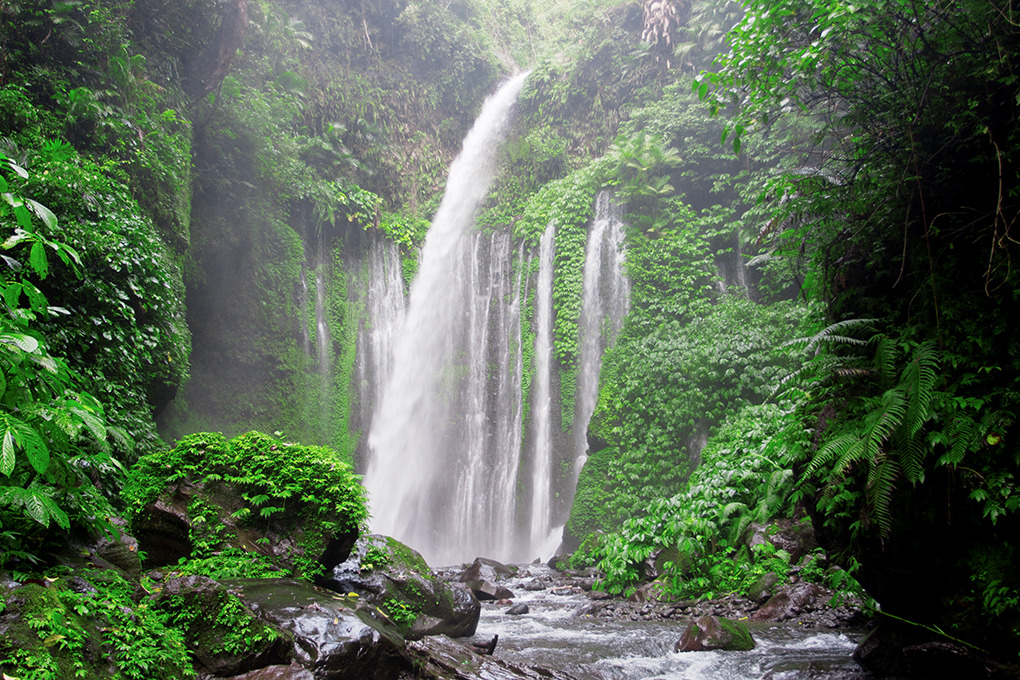
Rising to 3,805 meters, Mount Kerinci is a summit both dreamed of and dreaded by trekking enthusiasts on trips to Indonésie. To reach its crater, you cross the Kerinci Seblat National Park, one of Sumatra's largest protected areas. The park is home to exceptional wildlife: Sumatran tigers, rhinoceros, several species of rare primates and birds including the elusive Argus pheasant.
Beyond its fauna, the mountain possesses a vast crater sheltering a lake with turquoise waters. Fifteen other lakes dot the massif landscape, including Lake Gunung Tujuh, nestled at 1,950 meters. On the summit, in clear weather, the panorama extends over towns in Jambi Province, to Padang and Bengkulu, and further still over the vastness of the Indian Ocean.
When to visit Mount Kerinci
Kerinci's climate is equatorial: it rains year-round, but with marked differences between dry and wet seasons.
- May to September: dry season, safest period for attempting the ascent. Trails less muddy, skies often clear at sunrise.
- June to August: optimal window, cool temperatures at altitude (near 0°C at night at Camp II).
- October to April: wet season, fog, slippery ground, reduced visibility at the summit. Ascent discouraged for inexperienced trekkers.
Whatever the season, pack warm and waterproof clothing: weather changes rapidly above 3,000 meters.
Climbing Mount Kerinci
Climbing Kerinci is no easy task and requires excellent physical fitness. It begins from Kersik Tuo village, south of the volcano, at approximately 1,500 meters altitude. Plan for three days and two nights to reach the summit, or two days and one night if you stop at the first observation point, Camp II, located at 3,000 meters.
Most of the route passes through thick jungle, heavy with humidity. Ground is muddy and slippery, roots omnipresent. The final section, above the tree line, becomes rocky: volcanic stone, steep slopes, cold wind. The final push to the crater is usually done at night to reach the summit at sunrise.
Departure for the summit occurs around 2 a.m. from Camp III. Plan for 3 to 4 hours of sustained uphill hiking to reach the crater rim, where the smell of sulfur reminds you the volcano is still alive.
Equipment and permits
- High-ankle hiking boots, lugged soles (muddy and rocky terrain)
- Warm clothing: fleece, light down jacket, hat, gloves for the night at Camp III
- Waterproof jacket and rain pants
- Headlamp with spare batteries (night-time final ascent)
- Sleeping bag 0°C minimum, tent usually provided by the guide
- Park entry permit for Kerinci Seblat National Park, payable at Kersik Tuo (a few euros)
- Local guide mandatory in practice: trails poorly marked, weather changes rapidly, wild fauna requires real terrain knowledge
How to get there
Climbing Mount Kerinci is done from Kersik Tuo village. Two main options to reach it:
- From Padang: the coastal city has an international airport served by regular flights from Jakarta, Kuala Lumpur and Singapore. The Padang–Kersik Tuo journey takes about 7 hours by road, through spectacular West Sumatra landscapes.
- From Sungai Penuh: a closer city, just 2 hours' drive from Kersik Tuo. Convenient if you combine Kerinci with other stages of Kerinci Seblat park.
On site, travel is by shared minibus, private car with driver, or motorbike taxi for short distances.
Where to stay around Kerinci
Accommodation options remain simple, in keeping with the region. Kersik Tuo concentrates most of the addresses for trekkers.
- Family guesthouses (€15-30/night): the most common formula in Kersik Tuo. Simple rooms, shared shower, local meals served by hosts. Often run by Kerinci guides themselves.
- Comfortable small hotels (€60-120/night): mainly in Sungai Penuh, with private bathroom and wifi.
- Charming lodges (€150+/night): a few recent properties on the park's edge, with balconies over rice fields and refined dining. Ideal for recovery after the ascent.
- Camping on the volcano: tents at Camps I, II and III during the trek. Basic conditions, organized by the guide.
Insider tips
- Train physically: cardio training and hikes with elevation gain two months beforehand. Kerinci is not technical, but it is long and steep.
- Book a guide in Kersik Tuo: plan for €150 to €250 for a 3-day trek, porter and permit included depending on agencies. Prioritize park-certified guides.
- Check volcano status before leaving: if an alert is issued, climbing is closed. Check with PVMBG (Indonesia's volcanic monitoring agency).
- Acclimatize: spend a night in Kersik Tuo (1,500 m) before heading up. Altitude fatigue affects some hikers above 3,000 m.
- Stay hydrated: plan for a minimum of 3 liters of water per day, plus energy bars.
- Respect wildlife: the park is home to Sumatran tigers. Never leave the trail and stay in a group.
Who is it for?
- Experienced trekkers accustomed to multi-day ascents in humid and cold terrain.
- Travelers seeking authenticity, ready to venture off the classic Bali or Java circuits.
- Volcano enthusiasts who have already climbed Bromo, Rinjani or Semeru and seek a wilder summit.
- Naturalists interested in Kerinci Seblat park's fauna: tigers, primates, endemic birds.
Kerinci is less suitable for families with young children, occasional hikers, and travelers with less than 5 days to spare.
Frequently asked questions
Frequently asked questions
Preparing your trek to Kerinci
Climbing Kerinci requires planning well in advance: guide selection, timing with the dry season, managing national park permits, logistics between Padang and Kersik Tuo. Our local expert can help you build a coherent itinerary across Sumatra, combining the volcano with other highlights of the island: Lake Toba, Bukit Lawang, Kerinci Seblat jungle. To go further in your planning, explore our trips to Indonésie page and reach out to discuss your project.
Want to discover this destination?
Our local advisors design your tailor-made trip.