Prambanan Temple
Prambanan Temple
Located 17 km from Yogyakarta, Prambanan comprises 240 Shivaite temples from the 9th century, UNESCO-listed. The Shiva sanctuary towers at 47 meters.
Prambanan Temple, roughly twenty kilometers east of Yogyakarta, forms Indonesia's most extensive Hindu complex. Also known as Candi Lara Jonggrang, it originally comprises 240 Shivaite structures and stands, alongside Borobudur, as one of central Java's two major archaeological sites.
Why visit Prambanan
Prambanan offers a striking contrast with its Buddhist neighbor Borobudur: here, the architecture soars vertically, in slender spires characteristic of Javanese Hindu style. The principal temple dedicated to Shiva reaches 47 meters in height, set upon an elevated platform of 34 meters and surrounded by a square enclosure of 110 meters per side.
The site is inscribed on the UNESCO World Heritage list since 1991. It suits a half-day visit and can be combined with other neighboring temples within the archaeological park.
History of the complex
Prambanan was constructed between 835 and 856, under the Sanjaya dynasty, at a time when Hinduism and Buddhism coexisted in Java. The site houses the remains of Mataram's king Balitung, who claimed to be a reincarnation of Shiva. Abandoned after the kingdom's capital relocated eastward into Java in the 10th century, the complex lay overgrown by jungle for centuries.
The complex was rediscovered in 1733 by the Dutchman C. A. Lons, though serious restoration efforts did not begin until the 20th century. The earthquake of May 2006 caused significant damage to several structures; consolidation and stone reassembly work continues to this day, with some minor temples remaining in ruins.
What to see on site
The central courtyard and the Trimurti
The heart of the complex brings together three principal temples aligned west to east, dedicated to the Hindu Trimurti:
- The Shiva temple, the tallest (47 m), houses four inner sanctuaries with statues of Shiva, his consort Durga (the legendary "Lara Jonggrang"), his son Ganesha, and the sage Agastya.
- The Brahma temple, to the south, dedicated to the creator.
- The Vishnu temple, to the north, dedicated to the preserver.
Facing them stand three smaller temples dedicated to the vahanas, the animal mounts of each deity: Nandi the bull, Hamsa the swan, and Garuda the eagle.
The Ramayana bas-reliefs
The interior balustrades of the Shiva and Brahma temples are carved with a detailed narrative cycle depicting the Ramayana epic. The reading begins at the eastern entrance of the Shiva temple and continues clockwise: the abduction of Sita, the alliance with Hanuman, the final battle against Ravana. The panels of the Vishnu temple illustrate episodes from the Krishnayana.
The peripheral temples
The archaeological park also encompasses several neighboring complexes, notably Candi Sewu (Buddhist temple, 800 m to the north) and Candi Lumbung. A walking tour or internal shuttle allows you to explore them.
Practical information
- Hours: open daily during daylight hours. Plan to arrive early morning or late afternoon to avoid the heat.
- Admission: paid entry, international ticket higher than local rate. A combined ticket for Prambanan + Borobudur is available at an advantageous price.
- Duration: allow 2 to 3 hours for the central courtyard and surroundings, a half-day if you include Sewu and Lumbung.
- Attire: a sarong is provided at the entrance. Bring a hat, water, and closed-toe shoes (shade is scarce).
When to go
The dry season, from May to September, offers the best visiting conditions: clear skies and well-lit stones for photography. The rainy season (November-March) remains manageable but late afternoon showers are frequent.
For a unique experience, the Ramayana ballet is performed in the evening several times weekly on an open-air stage facing the temple, with the illuminated spires in the background. The performance follows the seasonal calendar (open-air during dry season, covered hall during rainy season).
How to get there from Yogyakarta
Prambanan is located approximately 17 km northeast of central Yogyakarta, on the road to Solo.
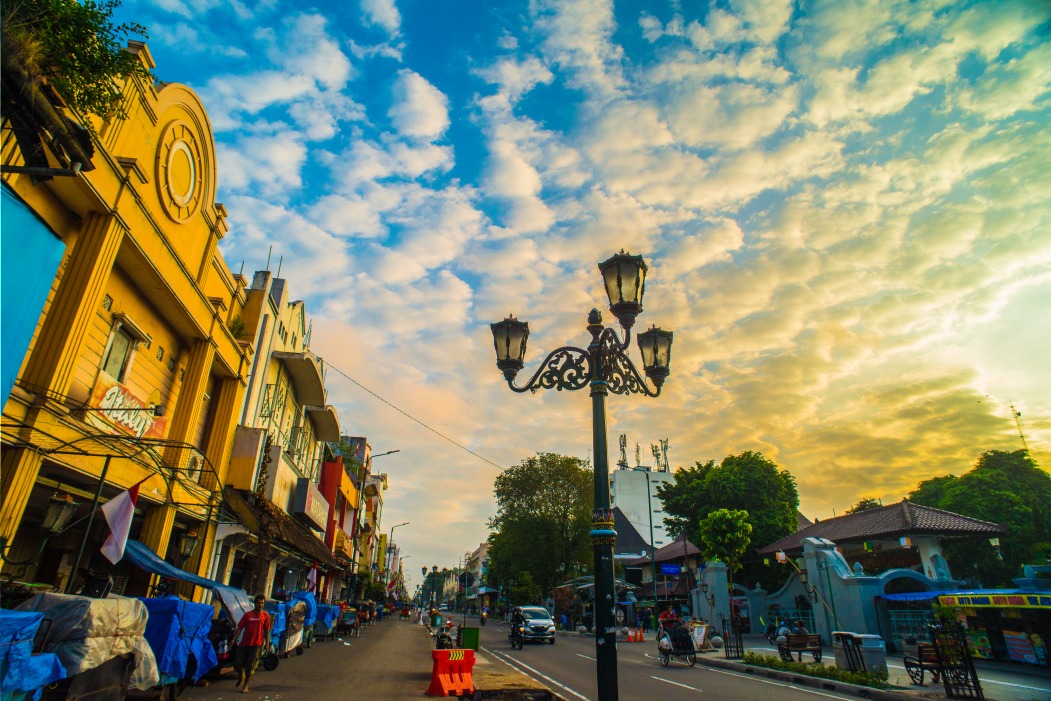
- By TransJogja (urban bus): from the Malioboro stop, take lines 2B or 3A to the Jombor terminal, then a local bus to the park terminal. From the exit, count about ten minutes' walk along the park's perimeter.
- By taxi or ride-sharing: approximately 30 to 45 minutes depending on traffic.
- By rental scooter: a convenient option for combining Prambanan with other sites in the Kewu plain in a single day.
Combined nearby visits
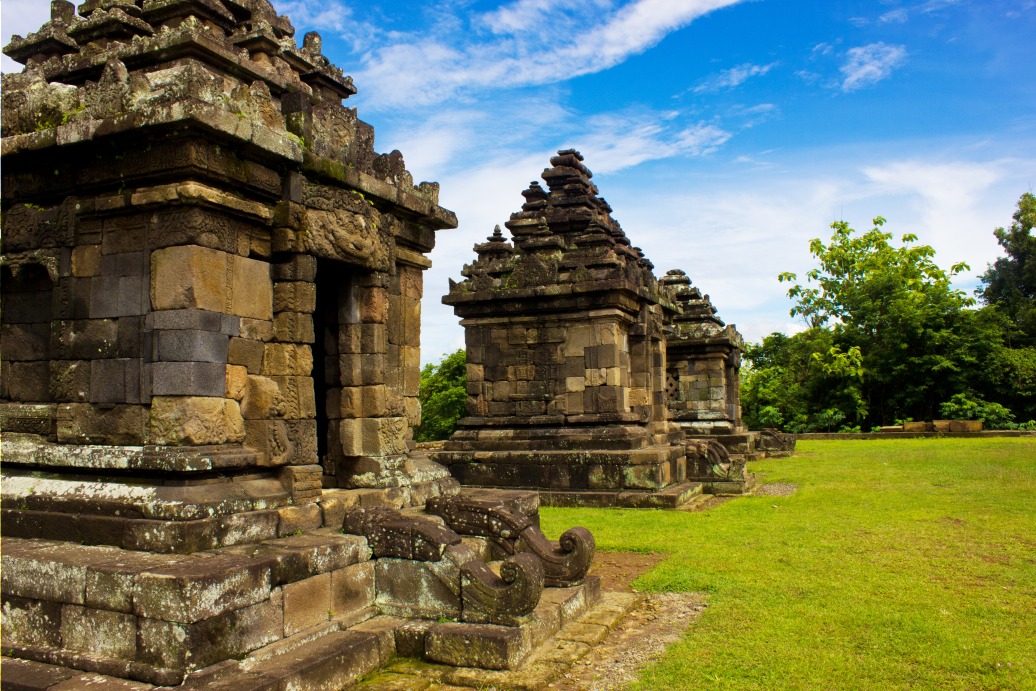
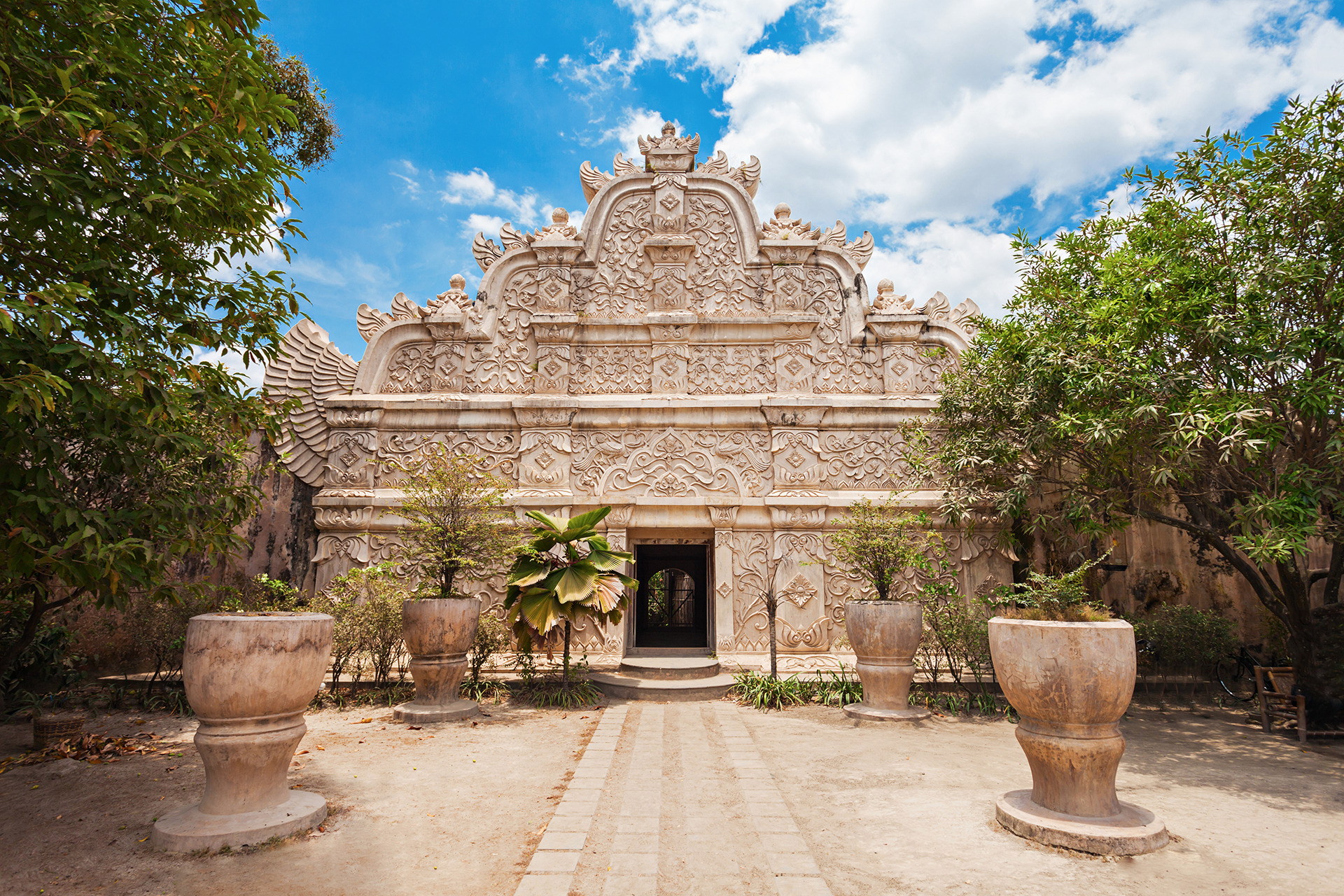
Back in Yogyakarta, two visits are essential in the historic city: the Kraton, the still-inhabited palace of the sultans, and Taman Sari, the former royal water garden. Enthusiasts of lesser-known temples can reach the Selogriyo temple on the slopes of Mount Sumbing. For broader Java itineraries, the observation point at Babadan allows you to approach Mount Merapi.
Frequently asked questions
Frequently asked questions
Allow 2 to 3 hours for the central courtyard and surroundings. If you wish to include the neighboring temples of Sewu and Lumbung, plan for a full half-day.
Yes, both sites are accessible in a day from Yogyakarta, but this requires a brisk pace. Many travelers prefer to visit Borobudur in the morning and Prambanan in late afternoon to enjoy the raking light. A combined ticket exists.
For travelers interested in Javanese performing arts, yes. The open-air performance, with the temple spires as backdrop, is performed several evenings weekly during the dry season.
The main park pathways are passable, but accessing the temple interiors involves climbing steep stone stairs without railings. Viewing the exteriors remains possible.
Yes, since the 2006 earthquake, several minor temples are still being reassembled. The principal sanctuaries in the central courtyard have been consolidated and remain open.
Include Prambanan in your journey
Prambanan Temple naturally integrates into a Java circuit, complementing Yogyakarta, Borobudur, and the volcanoes of eastern Java. To build a customized itinerary including this site, consult our Indonesia travel suggestions.
Nearby
Interested in this visit?
We can include it in your personalised itinerary.