Candi Ijo Temple
Candi Ijo Temple
Perched at 425 m on Gumuk Ijo hill, Candi Ijo is a 10th–11th-century Hindu temple, a legacy of the Medang dynasty 28 km from Yogyakarta.
Perched at 425 metres above sea level on Gumuk Ijo hill, Candi Ijo is a Hindu temple built of andesite stone located in the hamlet of Dukuh Groyokan, Prambanan district, Sleman regency. Roughly thirty kilometres east of Yogyakarta, this sanctuary ranks among the region's highest temples and commands an unobstructed panorama over the surrounding plain, particularly striking at day's end.
Why visit Candi Ijo
The site stands out for three distinctive qualities. Its elevated position first, making it one of Yogyakarta's highest temples. Its orientation next, facing the setting sun, which shapes the experience of a late-afternoon visit. Its terraced configuration finally, with a main sanctuary at the summit of the eleventh terrace—a rare architectural legacy of the Medang dynasty.
Less crowded than other cultural sites in Indonesia, Candi Ijo retains a withdrawn atmosphere conducive to contemplation, in keeping with its original purpose.
History of the temple
Candi Ijo was built between the 10th and 11th centuries, during the Medang dynasty's dominion over central Java. Its name blends two Indonesian words: ijo means "green" and candi denotes a temple, referring to the verdant setting that surrounds the site.
The sanctuary fell into obscurity for centuries before being identified in 1886 by H. E. Dorrepaal, a Dutch colonial administrator. Ancient inscriptions discovered on-site indicate it served as a hermitage and monastery—a function consistent with its isolated hilltop location. Archaeological excavations continue and keep yielding sculptural elements.
What to see
The complex spans 0.8 hectares, organized in successive terraces climbing to the main sanctuary, the holy of holies, situated on the eleventh and final terrace.
The main sanctuary
The central structure bears sculptures characteristic of Javanese Hindu iconography: Kala heads above openings, dragons, dwarfs and Makara figures (mythological sea creatures). Its pyramidal, multi-tiered roof typifies temple architecture from this period.
Inside the sanctuary stand statues of Brahma, Vishnu and Shiva, the Hindu trinity. At the room's centre rises a Linga-Yoni, a ritual element symbolizing the cosmic bond between masculine and feminine divinity.
The subsidiary temples
Before the main sanctuary, three small temples are each dedicated to one of the three gods. This triadic arrangement recurs throughout central Java's Hindu religious architecture.
The panorama
From the upper terrace, views stretch across rice fields and villages of the Prambanan plain. On clear days, Mount Merapi is also visible to the north.
Practical information
- Site open year-round during daylight hours (check current times on-site)
- Moderate entrance fee, with differentiated rates for foreign visitors; parking fee may apply
- Allow 1 to 1.5 hours for a visit, longer if you stay for sunset
- No dress code imposed, though modest attire is advised (altitude makes the air fresher late in the day)
- Bring water; a few stalls sell drinks and snacks nearby
When to visit
The dry season, May through October, offers ideal conditions: clear skies, accessible paths and maximum visibility from the terraces. The rainy season makes access trickier and often obscures the panorama.
Late afternoon remains the most sought-after window, roughly an hour before sunset. The main sanctuary's western orientation is designed for this moment. Arriving mid-afternoon leaves time to explore the terraces before the golden light.
How to get there
Candi Ijo lies 28 km east of central Yogyakarta and 10.2 km from Adisucipto International Airport. Access is via the Raya Solo-Yogyakarta road, then a secondary road climbing the hill. Allow roughly thirty minutes driving from the airport, depending on traffic. Signage marks the route from Prambanan onwards.
Renting a scooter or hiring a private driver are the most convenient options, as public transport does not serve the site directly.
Combine with nearby attractions
Candi Ijo's position allows you to include it in a circuit with other archaeological sites on the Prambanan plain:
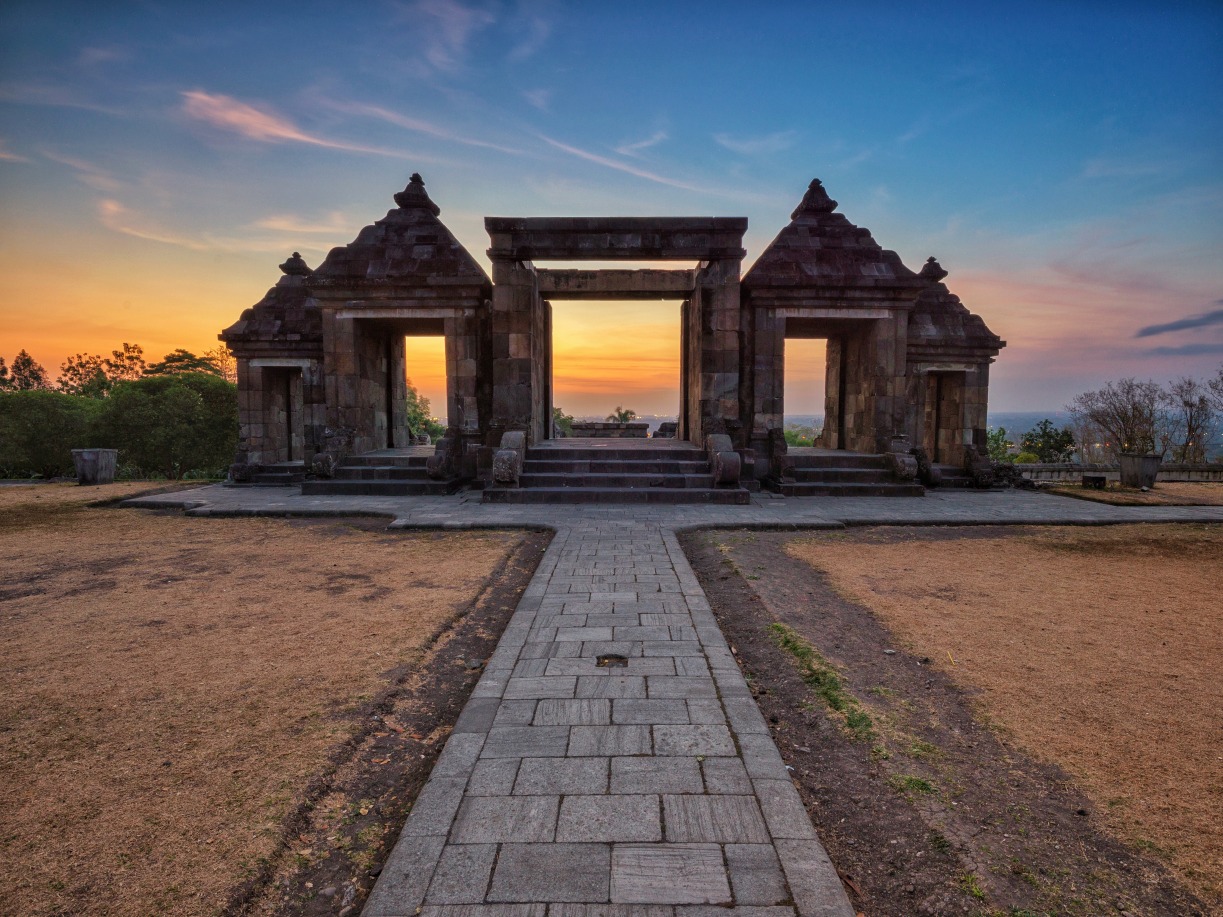
- Ratu Boko, 4 km away, an ancient palatial complex offering equally remarkable views
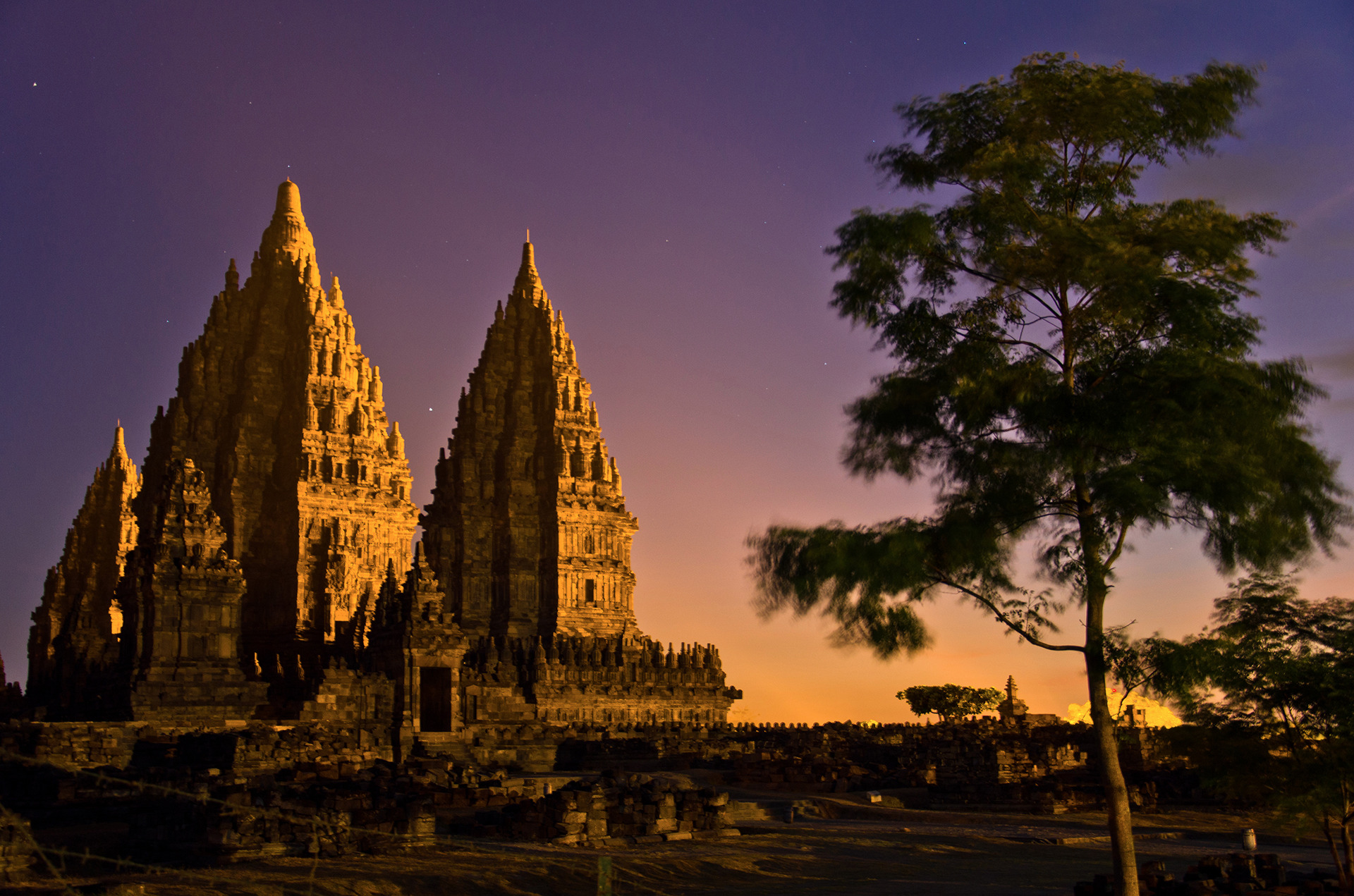
- Prambanan, 9 km away, the grand UNESCO-listed Hindu temple complex
- Several smaller temples (Banyunibo, Barong) scattered across neighbouring hills
A full day allows you to visit Prambanan in the morning, Ratu Boko in mid-afternoon and Candi Ijo for sunset.
Frequently asked questions
Frequently asked questions
Plan your trip
Candi Ijo is part of central Java's rich archaeological heritage. To build a custom itinerary incorporating Yogyakarta and its surroundings, explore our Indonesia travel suggestions.
Nearby
Interested in this visit?
We can include it in your personalised itinerary.