Taman Sari
Taman Sari
A former royal garden of the Sultan of Yogyakarta, Taman Sari combines pools, an underground mosque and 18th-century galleries, just steps from the Kraton.
A former royal complex of the Sultan of Yogyakarta, Taman Sari is a collection of pools, pavilions and underground galleries built in the 18th century. Its name means "fragrant garden", and the Dutch once nicknamed it waterkasteel, the "water castle". Today partially restored, this site remains one of the finest testimonies to Javanese architecture of the era.
Why visit Taman Sari
Taman Sari combines several interests in a single location: distinctive architecture blending Javanese, Portuguese and Dutch influences, spiritual significance (underground mosque, place of retreat for sultans), and the photogenic atmosphere of its pools and tunnels. A visit takes 1 to 2 hours depending on your pace, making it a natural complement to the Kraton, the nearby royal palace.
The neighbourhood surrounding the complex, Kampung Taman, is itself fascinating: narrow alleys, batik workshops and local dwellings developed over time around the royal ruins.
History of the royal garden
Taman Sari was built between 1758 and 1765 on the initiative of Sultan Hamengku Buwono I, founder of the Sultanate of Yogyakarta. Originally, the ensemble formed a vast recreational and retreat park combining palaces, pools, waterways and underground galleries.
The garden was designed on three levels and divided into two sections: Taman Sari proper, on the upper level to the north, and Taman Ledok, the lower garden to the south. This layout reflected both the recreational function of the place and its symbolic dimension.
Beyond leisure, the site served as a place of meditation and spiritual retreat, as evidenced by its mosque and underground galleries called sumur gemuling. An annual ritual was also celebrated there: the first sultans of Yogyakarta renewed their mystical union with Nyai Loro Kidul, goddess of the South Sea, a major figure in Javanese cosmology.
The complex suffered two major events: the Diponegoro War (1825-1830), which severely damaged it, and an earthquake in 1865. Restoration campaigns were subsequently undertaken, notably thanks to the Gulbenkian Foundation, and conservation projects continue to be supported by the World Monuments Fund (WMF). Taman Sari is today considered one of the finest examples of 18th-century Javanese architecture and landscape.
What to see on the site
The visit is organised around several sets worth taking time to explore:
- Umbul Pasiraman (the royal pools): three adjoining pools, once reserved for the sultan, his wives and children. This is the most restored and most photographed area.
- The underground mosque (Sumur Gumuling): a circular structure below ground, punctuated by four staircases converging towards a central well. Its acoustics and geometry make it the highlight of the visit.
- Underground galleries and tunnels: a network that once connected different parts of the complex and allowed the sultan to move about away from prying eyes.
- Pavilions and portals: the ornate gapura and residual buildings show the blend of oriental and European influences in the original décor.
- The surrounding kampung: alleys, batik workshops and small warungs are interwoven with the ruins and give the site a living dimension.
Practical information
- Visit duration: allow 1 to 2 hours to tour the pools, underground mosque and galleries.
- Opening hours: the site is open daily during the day, generally from morning until mid-afternoon. Best to go early to avoid heat and crowds.
- Admission fee: entry at a very modest price (equivalent to a few tens of cents). A small surcharge may be asked for cameras.
- Guides: local guides offer their services at the entrance. They are helpful for understanding the uses of different spaces and easily accessing the underground mosque via the kampung's alleys.
- To bring: clothing covering shoulders and knees out of respect for the site's religious character, water, comfortable shoes.
How to get there
Taman Sari is located just south of the Kraton, the sultan's palace, a short distance from Yogyakarta's historic centre. Several options are available:
- On foot from the Kraton or Malioboro: the journey takes you through the alleys of the royal quarter.
- By becak (cycle rickshaw): typical Yogyakarta transport, ideal for short distances.
- By taxi or ride-sharing: convenient from other parts of the city.
The main site entrance is from the east, but access to the underground mosque is via the alleys of the kampung behind the complex: following signs or getting a guide helps avoid going in circles.
What to see nearby
Taman Sari naturally fits into a day devoted to Yogyakarta's historic heart. You can extend the visit with:
- The Kraton, the sultan's palace, a few minutes to the north.
- The Pasar Ngasem bird market, an immediate neighbour of Taman Sari.
- Batik workshops in the quarter, a living legacy of Kampung Taman.
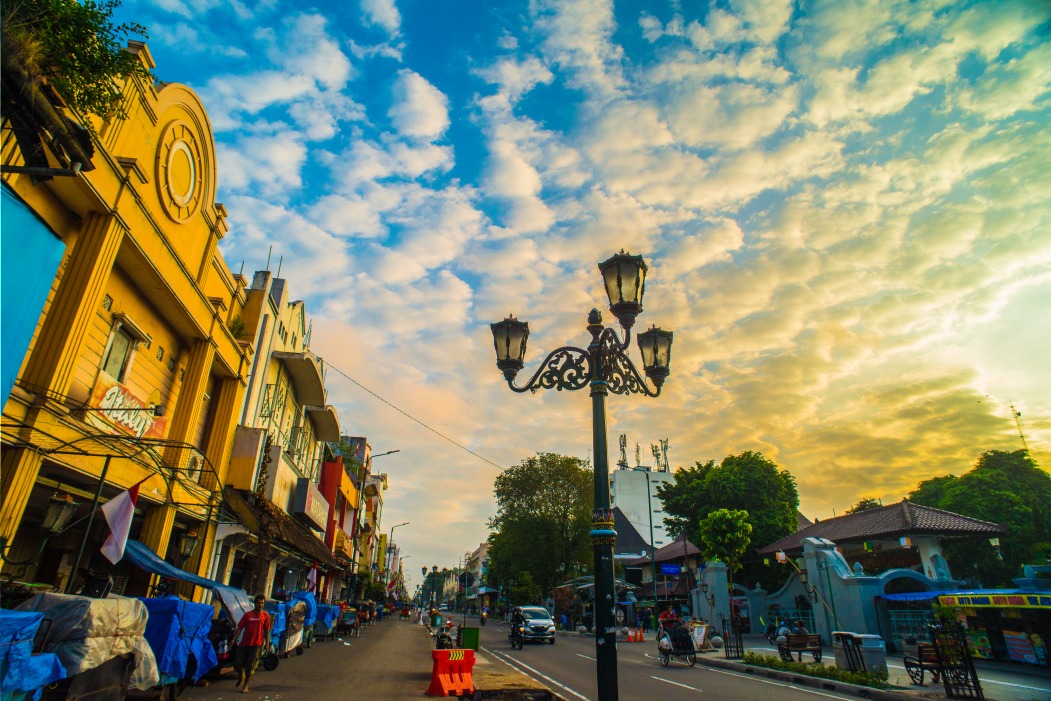
- Malioboro Avenue, the city's main commercial street.
If you extend your journey through Indonesia, other gardens are worth visiting, such as the Bali Botanical Garden.
Frequently asked questions
Allow between 1 and 2 hours to tour the pools, underground mosque and galleries. If you take a guide or explore the surrounding kampung, allow half a day.
It's not mandatory, but a local guide helps you understand the function of different spaces and facilitates access to the underground mosque, which is located away from the main entrance.
No, the complex is located just south of the Kraton, a short walk away. Both sites are typically visited on the same day.
In the morning, from opening, to enjoy soft light on the pools, avoid midday heat and the arrival of tour groups.
Clothing covering shoulders and knees is recommended, particularly for the underground mosque. Also choose comfortable shoes, as the ground can be uneven and slippery.
Including Taman Sari in your trip
Yogyakarta is a key stop for understanding Javanese culture, and Taman Sari holds a special place here for its historical and spiritual significance. To include this site in a custom itinerary combining Java, Bali and neighbouring islands, consult our Indonesia tours.
Nearby
Interested in this visit?
We can include it in your personalised itinerary.