Beringharjo Market
Beringharjo Market
Historic Yogyakarta market on Malioboro Street: batiks on the ground floor, jamu on the 2nd floor, antiques on the 3rd. History, access and practical tips.
The Beringharjo market (Pasar Beringharjo) is one of Yogyakarta's historic markets, located on Malioboro Street, in close proximity to the Kraton (royal palace) and Vredeburg fort. Spread across two buildings and several floors, it brings together batiks, medicinal herbs, antiques, wedding articles and everyday products.
Why visit Beringharjo market
Beringharjo offers a genuine glimpse into Javanese commercial life, far removed from stalls reconstructed for visitors. Here you'll encounter locals doing their everyday shopping, textile artisans, traditional herbalists and antique hunters. For those interested in Indonesian batik or Javanese pharmacopoeia (jamu), it's one of the city's most concentrated observation points. Its position at the foot of Malioboro also makes it a logical stop between the Kraton and the commercial centre.
Market history
The current location was once a banyan forest. After the founding of the kingdom of Ngayogyakarta in the 18th century, the vegetation was cleared and inhabitants established a place of exchange. Commerce took place in the open air for nearly two centuries, until authorities decided, around 1925, to build a proper structure there.
The name Beringharjo was given that same year by Sultan Hamengkubuwono VIII. It combines Beringin (the banyan, in reference to the vanished forest) and Harjo (hope, the prosperity the market should bring to the population). The architecture reflects this double heritage, blending Dutch and Javanese codes.
What you'll find on site
The market consists of two buildings: the western building, three storeys high, houses most of the tourist and craft offerings; the eastern section, two storeys, is more oriented towards locals. Small doors provide access on the east, north and south sides. The main entrance, of colonial design, opens onto Malioboro Street to the west and is flanked by two structures serving as offices for the market chief.
Ground floor: batiks
From the entrance, rows of batiks (traditional Indonesian fabrics) unfold, in silk or cotton, in a wide palette of patterns and colours. Prices are generally lower than those in Malioboro shops, provided you compare several stalls and negotiate.
Second floor: herbs, spices and jamu
This floor is dedicated to medicinal herbs, spices and traditional Javanese phytotherapy, jamu. You can buy both dried preparations and ready-to-brew blends, sold by herbalists who often practise their craft across generations.
Third floor: antiques and second-hand goods
The top level brings together antique dealers and second-hand sellers: typewriters, helmets from the 60s, old fabrics, coins, vintage bags and shoes. The inventory evolves with new arrivals.
Eastern building: wedding articles and costume jewellery
On the other side, the eastern section specialises in wedding articles and costume jewellery. It's also where part of the food stalls frequented by locals are concentrated.
Practical information
- Visit duration: allow 1 to 2 hours to explore both buildings at a leisurely pace.
- Opening hours: open daily during the day. Upper floors close earlier than the ground floor; check locally on the day of your visit.
- Prices: free entry. Bring small denomination cash for purchases and negotiation, which is customary.
- To avoid: open bags in very dense areas; the market remains safe but busy.
When to go
The market is lively all day long, but mid-morning offers the best compromise: complete stalls, natural light on the floors, crowds still manageable. In late afternoon, some traders begin to pack up, particularly on the upper floors. Weekends and Javanese holiday eves see noticeably higher crowds. For photography and shopping, aim for the morning slot.
How to get there
The market is located in the heart of Yogyakarta, approximately 800 m from the Kraton, on Malioboro Street.
- From Adisucipto airport: Trans Jogja bus lines 3A or 3B, get off in front of the governor's office, then a short walk.
- From the city centre: on foot from Malioboro or the Kraton, or by becak (cycle rickshaw) and andong (horse cart) for a more local option.
- Ride-hailing: Gojek and Grab cover the entire city and allow you to fix the price in advance.
What to see nearby
Beringharjo is part of a pedestrian perimeter that brings together several major sites in Yogyakarta:
- The Kraton, the Sultan's palace, 800 m to the south.
- Vredeburg fort, a former Dutch stronghold converted into a museum, just opposite the main entrance.
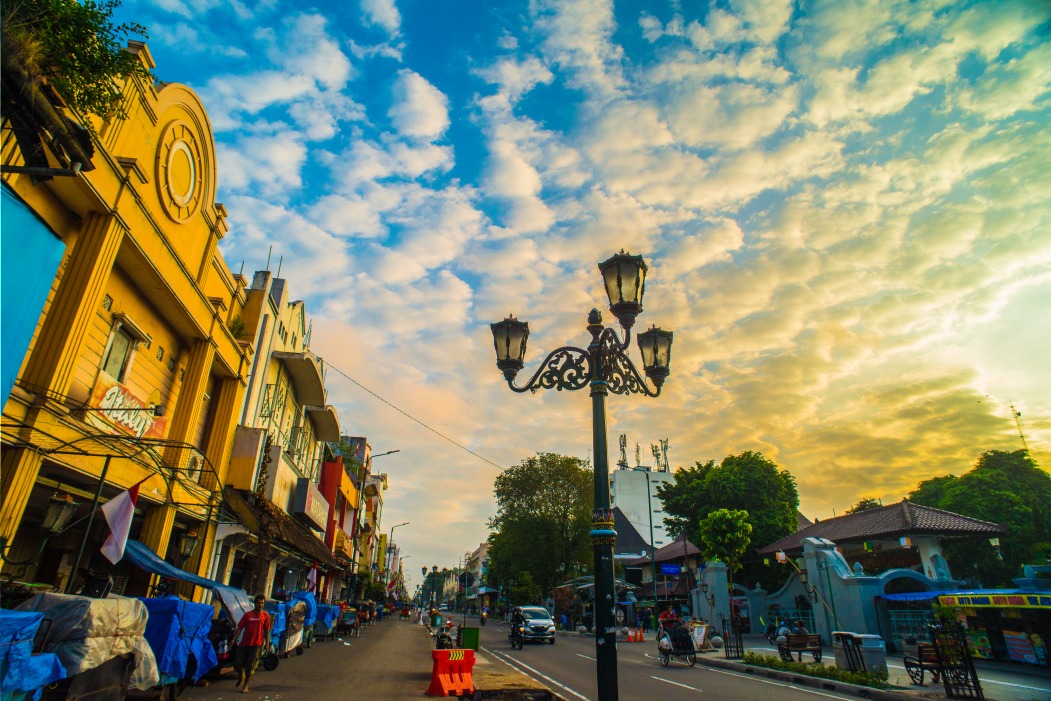
- Malioboro Street, the historic commercial axis that extends the visit.
To expand the itinerary to the rest of the archipelago, you can combine Yogyakarta with a stop in Bali and its botanical garden, or continue to the Komodo islands and Rinca. Further north in Sumatra, Sipiso-Piso waterfall ranks among the island's most striking natural landscapes.
Frequently asked questions
Frequently asked questions
Yes, entry is free. You only pay for any purchases you make, usually in cash.
Yes, negotiation is part of the custom, particularly for batiks, antiques and jewellery. Compare several stalls before setting a reference price.
An hour is enough for a quick pass through the ground floor. Allow two hours if you want to explore the antique floors and the eastern section.
On the ground floor of the western building, from the main entrance on the Malioboro side.
Yes, during the day. Upper floors close earlier than the ground floor; check locally the day before your visit.
Organise your visit
Beringharjo fits easily into a day in Yogyakarta dedicated to the Kraton, Vredeburg and Malioboro. To build a complete itinerary across the archipelago, check our Indonesia travel suggestions.
Nearby
Interested in this visit?
We can include it in your personalised itinerary.