Pura Lempuyang Luhur Temple
Pura Lempuyang Luhur Temple
A major sanctuary in eastern Bali at 1,175 m elevation, Pura Lempuyang Luhur is reached via 1,700 steps with views of Mount Agung.
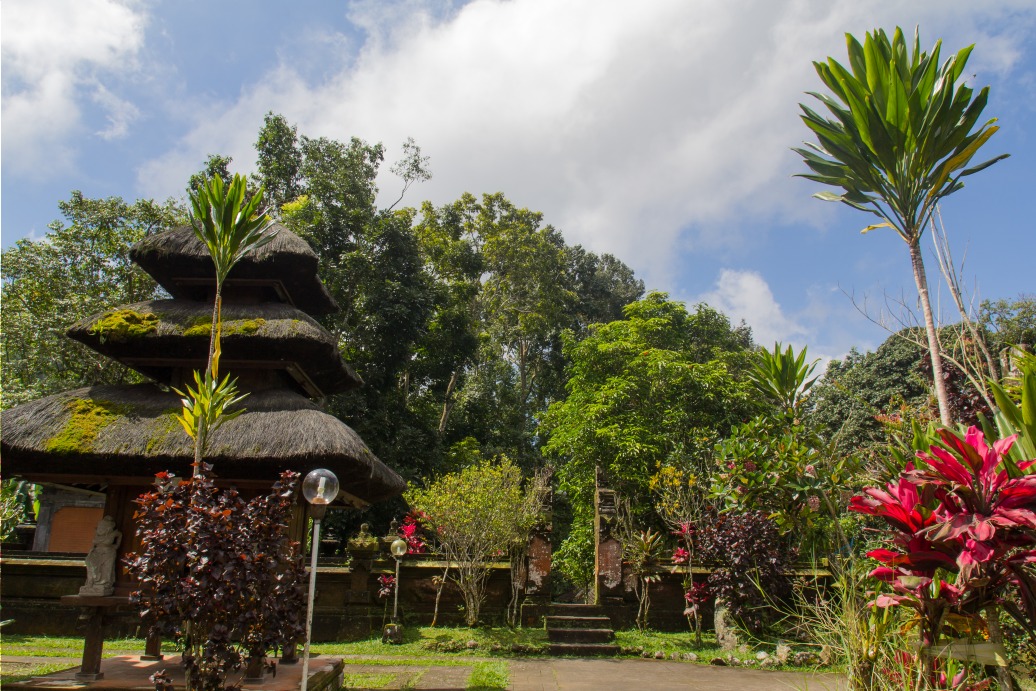
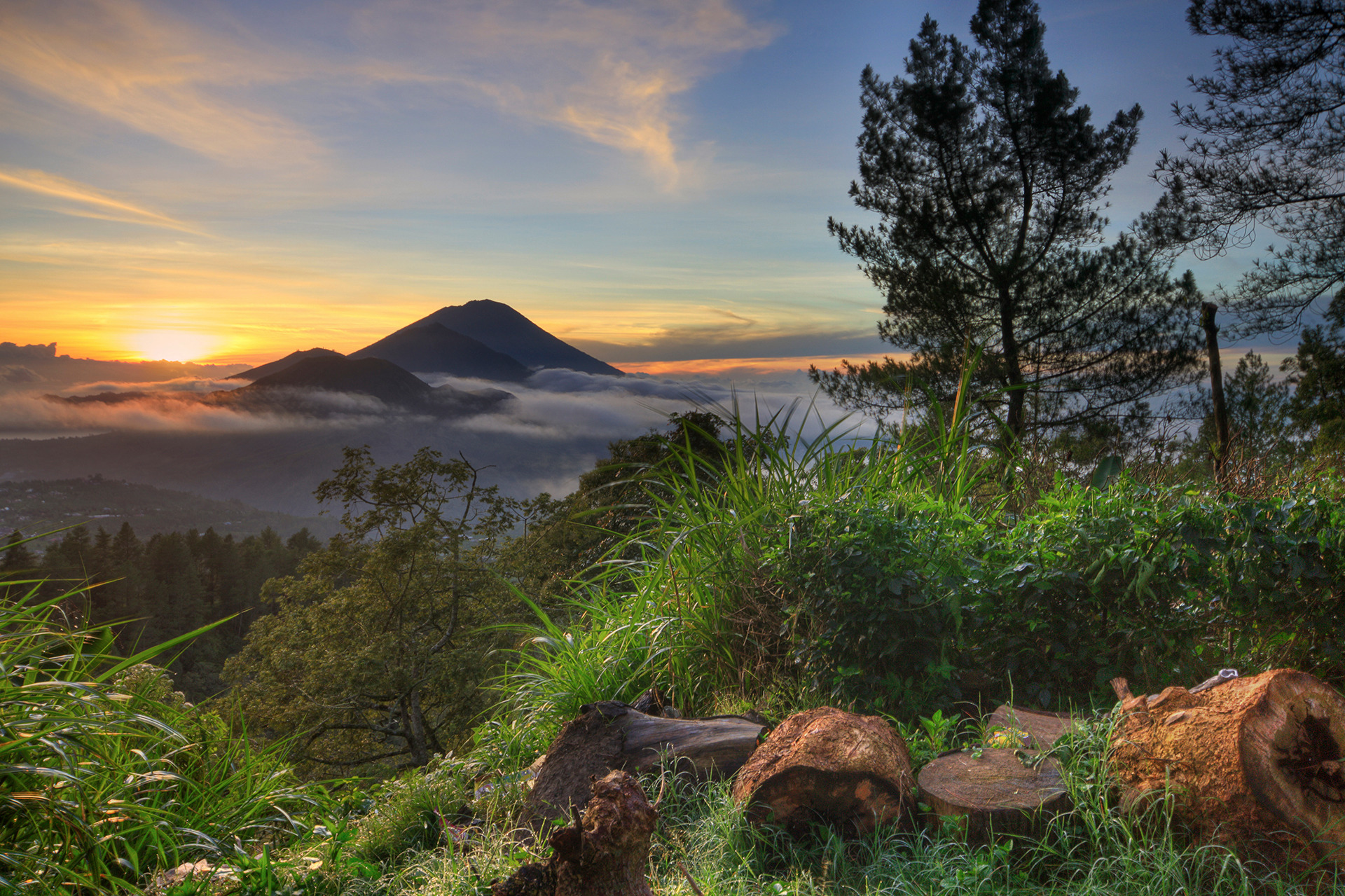
The Pura Lempuyang Luhur temple stands at approximately 1,175 m elevation, at the summit of Mount Lempuyang, at the eastern tip of Bali. A major sanctuary of Balinese Hinduism, it belongs to the Sad Kahyangan Jagad, the six sacred places that maintain the spiritual balance of the island. Its ascent of 1,700 steps and the silhouette of the Agung volcano visible from the site make it a memorable stop on an itinerary through eastern Bali.
Why visit Pura Lempuyang Luhur
The site brings together three dimensions rarely found in one place: an active religious function (Hindu pilgrimage), a high-altitude natural setting covered in tropical jungle, and a panorama of Mount Agung rising opposite. The split gate at the entrance of the lower complex, nicknamed locally the "Gates of Heaven," frames the volcano in a perspective that has become emblematic of Bali.
Unlike the more touristy temples in the island's south, Lempuyang remains an active place of worship. Balinese devotees visit at least once in their lifetime for pilgrimage. The pace of a visit here is slower, more contemplative.
History and spiritual significance
According to Balinese oral tradition, the island experienced chronic instability in its early days, shaken by earthquakes. The divinity Pashupati, residing on Mount Semuru in Java, is said to have sent three of his descendants to stabilize Bali: Hyang Putra Jaya to Mount Agung, Dewi Danu to Mount Batur, and Hyang Gni Jaya to Mount Lempuyang. This cosmogony explains the sacred status of the summit and the ancient presence of places of worship on its slopes, considered by local tradition to predate other Balinese temples.
Mount Lempuyang and the Hindu trinity
The mountain is divided into three sections corresponding to the Trimurti, the Hindu trinity:
- Sang Ananta Bhoga, lower section, associated with Brahma, the creator
- Sang Naga Basukih, middle section, dedicated to Vishnu, the preserver
- Sang Naga Taksaka, summit, consecrated to Shiva, the destroyer-transformer
Pura Lempuyang Luhur also belongs to the Pura Kahyangan Padma Bhuwana group, a set of temples marking the cardinal points of Bali. Lempuyang represents the east and the color white.
What to see on the site
The ascent is not merely an approach walk: it is a ritual journey marked by several sanctuaries encountered successively.
- Pura Penataran Agung Lempuyang: lower temple, starting point and site of the famous split gate (candi bentar) framing Mount Agung
- Pura Telaga Mas and Pura Telaga Sagawan: intermediate sanctuaries linked to sacred springs
- Pura Pasar Agung: an advanced point on the slopes
- Pura Puncak Bisis: the second-to-last temple on the path to the summit
- Pura Lempuyang Luhur: the summit sanctuary, the goal of pilgrimage
The 1,700 steps traverse dense tropical vegetation where macaques live. Stay alert to your belongings: these monkeys are attracted to food and shiny objects (glasses, phones, jewelry).
Practical information
Allow approximately 2 hours to ascend to the summit in good physical condition. Bring plenty of water and a snack: there are no reliable supply points along the route. If the full climb is not feasible, a mountain road allows visitors to reach certain temples by motorbike taxi.
Dress code: wearing a sarong is mandatory for both men and women. Shoulders, knees, and legs must be covered. Sarongs are usually available on-site. When photographing, maintain distance from worshippers at prayer.
According to Balinese belief, a person with a heavy heart does not reach the summit, and complaining during the ascent breaks the spiritual dimension of the place. Silence and patience are part of the ritual.
When to go
The dry season, April to October, offers the best conditions: passable trails, clear skies over Mount Agung, and limited storm risk. During the monsoon (November to March), the steps become slippery and clouds often obscure the volcano.
An early morning arrival is recommended: the light is softer, the heat manageable, and crowds at the split gate much smaller. Late afternoon can also offer beautiful light, provided you descend before nightfall.
How to get there
The temple is located near the village of Bunutan, approximately 10 km north of Amlapura, capital of Karangasem regency. From Ubud, allow about 2.5 hours; from Denpasar or Kuta, plan 3 to 3.5 hours. Most visitors travel by car with a driver or by scooter for the day. Once at the lower car park, local shuttles (motorbike taxis or shared minibuses) transport visitors to the first temple complex.
Nearby attractions
Eastern Bali has several complementary sites:
- Tirta Gangga, a former royal water palace with ornamental pools, about twenty minutes away
- Amlapura and its Puri Agung Karangasem palace
- The fishing villages of Amed and Jemeluk, known for diving and snorkeling
- The Bali Botanical Garden, further west, to extend your exploration of Balinese nature
For those continuing east into the archipelago, Komodo Island and Rinca Island make a natural follow-up.
Frequently asked questions
The 1,700 steps require good physical fitness. Allow approximately 2 hours to reach the summit, with regular breaks. Heat and humidity increase the difficulty; starting early in the morning makes the effort easier.
A guide is not essential, as the path is well-marked. However, a guide provides valuable insight into the symbolism of the temples and the rules of respect to observe in the presence of worshippers.
Yes. The split gate (candi bentar) is located at the first complex, Pura Penataran Agung Lempuyang, accessible without climbing the 1,700 steps.
A sarong is mandatory to cover shoulders, knees, and legs for both men and women. It is usually provided on-site. Also bring closed hiking shoes suitable for walking.
Macaques live along the path. They are not aggressive but seek to grab food and shiny objects. Keep your bag closed and avoid eating while walking.
Plan your trip
Pura Lempuyang Luhur temple fits naturally into an itinerary focused on eastern Bali, blending culture, spirituality, and volcanic landscapes. To build a complete journey in travel in Indonesia, our advisors can combine this stop with other sacred temples, the Amed coast, or a crossing to nearby islands.
Interested in this visit?
We can include it in your personalised itinerary.