Ratu Boko Temple
Ratu Boko Temple
19 km from Yogyakarta, Ratu Boko spreads its ruins across a hilltop overlooking Prambanan and Mount Merapi. Royal palace, monastery, or royal residence?
Ratu Boko, commonly called Kraton Ratu Boko, means "palace of King Boko." This archaeological site stands 3 kilometers south of Prambanan Temple, in central Java, perched on a hill that dominates the Yogyakarta plain. Spread across 16 hectares, it features monumental gates, ritual pools, terraces and stone platforms whose purpose continues to puzzle researchers: a royal palace, a Buddhist monastery, or a leisure residence.
Why visit Ratu Boko
Unlike other remains in central Java, which are almost entirely religious, Ratu Boko resembles a place of habitation. The site offers a clear view of Prambanan, surrounding temples and Mount Merapi in the background. It is one of the rare Javanese archaeological complexes where you can move freely among civil structures, baths and meditation spaces, rather than around a central sanctuary.
The atmosphere changes depending on the time of day: late afternoon light is particularly appreciated for photographing the monumental gate and observing the valley.
History and inscriptions
The inscriptions found on the site date from the 8th and 9th centuries. Five of them, in pre-Nagari script and Sanskrit, mention a sanctuary dedicated to Avalokitesvara. One refers to the founding of a Buddhist monastery inspired by the Abhayagiri Vihara in Sri Lanka, where ascetic monks lived in forest retreat.
Three other inscriptions, dated to 856 CE and written in Old Javanese and poetic Sanskrit, recount the establishment of two lingga, symbols of the god Shiva. An additional inscription, without precise dating, records the erection of two further lingga. This mix of Buddhist and Shivaite elements fuels uncertainty about the site's true function: a palace of the Mataram kingdom for some, a monastery for others, a place of retreat and leisure for still others.
The legend of Loro Jonggrang
Ratu Boko palace, the statue of Durga at Prambanan and the Sewu complex are linked by the same legend, that of Loro Jonggrang. Prince Bandung Bondowoso, eager to marry Princess Loro Jonggrang, daughter of King Boko, faces an obstacle: he has killed that king to seize the kingdom. The princess accepts marriage on one condition: that he build 1,000 temples in one night.
The prince calls upon an army of supernatural creatures and manages to erect 999 temples before dawn. Loro Jonggrang then orders her servants to pound rice to awaken the roosters. Tricked by the noise, the creatures return to their underground realm. Furious, Bandung Bondowoso curses the princess and transforms her into stone. The statue identified by the local population as Loro Jonggrang corresponds to that of Durga, in the northern cell of the Shiva temple at Prambanan.
What to see on site
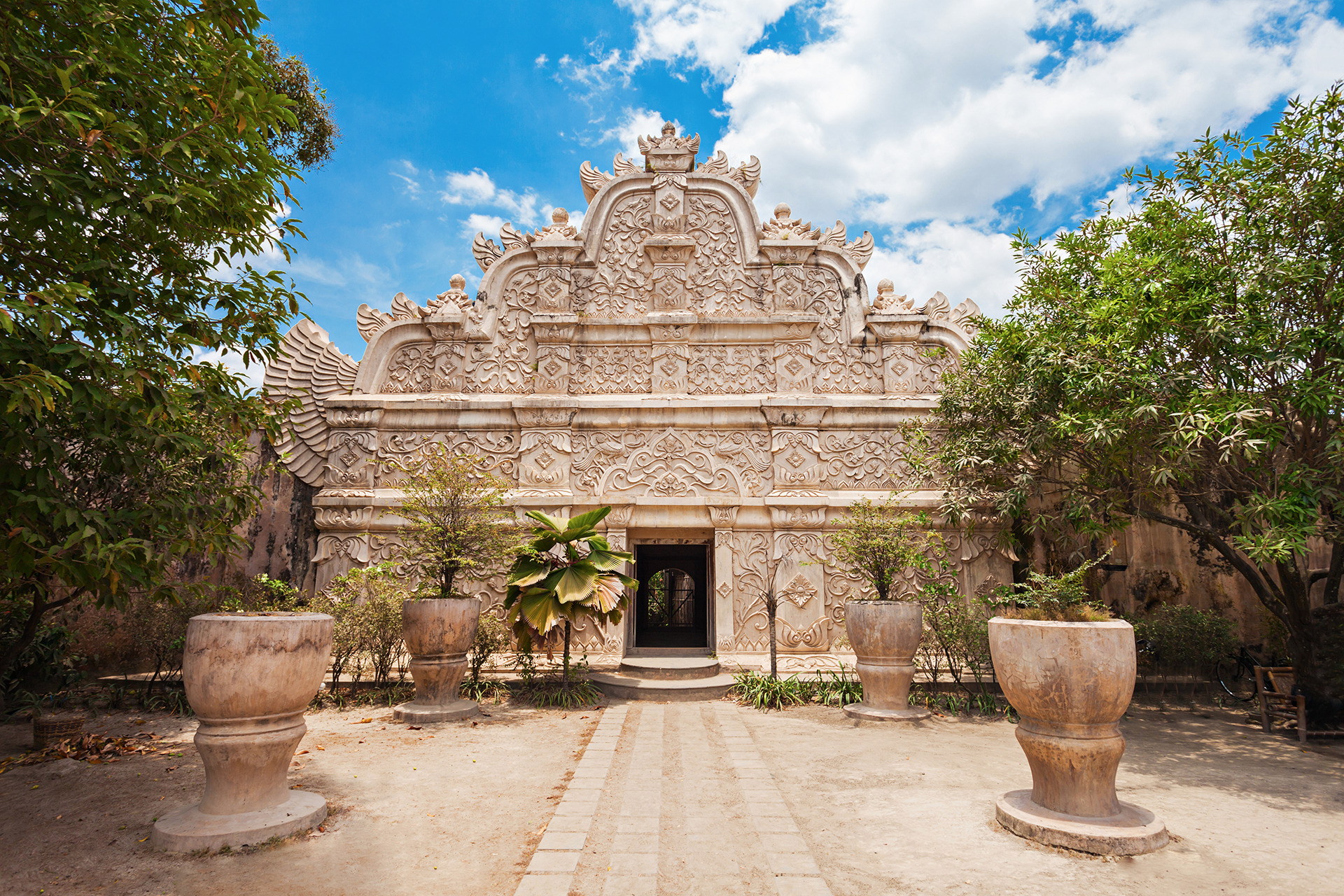
Entry is through a monumental gate consisting of three stone portals, whose sculptures testify to the craftsmanship of artisans of the era. Beyond, the site unfolds into several areas:
- The central terrace: an auditorium, ritual baths and several stone platforms that served as foundations for wooden buildings now disappeared. The baths illustrate the importance of water rituals in ancient Javanese culture.
- The pendopo: a large audience hall open to the outside, typical of traditional Javanese architecture. Only the stone bases remain.
- Candi Pembakaran: a structure of approximately 26 × 26 meters pierced with a square hole, probably a crematorium.
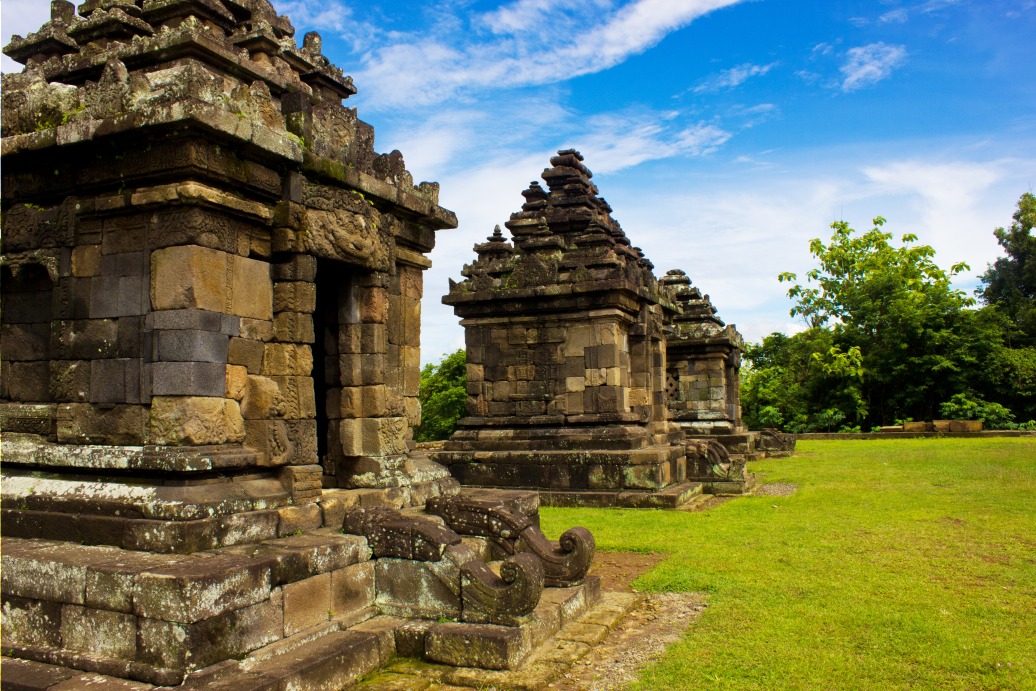
- Three miniature temples grouped around a square stone basin.
- An ascetic cave, probably a meditation space.
Practical information
The site is open daily during daylight hours, from morning through late afternoon. Entry fees for foreign visitors remain moderate; a combined ticket allows visiting Ratu Boko with Prambanan and Borobudur, shuttle included, which often costs less than three separate tickets.
Allow 1.5 to 2 hours on site for a relaxed visit. Bring water, a hat and closed-toe shoes: the hill is exposed and shade is scarce among the ruins.
When to visit Ratu Boko
The dry season, from May to October, offers the best visiting conditions: clear skies over Mount Merapi and walkable grounds. During the rainy season (November to April), showers fall mainly in late afternoon.
Two time slots stand out during the day:
- Early morning, for cool temperatures and soft light over Prambanan.
- Late afternoon, popular for sunset behind the monumental gate; arrive at least an hour before dusk to have time to explore the site.
How to get there
Ratu Boko is located approximately 19 km east of Yogyakarta. No public transport serves the site directly. Three options are common:
- Rent a scooter in Yogyakarta (allow 30 to 45 minutes driving time).
- Hire a private driver for the day, often combined with Prambanan.
- Book a ride-sharing service via app from Yogyakarta, arranging your return in advance as vehicles are scarce at the site's base.
Nearby
Ratu Boko is logically visited with neighboring archaeological sites, on the same day or over two days:
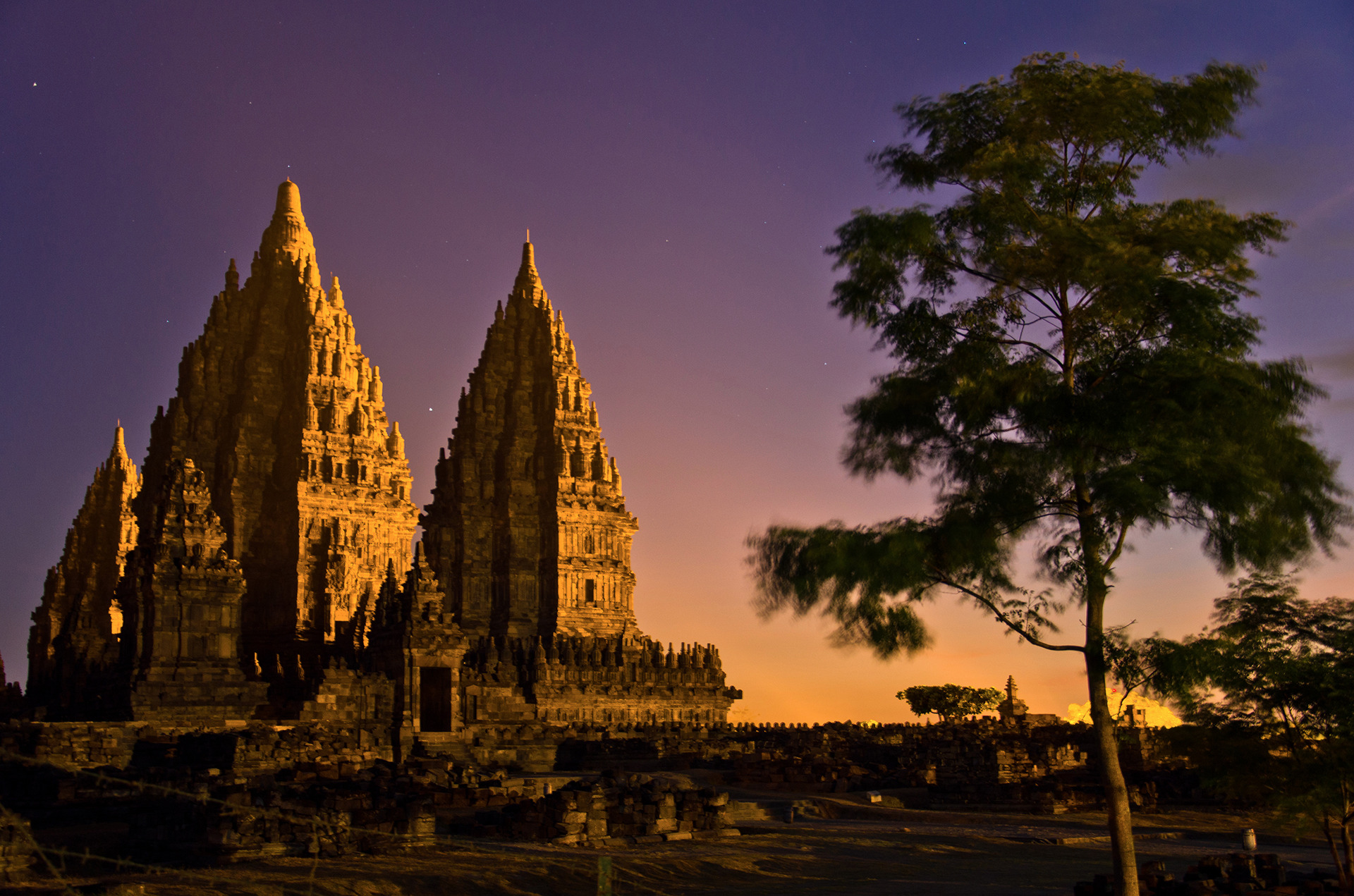
- Prambanan, 3 km to the north, Java's principal Hindu complex.
- Sewu, a Buddhist complex located within the Prambanan area, linked to the same Loro Jonggrang legend.
- Borobudur, approximately 50 km to the west, often included in the combined ticket.
Frequently asked questions
Frequently asked questions
The site's exact function remains debated. Inscriptions mention a sanctuary dedicated to Avalokitesvara and a Buddhist monastery inspired by the Abhayagiri Vihara in Sri Lanka, but the arrangement of structures (ceremonial gate, pendopo, baths) also suggests a royal residence of the Mataram kingdom.
The legend links Ratu Boko, Prambanan and Sewu: Prince Bandung Bondowoso reportedly built 999 temples in one night before being tricked by rice pounding, then petrified Princess Loro Jonggrang. This statue is identified as that of Durga, in the northern cell of Shiva's temple at Prambanan.
Yes. A combined ticket covers Ratu Boko, Prambanan and Borobudur, with shuttle transfers between sites included. Options evolve: check what's available upon arrival in Yogyakarta.
Allow 1.5 to 2 hours to explore the monumental gate, central terrace, pendopo, Candi Pembakaran, miniature temples and ascetic cave at a leisurely pace.
Incorporating Ratu Boko into an Indonesia trip
The site combines easily with other archaeological treasures of central Java, and makes a worthwhile stop between visiting Yogyakarta and continuing an itinerary toward Bali or the eastern islands. To prepare your customized itinerary, explore our Indonesia travel ideas.
Nearby
Interested in this visit?
We can include it in your personalised itinerary.