Sipiso-Piso Waterfall
Sipiso-Piso Waterfall
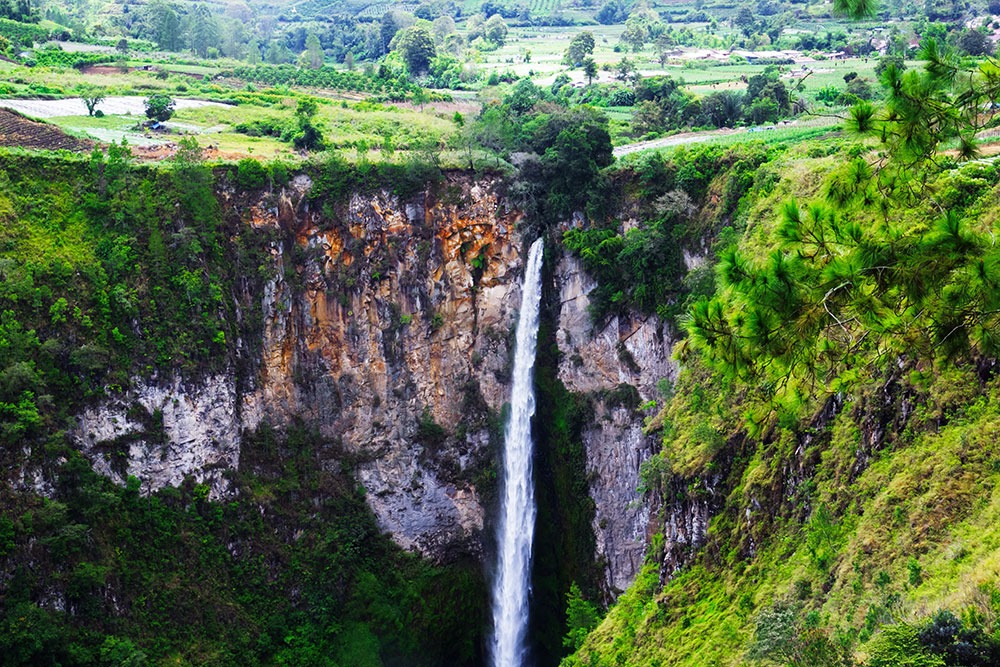
Indonesia's highest waterfall, Sipiso-Piso plunges 120 m into the Lake Toba caldera, 30 minutes from Tongging village in North Sumatra.
Sipiso-Piso Waterfall cascades 120 meters down into the Lake Toba caldera, making it Indonesia's highest waterfall. Its name means "knife" in reference to the streams of water that fall like sharp blades along a vertical cliff face. The site sits at approximately 800 m elevation, about 30 minutes' drive from Tongging village in North Sumatra province.
Why Visit Sipiso-Piso Waterfall
Three elements make this site remarkable:
- An exceptional waterfall: 120 m in height, recognized as the country's highest cascade.
- A geological setting: the waterfall marks the northern rim of the Lake Toba caldera, one of the world's largest volcanic structures.
- Genuine accessibility: the viewpoint is reached in minutes from the parking area, and a developed trail allows you to descend to the base of the waterfall.
The site combines easily with time around Lake Toba or a traverse across the Karo plateau.
What to See and Do
The Panoramic Viewpoint
Perched high above, it offers a sweeping view over the waterfall and Lake Toba stretching below. A few small shops sell drinks and snacks. This is the most accessible vantage point, ideal if you want to simply observe the cascade without descending.
The Descent to the Waterfall's Base
A developed trail with hundreds of secure steps descends along the cliff face to the base of the waterfall. The descent is gradual; the climb back up is more demanding and requires reasonable fitness. At the base, the roar of water and spray saturate the air—bring protection for your camera gear.
The Site's Geology
The waterfall is fed by an underground river sourced from the Karo plateau, which emerges from a cave on the caldera's flank before plunging into open air. The surrounding slopes are covered with vegetation dominated by tropical conifers, typical of North Sumatra's highlands.
Practical Information
- Duration of visit: allow 30 to 45 minutes for the viewpoint alone, 2 to 3 hours if you descend to the base of the waterfall.
- Entrance fee: a modest ticket is required at the site entrance, with a possible additional charge for parking.
- Equipment: closed-toe shoes with good grip for the descent, windproof or light rain jacket (spray wets quickly), water.
- Safety: stay on marked trails and platforms; the viewpoint edges are steep.
When to Visit
The region experiences a tropical climate with two seasons. The drier season runs roughly from April to July, the busiest tourist period due to reduced rainfall. The wetter season runs from August to March: the waterfall is more powerful then, but the viewpoint often lies shrouded in mist and trails become slippery. Mornings typically offer the best visibility, before afternoon clouds form.
How to Get There
The usual starting point is Medan, capital of North Sumatra:
- Medan → Kabanjahe: approximately 2 hours by car or bus, heading up toward the Karo plateau.
- Kabanjahe → Tongging: about twenty kilometers north, toward Lake Toba.
- Tongging → waterfall: 30 minutes from the village to the viewpoint parking area.
A rented car with driver remains the most flexible option, especially if you continue on to Lake Toba. Local buses serve Kabanjahe and the Tongging area, but require more time and patience.
Nearby Attractions
- Lake Toba: the world's largest volcanic lake, a few kilometers south, with Samosir island at its center.
- The Karo plateau: traditional Batak Karo villages, agricultural markets, and active volcanoes (Sinabung, Sibayak) accessible from Berastagi.
- Tongging: a small fishing village on Lake Toba's shore, a practical base for the night after your visit.
To expand your expedition across the country, consider also visiting Komodo Island or Galunggung Volcano in Java.
Frequently asked questions
Want to include Sipiso-Piso in a Sumatra itinerary? Our advisors build your custom trip to Indonésie, from the Karo plateau to Lake Toba.
Interested in this visit?
We can include it in your personalised itinerary.