Ubud Palace
Ubud Palace
A royal residence in the heart of Ubud, Puri Saren Agung showcases traditional Balinese architecture, a lotus garden and evening dance performances.
Also known as Puri Saren Agung, Ubud Palace is a royal complex located in downtown Ubud, at the intersection of Jalan Raya Ubud. The official residence of Ubud's royal family, it remains one of the region's principal cultural and architectural landmarks.
Why visit Ubud Palace
The palace offers multiple points of interest for visitors: a historic site still inhabited by descendants of Bali's last raja, a traditional Balinese architectural ensemble freely accessible, and a daily cultural programme centered on dance and music. Its location in the heart of Ubud makes it a natural anchor point for exploring the city on foot.
- Balinese royal architecture and stone carvings in courtyards open to the public
- Traditional dance performances held in the evenings
- Host to the annual literary festival (Ubud Writers & Readers Festival)
- Free entry to visit the exterior courtyards
History of Puri Saren Agung
The palace was first built in 1640. Sovereign Tjokora Putu Kandel (1800–1823) extended its construction in the 19th century, gradually expanding the royal complex. Descendants of Bali's last raja still live at the palace today.
The complex was completely destroyed in the 1917 earthquake. The palace was rebuilt around 1928, in an effort that also aimed to promote Ubud's tourism sector, which was then booming among foreign artists. This reconstruction was accompanied by the creation of the Tjampuhan hotel, a pavilion that served to receive palace guests.
What to see in the complex
The front section of the palace—exterior courtyards, buildings and garden—is accessible to the public. The rear section remains reserved for residents. Several ensembles merit attention.
The Wantilan auditorium
A large establishment used only for meetings and ceremonies of the royal family. Its open structure is typical of Balinese ceremonial architecture.
The Pura Marajan Agung
The private temple of the royal family, located in the northern part of the complex. The decorations and ornaments are more detailed here than in other buildings, with particularly careful stonework.
The Sosrobaju
Just opposite the palace stands the Sosrobaju, a private residence of the royal family. It complements the complex on the main street side.
The garden and lotus pond
The garden features a pond covered with lotus flowers. Along the path encircling it, several statues represent Dewi Saraswati, the Hindu goddess of wisdom and the arts. It is one of the most photographed spots on the site.
When to visit
The palace is open year-round. Two key periods structure the visit:
- Evening performances: traditional dance and music performances are held nightly around 7:30 PM in the courtyard. Tickets are sold on-site in the afternoon; it's advisable to arrive early for front-row seating.
- Ubud Writers & Readers Festival: the palace hosts this international literary festival annually, typically in October. It brings together Indonesian and international writers over several days.
Weather-wise, the dry season (May to September) is most comfortable for combining the palace visit with the surrounding rice paddies.
Practical information
- Admission: free entry to visit the exterior courtyards. Evening dance performances are ticketed at a modest rate.
- Hours: the public section is generally open during the day until early evening.
- Dress code: wearing a sarong is mandatory. Rental is available at the entrance.
- Visit duration: allow 30 to 45 minutes for the courtyards; longer if you stay for the performance.
How to get there
The palace is located at the intersection of Jalan Raya Ubud and Jalan Suweta, in downtown Ubud. Allow approximately one hour's drive from Denpasar depending on traffic. From any accommodation in central Ubud, the site is generally accessible on foot. Parking for taxis and scooters is available in the immediate vicinity.
Nearby attractions
To extend your visit while remaining in the region or branching out to other Balinese and Indonesian stops:
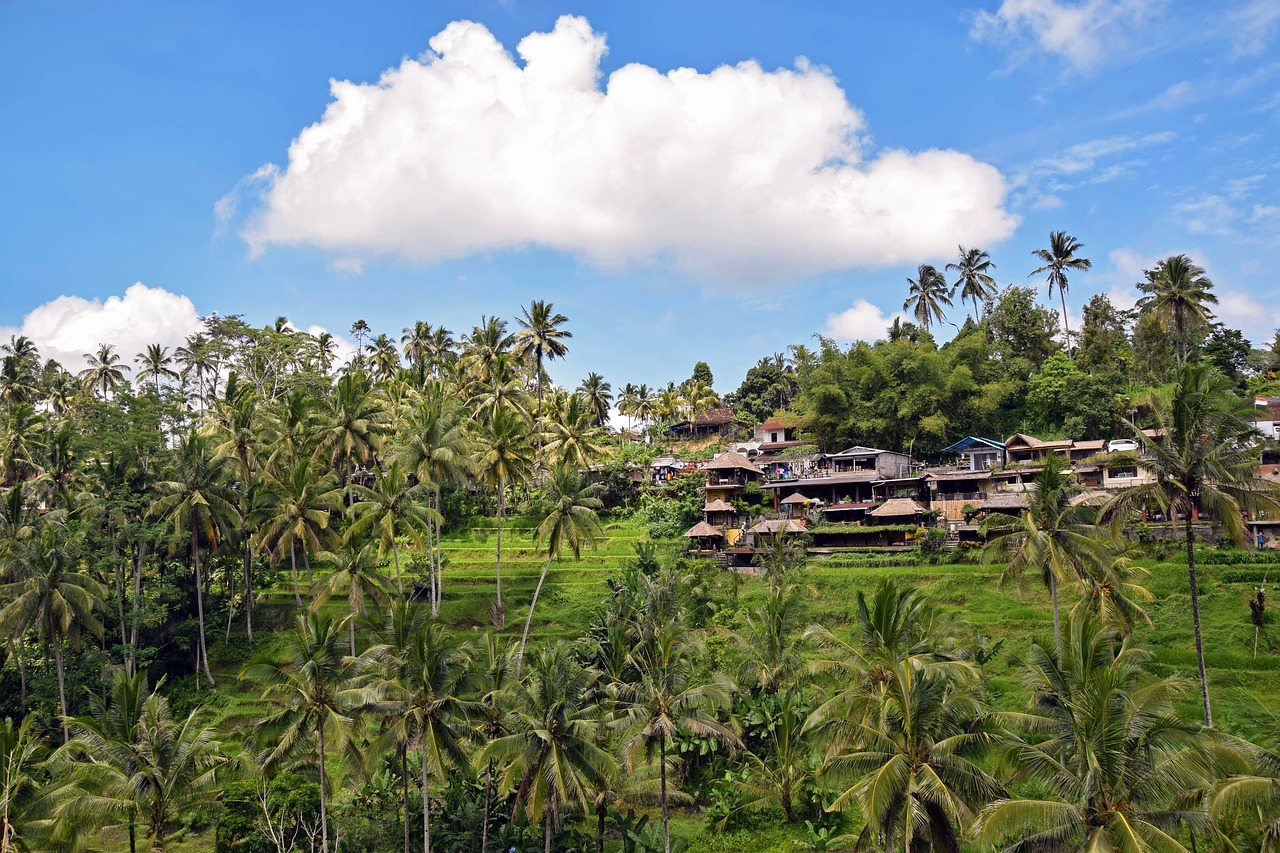
- Ubud: central market, Tegallalang rice terraces, monkey forest
- Bali Botanical Garden, approximately one hour to the north
- Komodo Island for a nature extension to the east of the archipelago
- Rinca Island, neighbour to Komodo
Frequently asked questions
Frequently asked questions
No, tickets are sold directly on-site in the afternoon for the evening performance (around 7:30 PM). It is advisable to arrive early to secure front-row seats, as the courtyard has limited capacity.
Wearing a sarong is mandatory to enter areas of the palace with religious significance. If you do not have one, rental is available at the entrance. Also consider wearing clothing that covers your shoulders.
A visit to the public courtyards takes 30 to 45 minutes. If you attend an evening dance performance, allow approximately an additional 1.5 hours.
Include Ubud Palace in your journey
Ubud Palace fits naturally into a Balinese itinerary combining culture, rice paddies and temples. To build a tailor-made itinerary, consult our trips to Indonésie.
Interested in this visit?
We can include it in your personalised itinerary.