Ubud Central Market
Ubud Central Market
Facing the Royal Palace Puri Saren, Ubud Central Market combines spice stalls, Balinese offerings and crafts from neighbouring villages of Tegallalang and Pengosekan.
The Ubud Central Market occupies a strategic position in the heart of the town, on Jalan Raya Ubud, just across from the Royal Palace Puri Saren. A place of daily commerce for locals and a showcase of Balinese craftsmanship, it brings together agricultural products, religious offerings and textile creations from neighbouring villages in a single space.
Why visit Ubud Market
The market plays a central role in Ubud's daily life. Locals come here each morning to buy their spices, offerings, traditional cakes and fresh produce. For travellers, it is one of the rare places where you can observe the daily rhythm of Balinese life without artifice, provided you arrive early enough.
The market also concentrates a large share of regional craftsmanship: the pieces sold come largely from the neighbouring villages of Pengosekan, Tegallalang and Payangan, which are renowned for their sculpture, painting and weaving workshops. It therefore serves as a useful point of comparison before or after visiting the villages themselves.
Ancient history, global renown
Ubud Market has existed for several centuries. It developed in the shadow of the royal palace Puri Saren, whose princes long supported the region's artistic and craft activities. This proximity explains the density of art shops around the central crossroads.
The place gained international recognition after its appearance in the film Eat Pray Love (2010), adapted from Elizabeth Gilbert's book. Since then, the art market has attracted a wider audience, which has transformed part of the stalls into shops aimed at foreign visitors, without erasing the traditional market's daily function.
What to see and find here
The market is divided into two distinct sections:
- To the east: the traditional market. You will find spices, fruits and vegetables, offerings made from palm leaves (canang sari), Balinese cakes and everyday products. This section operates early in the morning, between 4am and 6am, and generally closes by 9am.
- To the west: the art market. It takes over mid-morning and remains active throughout the day. You will find scarves, batik shirts, hand-woven bags, baskets, hats, wooden statues and even the colourful kites characteristic of Bali.
The aisles are narrow and the layout may seem dense. Take time to compare several stalls: the same items are often offered at very different prices depending on the vendors.
Practical tips: negotiation and etiquette
No prices are displayed. Negotiation is an integral part of the experience and the initial prices quoted can be significantly higher than the actual rate. A few useful guidelines:
- Remain courteous and smiling: Balinese negotiation is conducted in good humour, never in confrontation.
- A counter-offer of around 40 to 60% of the initial price is a reasonable starting point.
- Prepare Indonesian rupiah: not all stalls accept cards.
- Avoid handling an object at length if you don't intend to buy it, and do not photograph the vendors without their consent.
When to visit
The time of visit greatly influences the atmosphere. To see the traditional market in operation, you must arrive very early, ideally between 6am and 8am: this is when locals do their shopping and the spice, fruit and offering stalls are at their fullest.
For the art and craft market, late morning and afternoon work better. Some stalls remain open late into the evening. Avoid midday, which is hotter and busier with tour groups.
Allow 1 to 2 hours of visiting depending on your interest in shopping.
What to see nearby
The market lends itself well to a half-day combined with other Ubud sites:
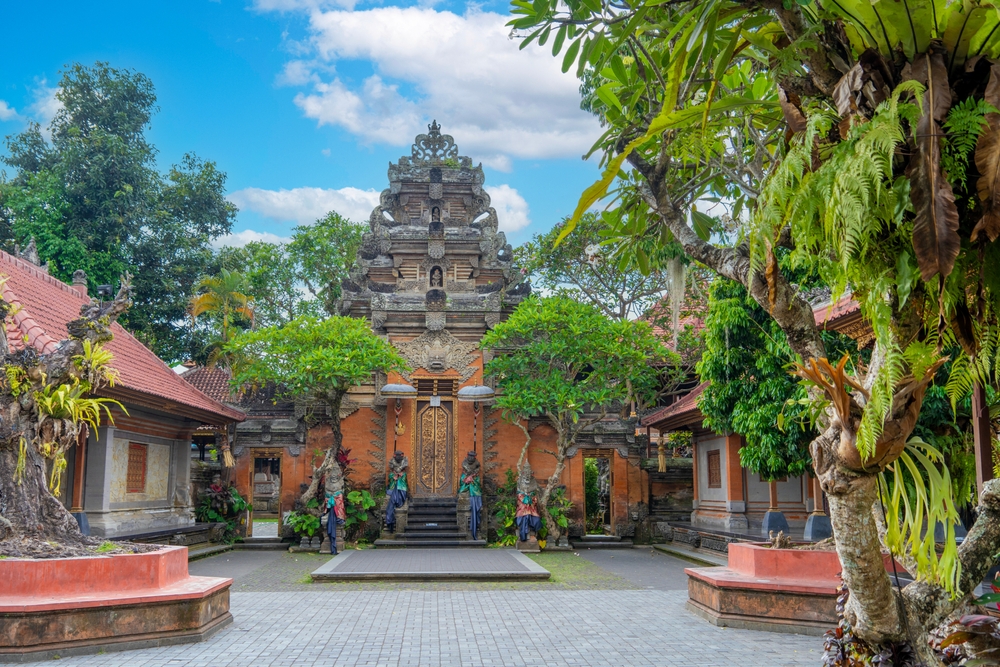
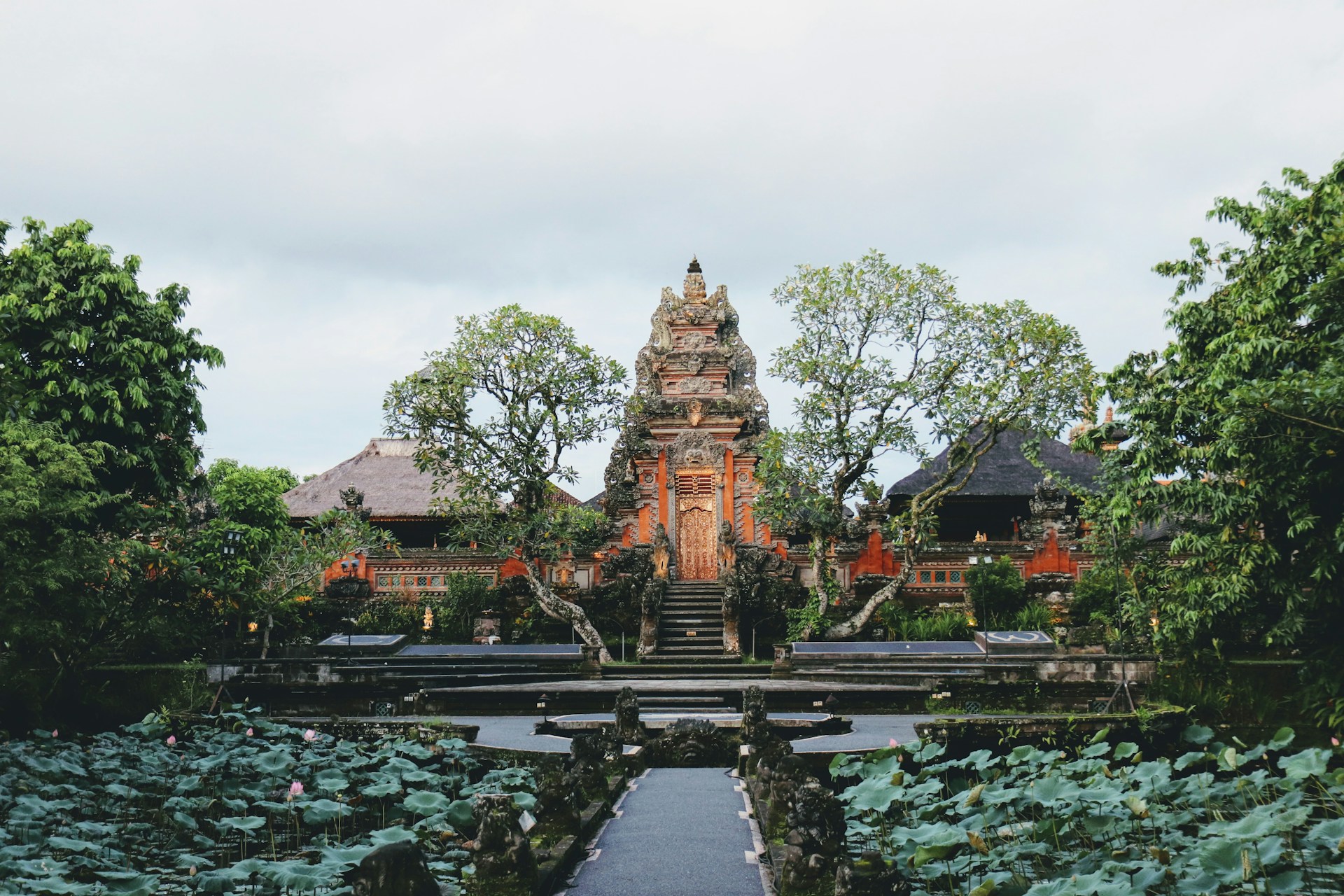
- The Royal Palace Puri Saren, situated just across from the market, can be visited free of charge and offers an insight into Balinese princely architecture.
- The Sacred Monkey Forest, approximately 15 minutes' walk to the south, is home to ancient temples within a jungle populated by macaques.
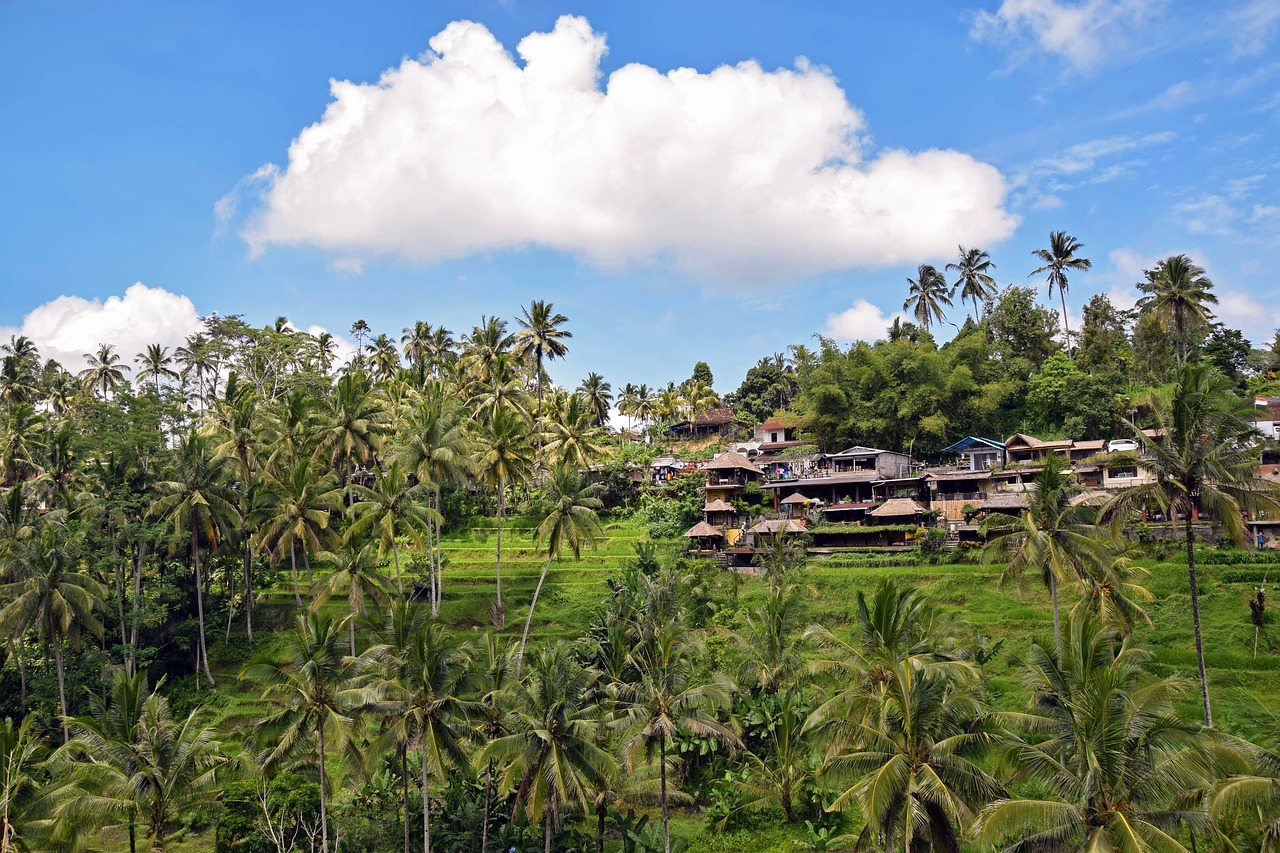
- The Tegallalang rice terraces, to the north, offer one of Bali's most renowned terraced landscapes.
The market is located approximately 32 km from Kuta, about 1.5 hours' drive from Denpasar international airport depending on traffic.
Frequently asked questions
Frequently asked questions
To see the traditional market in full operation, arrive between 6am and 8am. For the art market, late morning and afternoon are more suitable.
Yes. No prices are displayed and negotiation is expected. A counter-offer of around 40 to 60% of the quoted price is a common starting point, to be adjusted afterwards depending on the quality of the item.
Yes, the market operates every day. The traditional market is concentrated early in the morning, while the art market remains active until late in the day, with some stalls extending into the evening.
Most stalls accept cash only. Plan to have Indonesian rupiah available, preferably in small denominations.
Allow 1 to 2 hours to tour both sections at a relaxed pace, longer if you wish to take time comparing craft pieces.
Plan your visit
Ubud Market fits naturally into a larger circuit across Bali, between temples, rice fields and artisan villages. To build a tailor-made itinerary, consult our suggestions for travel in Indonesia.
Nearby
Interested in this visit?
We can include it in your personalised itinerary.