Komodo Island, a must-see destination on an Indonesia trip
Komodo Island, a must-see destination on an Indonesia trip
Between Sumbawa and Flores, Komodo Island is home to giant monitor lizards and a UNESCO-listed marine park. Practical guide: wildlife, diving, access and seasons.
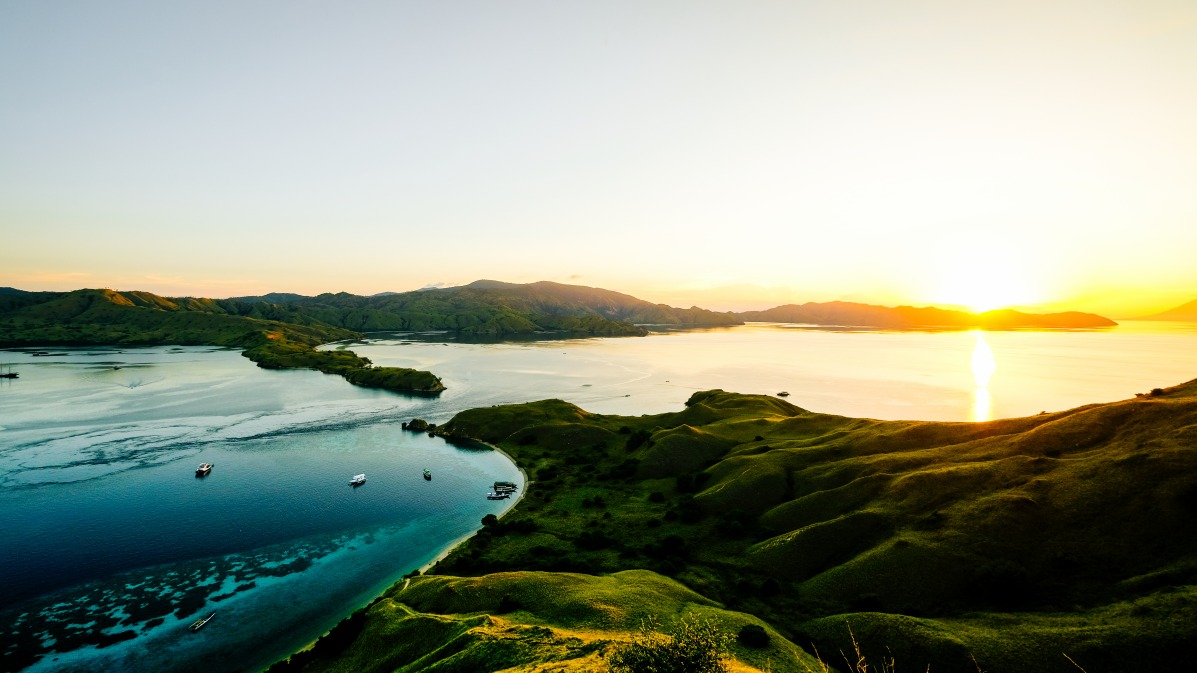
Located between Sumbawa and Flores, in the province of East Nusa Tenggara, Komodo Island is home to the world's largest living lizard, the Komodo dragon (Varanus komodoensis). The national park that encompasses it, inscribed as a UNESCO World Heritage Site since 1991, spans three main islands and several dozen islets, at the heart of one of Southeast Asia's richest marine environments.
Why visit Komodo Island
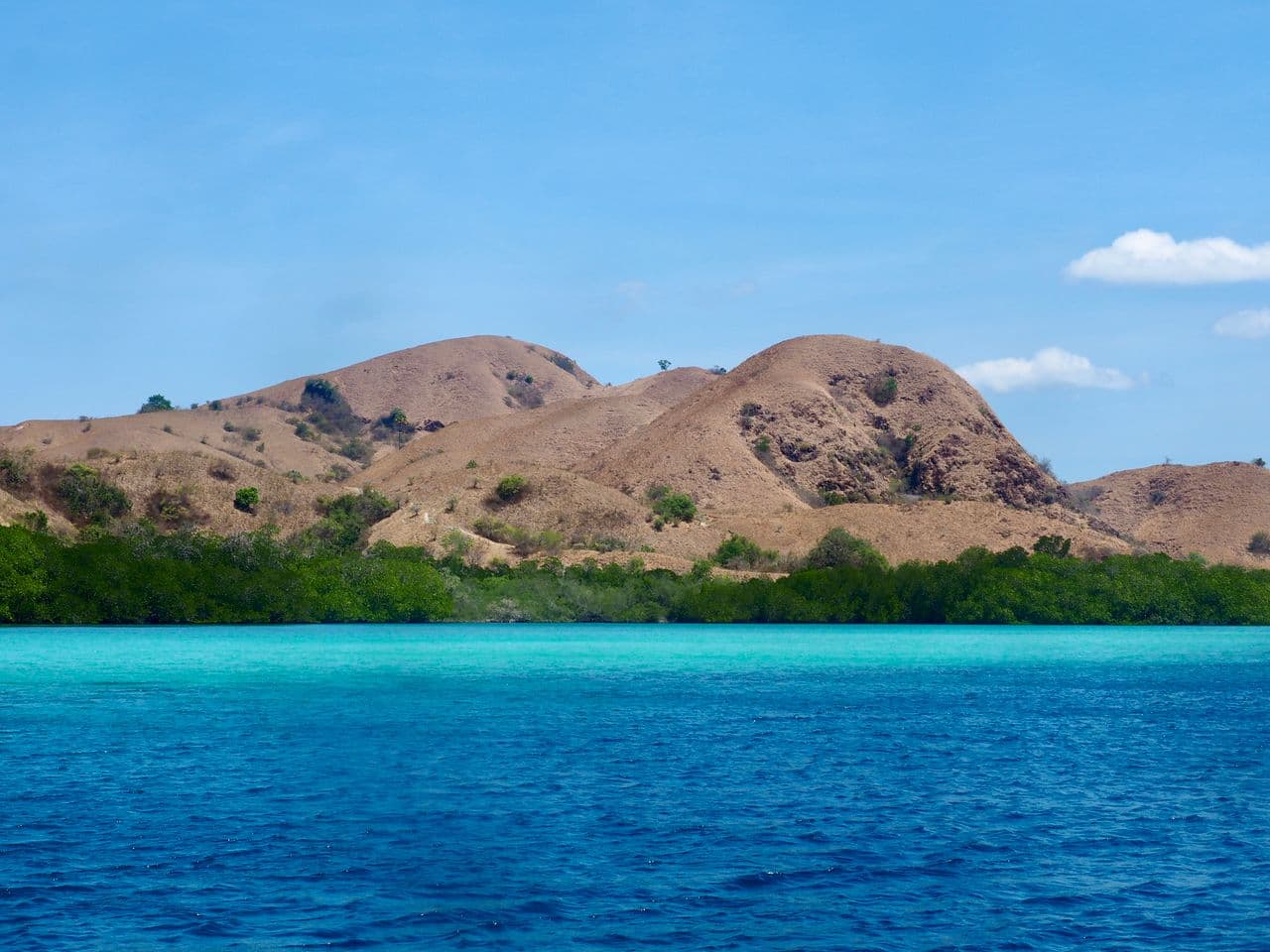
Komodo's appeal lies in a rare combination: endemic terrestrial fauna, world-class diving sites, and dry savanna landscapes that contrast with Indonesia's typical jungles. The monitor lizard, found only on a few islands in the region, attracts most visitors, but the marine zone alone—reefs, manta rays, reef sharks—justifies the journey.
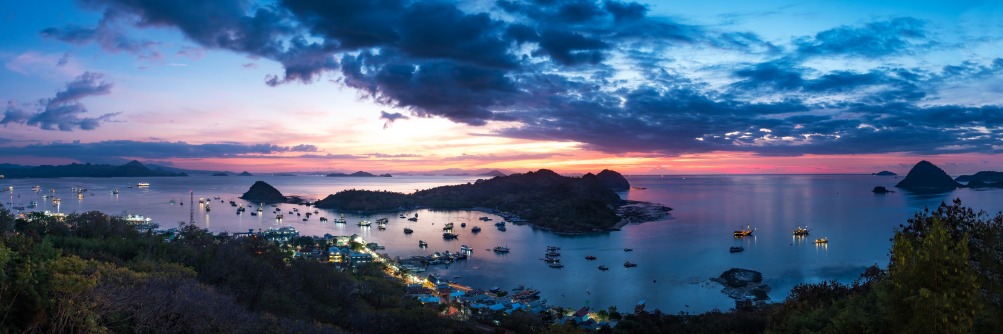
The neighbouring island of Labuan Bajo, on Flores, serves as the gateway and hosts most of the marine operators.
History and legend
Komodo entered the scientific world's knowledge in 1910, following a Dutch expedition that confirmed the existence of the giant monitor lizard. The island belongs to the Lesser Sunda Islands, a volcanic chain stretching between Bali and Timor. Local inhabitants refer to the reptile by two names: Buaya Darat, "land crocodile", and Ular Naga, "dragon serpent".
Komodo National Park was established in 1980 to protect the species and its habitat. Eleven years later, in 1991, UNESCO inscribed it on the World Heritage list.
A local legend explains the particular bond that unites villagers to the monitor lizards. Princess Putri Naga is said to have given birth to twins: a boy, Gerong, and a dragon girl, Ora. Raised in the village by his father, Gerong lived apart from his sister, who went into the forest with their mother. As he grew into a hunter, he one day encountered a dragon about to devour his catch. On the verge of killing it, he was stopped by his mother, who revealed to him that it was his twin sister. Since then, the inhabitants have protected the monitor lizards in memory of this shared kinship.
What to see on-site
Komodo monitor lizards
Observing monitor lizards is the heart of the visit. The wild population is estimated at several thousand individuals, distributed mainly on Komodo and Rinca. Hikes take place obligatorily with a park ranger, who adapts the itinerary to visitors' fitness levels and animal presence. You'll also encounter water buffalo, Timor deer, and wild horses, which form part of the monitor lizards' diet.
Dive sites
The park ranks among Indonesia's most renowned diving and snorkeling destinations:
- Manta Alley: moderate depth (10 to 20 metres), a prime site for observing manta rays.
- Batu Balong: steep drop-offs and strong currents, frequented by Napoleon fish, sharks and schools of reef fish.
- Golden Passage: drift diving near Gili Lawa Darat, with corals, reef sharks and occasional passages of dolphins or manta rays.
- Manta Point: sustained current, feeding manta rays, white-tip sharks, sailfish and mantis shrimp.
Pink Beach (Pantai Merah Muda)
On the north-east coast of the island, Pantai Merah Muda owes its characteristic hue to fragments of red coral mixed with white sand. It is one of the world's rare pink beaches. The water is clear and snorkeling from the shore gives access to a living reef within a few fin strokes.
Practical information
- Access to the park requires a mandatory ranger, both for safety and to regulate visitor numbers.
- Families with children under four years old are advised to remain at the ranger station or on board the boat: high-pitched cries resemble those of wounded prey and may attract monitor lizards.
- Light clothing, closed-toe shoes (rocky terrain), water, hat and high-protection sunscreen are essential.
- The park entrance fee, ranger fees and diving tax are generally paid on-site; budget for moderate daily costs.
When to go
The dry season, from May to October, offers the most favourable conditions: clear skies, temperatures between 27 and 32°C, calm seas and good underwater visibility. This is also the busiest period, particularly from July to September. The rainy season, from November to April, sees fewer visitors; landscapes are greener but monitor lizards are less active and diving visibility is more variable. These windows are indicative and tend to shift from year to year.
How to get there
Labuan Bajo airport, on the west coast of Flores, is the usual gateway to the park. From Bali (Denpasar), allow around 1 hour 15 minutes of direct flight; connections also exist from Jakarta and Surabaya. Once in Labuan Bajo, Komodo Island is only accessible by boat: day excursions, two to four-day sailing cruises on schooners or diving liveaboards can be booked on-site or in advance.
Nearby attractions
- Rinca: the park's second major island, denser monitor lizard population, less-frequented trails than Komodo.
- Padar: famous for its panoramic viewpoint over three bays with beaches of different colours.
- Labuan Bajo: the region's logistics hub, bustling port and gateway to western Flores.
- Atauro Island: to extend the marine experience further east, towards Timor.
Frequently asked questions
Frequently asked questions
A day trip from Labuan Bajo allows for a monitor lizard observation hike and one to two snorkeling stops. To explore Komodo, Rinca, Padar and Pink Beach under good conditions, allow two to three days on a cruise.
The monitor lizard bite is venomous and the animal can move quickly over short distances. A ranger's presence is mandatory and the route is marked to minimise risk. Following their guidance is sufficient in the vast majority of cases.
Yes. Observation hikes, snorkeling at Pink Beach and trekking at Padar can be enjoyed without certification. Scuba diving remains nonetheless the best way to access major sites like Batu Balong or Manta Alley.
Manta rays are present year-round at Manta Point and Manta Alley, with generally higher concentrations between December and February, when plankton is most abundant.
To incorporate Komodo into a complete itinerary, consult our suggestions for an Indonesia trip.
Photos
Interested in this visit?
We can include it in your personalised itinerary.