Puri Saraswati
Puri Saraswati
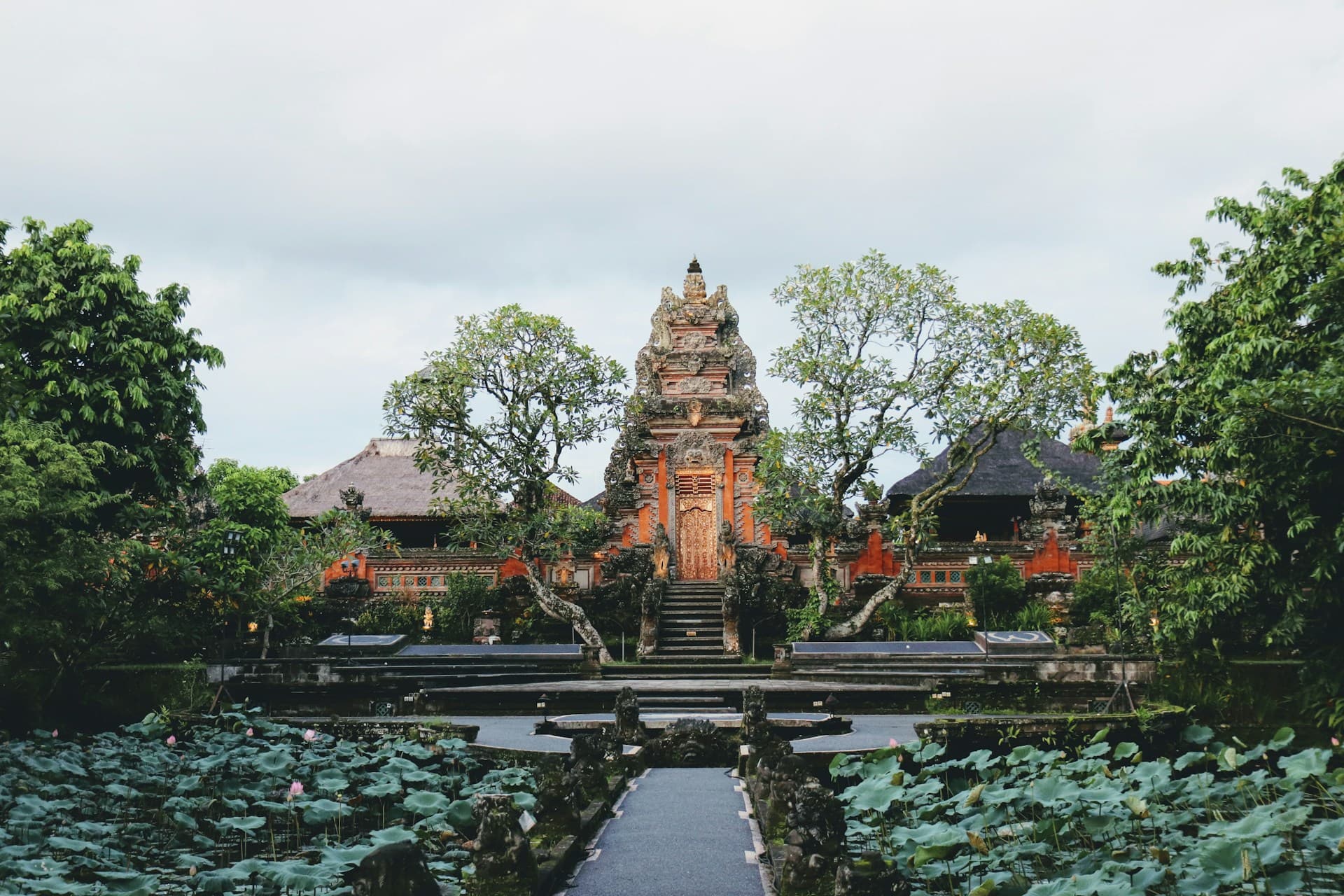
In the heart of Ubud, Puri Saraswati is a Balinese temple surrounded by an expansive lotus pond, designed by architect I Gusti Nyoman Lempad. A place of devotion and culture, it also hosts traditional dance performances in the evening.
At the heart of Ubud, Puri Saraswati is a Balinese temple dedicated to Saraswati, the Hindu goddess of knowledge and the arts. Built in the twentieth century by architect I Gusti Nyoman Lempad, it is renowned for its vast lotus pond that stretches before the sanctuary. The site also features a terrace café, making it as much a place of passage as one of devotion.
Practical Information at a Glance
- Entrance: access to the garden and pond is generally free; entry into the inner temple may require a sarong and waist sash
- Attire: sarong and waist sash are mandatory for entering the sacred grounds (often provided on-site)
- Recommended duration: 30 to 45 minutes for the garden and pond; longer if attending a dance performance
- Performances: kecak or legong dance shows are regularly organized in the evening within the garden
What You'll See
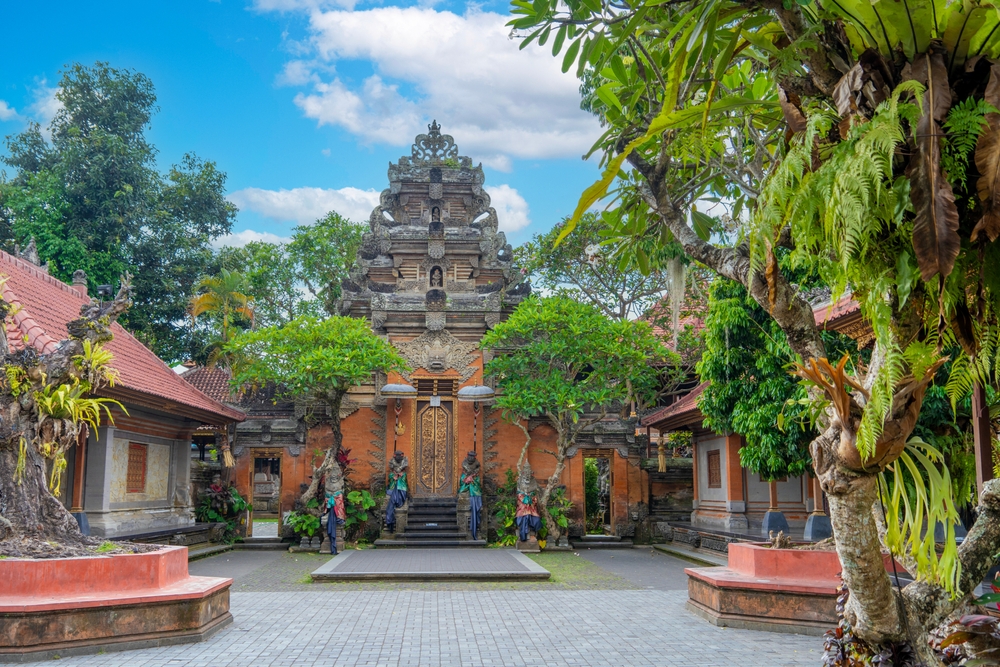
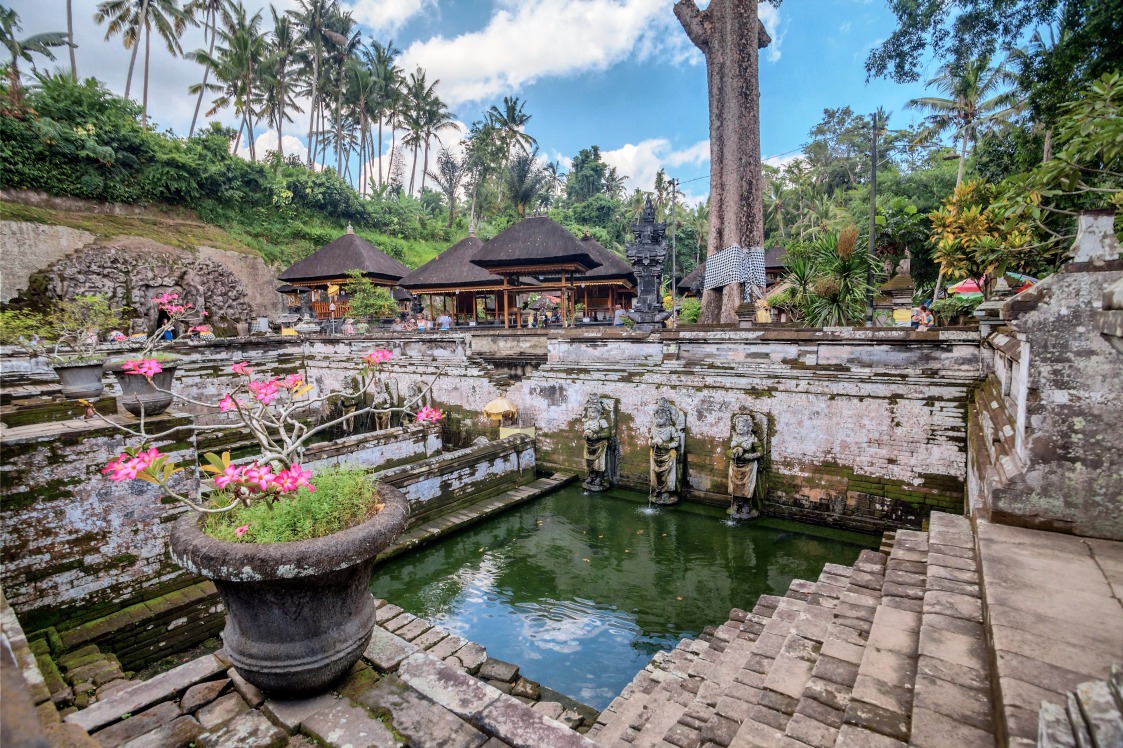
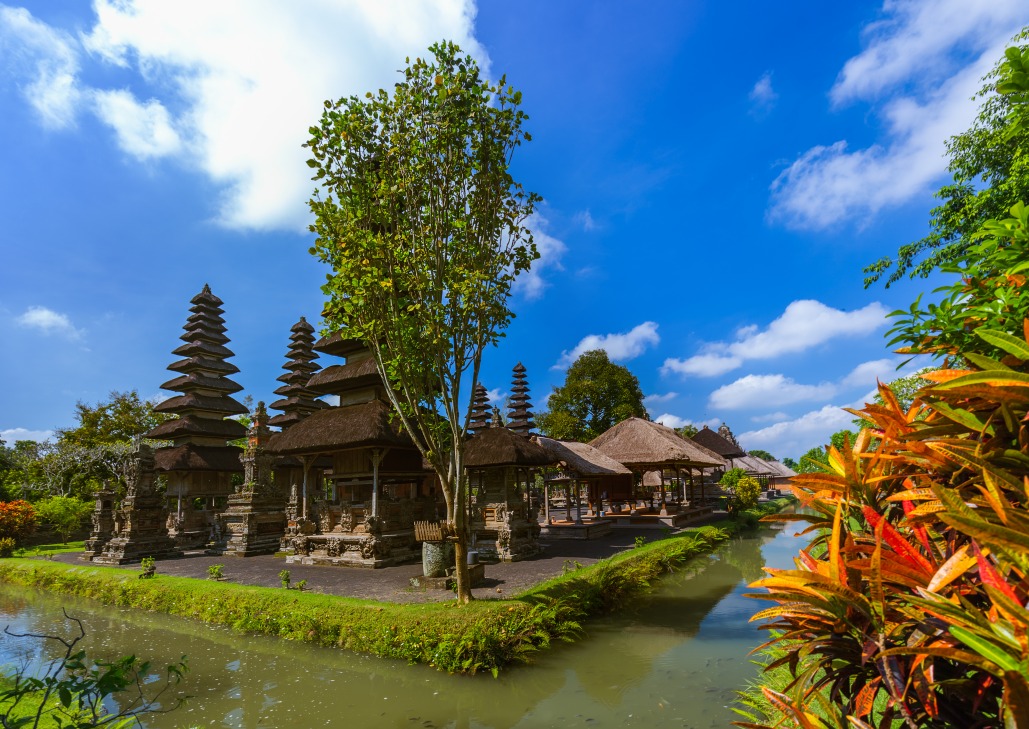
The lotus pond is the central feature: hundreds of pink and white flowers cover the water, framed by carved stone statues. Behind the pond rises the meru, a tower with tiered roofs characteristic of Balinese architecture. Carved doorways and friezes in black volcanic stone illustrate scenes from Hindu mythology.
History and Context
The temple was designed by I Gusti Nyoman Lempad, an artist and architect of Ubud whose work profoundly marked twentieth-century Balinese heritage. Saraswati, the divinity to whom the temple is dedicated, is revered by artists, musicians, and students. As Ubud is the cultural center of Bali, this choice of dedication reflects the very identity of the town.
Highlights of Your Visit
The Lotus Pond at Dawn
Early in the morning, before the arrival of crowds, the lotus flowers are fully open and the raking light accentuates reflections on the water. This is the quietest moment to observe the site.
Balinese Dance Performances
In the evening, the garden transforms into an open-air stage. Legong and kecak dances are regularly performed here, with the illuminated pond as a backdrop. Check the schedule with local agencies or at the site entrance.
Lempad's Sculptures
The carved details of doorways and fountains deserve close attention. Lempad's style blends artisanal precision with dense mythological narrative.
Etiquette and Visiting Rules
- Wear a sarong and waist sash to enter the temple grounds; they are often available at the entrance.
- Avoid turning your back to altars during prayers or ceremonies.
- Be discreet if a ceremony is in progress: observe without disturbing the faithful.
- Women during menstruation are traditionally invited not to enter the inner sanctuary.
Photography Tips
Morning light (before 9 a.m.) is ideal: it illuminates the pond face-on and avoids harsh shadows. Frame from the café terrace to include both the lotus flowers and the meru in the background. Avoid photographing ceremonies at close range without discretion. Late afternoon reflections on the water also offer beautiful compositions.
Location and Access
Puri Saraswati is located in the center of Ubud, a short walk from the craft market and the main street Jalan Raya Ubud. It is easily accessible on foot from most central accommodations. Ojek (motorcycle taxi) or car with driver are the most practical options from outlying areas. The site is on one level; wheelchair access to the garden is possible, but irregular paving may complicate mobility.
Nearby
- Ubud Royal Palace (Puri Saren Agung) — Balinese royal residence just steps away, also a venue for dance performances.
- Ubud Market — lively craft market across from the palace, ideal for textiles, sculptures, and spices.
- Puri Lukisan Museum — Bali's first art museum, a few minutes' walk away, featuring collections of traditional paintings.
- Ubud Monkey Forest — natural sanctuary and temple to the south of the center, inhabited by long-tailed macaques.
Frequently asked questions
Access to the garden and lotus pond is generally free. A contribution may be requested for evening dance performances.
A sarong and waist sash are required to enter the sacred grounds. They are often provided or sold at the entrance if you don't have your own.
Early in the morning, before 9 a.m., the site is notably quieter. The lotus flowers are also fully open at this time.
Yes, Balinese dances (legong, kecak) are regularly organized in the evening within the garden. Check on-site or with a local agency for dates.
Easily: the royal palace, market, and Puri Lukisan museum are all within a ten-minute walk from Puri Saraswati.
Photography is permitted in the garden and around the pond. Be discreet during ceremonies and avoid photographing worshippers in prayer at close range.
Nearby

Interested in this visit?
We can include it in your personalised itinerary.