Goa Garba Temple
Goa Garba Temple
A 12th-century troglodytic sanctuary carved into the Pakerisan ravine, near Ubud: sculpted niches, sacred pools and purification rituals.
Goa Garba temple is a 12th-century archaeological site located in the village of Pejeng Kelod, Gianyar regency, about fifteen minutes east of Ubud. Carved into the ravine of the Pakerisan River, this troglodytic sanctuary once served as a royal school and remains today a place of meditation and ritual purification, away from Bali's major tourist circuits.
Why visit Goa Garba
Goa Garba — literally "cave of the womb" — stands apart from other Balinese temples through its troglodytic character and antiquity. The site contains no candis (Javanese-style sanctuaries) but rather niches carved directly into the cliff face, sacred pools and inscriptions in rare Kadiri quadrangular script, uncommon in Bali. Visitor numbers remain limited, making it possible to observe in tranquility a site still active in ritual practice.
History of the site
Goa Garba's origins trace back to the late 11th or early 12th century, during the reign of King Jayapangus. Inscriptions in the upper temple indicate a founding in 1116, while other sources advance the date of 1196; historians have not yet settled the question. The site then functioned as a Pasraman, a school intended for children of the royal family, where spirituality, meditation and the art of leadership were taught.
Goa Garba lies below the Pengukur-Ukuran temple, whose name means "measure." This designation reinforces the idea that the place served to assess the capacities of future leaders, through spiritual and intellectual trials alike.
Forgotten for several centuries, the site was rediscovered in the 1920s by Dutch researchers. The sacred pools, meanwhile, were not uncovered until the 1950s, completing understanding of the complex.
What you see on site
The entrance and stairs
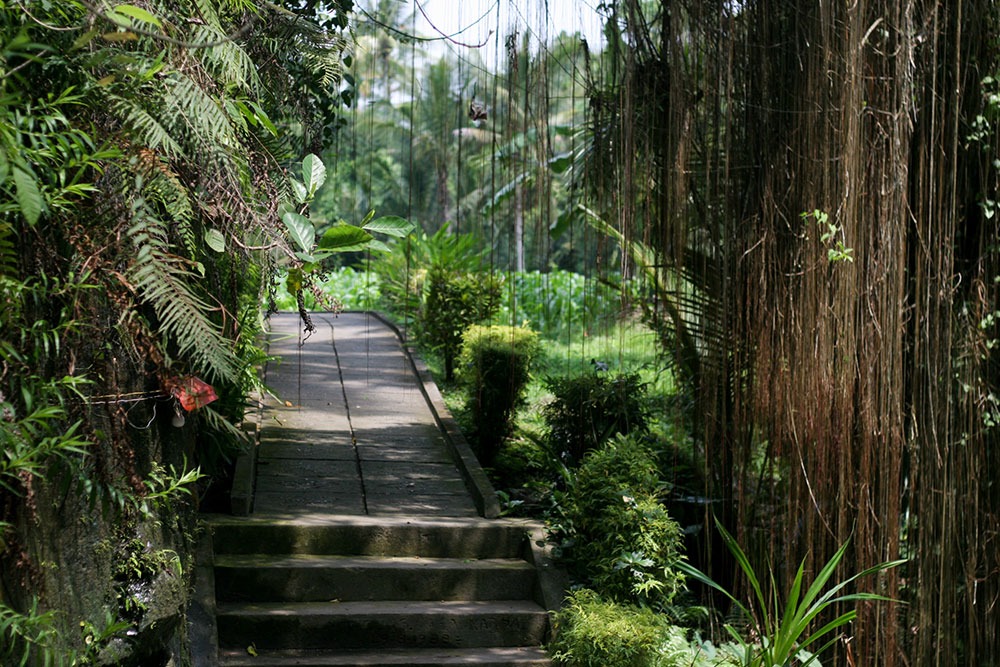
Entry is through an imposing gate followed by a steep staircase carved into blocks of rock, some steps exceeding 50 cm in height. The descent toward the river already demonstrates the skill of the original craftsmen.
The niches and sanctuary cave
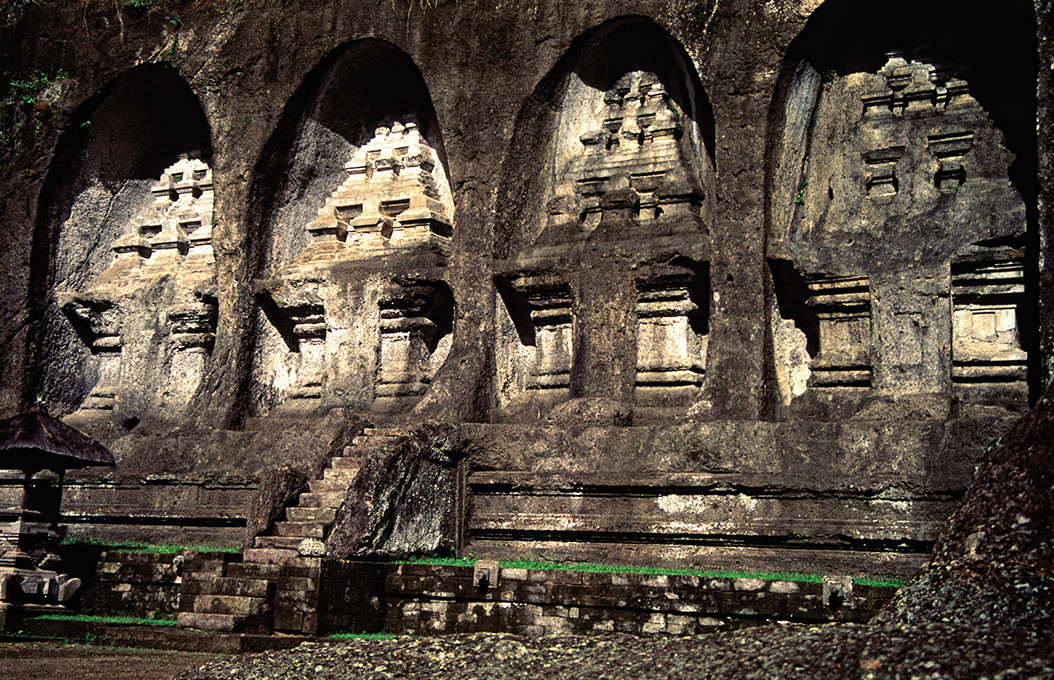
Two niches carved into the stone slope recall those at the nearby site of Gunung Kawi and likely served meditation purposes. An inscription in Old Balinese surmounts one of the sanctuary caves and supports the hypothesis of Buddhist or Shaivite meditative use, substantiated by a primitive relief depicting a head and a stūpa.
The heart of the site consists of three large niches sculpted into the cliff face. The most elaborate, on the left, features an alcove spacious enough for an adult to lie down in: this was likely the shelter of a hermit or spiritual guardian. On the right, a mushroom-shaped sculpture is topped by two small niches whose function remains uncertain — altar or repository of ritual objects. The third niche, cruder and irregular in form, keeps its secrets.
The sacred pools
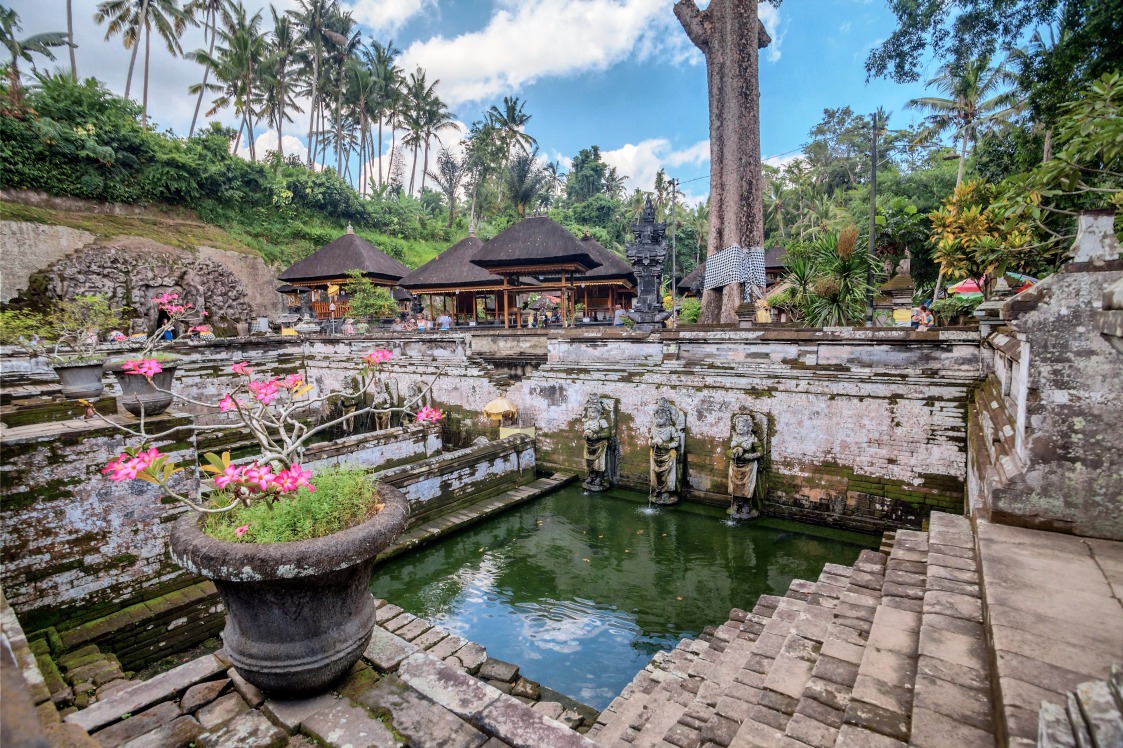
At the top of the bank, two pools collect waters used for purification rituals called melukat. A discrete opening in the ground leads to a cavern, likely intended for meditation in isolation.
The Kadiri inscriptions
Carvings in quadrangular Kadiri script are among the site's most precious elements. Difficult to decipher, they enabled archaeologists to date the construction. On the roof of the second niche, a sign resembling a monogram still intrigues researchers, as do holes scattered across the cliff face that might indicate the past existence of wooden structures now vanished.
The legend of Kebo Iwa
The site is closely linked to Kebo Iwa, also known as Kebo Teruna, a 14th-century military commander and future Mahapatih (Prime Minister) of the Kingdom of Bedahulu. According to tradition, he underwent several trials at Goa Garba before attaining his position, demonstrating strength, perseverance and wisdom.
He is credited with laying the immense stone steps that connect the river to the temple. One stone bears a footprint that legend associates with him: he supposedly struck it with such force that he left his mark upon it.
A living site of ritual practice
Goa Garba remains frequented for meditation and yoga, typically practiced facing east, toward the flowing water, a symbol of Vishnu. Visitors may observe the nuwur tirta, a purification ritual preceding the piodalan kahyangan tiga ceremony, as well as pengelukatan, purification in the river believed to eliminate negative energies.
Practical information
- Location: village of Pejeng Kelod, Gianyar regency, approximately 15 minutes east of Ubud.
- Access: free, with no official entry fee; a donation box is typically placed on site to contribute to maintenance.
- Dress code: sarong and sash, as at most Balinese sacred sites.
- Facilities: basic parking and toilets nearby.
- Visit duration: allow approximately 1 to 1.5 hours on site.
When to go
Morning and early afternoon offer the softest light and comfortable temperatures, ideal for photography as well as meditation. Avoid late afternoon: the site is unlit and the descent into the ravine becomes tricky at dusk. The dry season (April to October) remains the most comfortable for navigating the stone stairs, sometimes slippery after rain.
How to get there
From Ubud, a scooter or private car with driver are the most practical options. Two paths lead to Goa Garba: one passes through the Pengukur-Ukuran temple located above, the other leads directly to the sanctuary entrance. The second avoids part of the elevation gain but offers less context on the overall complex.
Nearby attractions
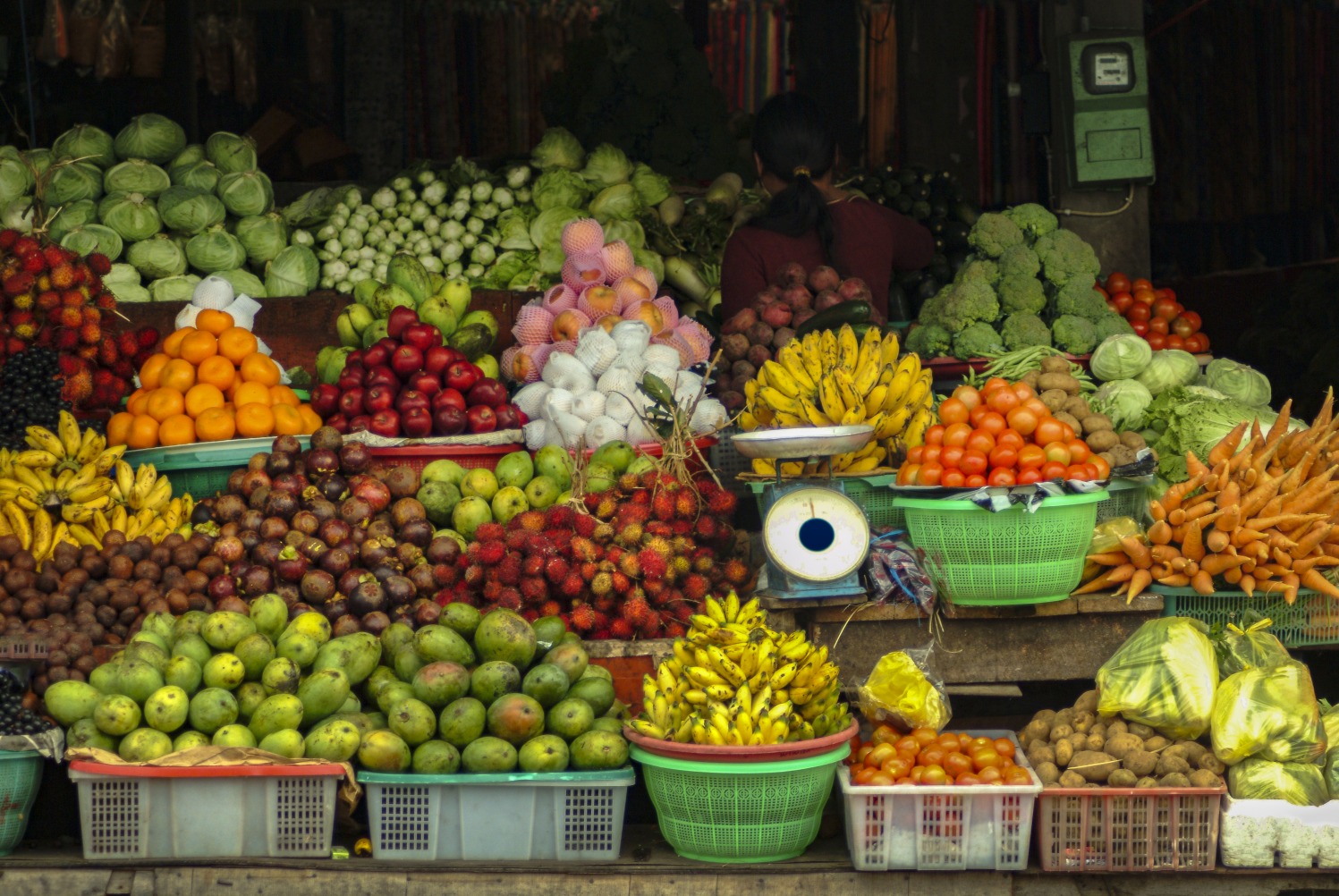
Goa Garba is set within a region dense with archaeological and cultural sites. The Pengukur-Ukuran temple, just above, logically complements the visit. Further north, the Gunung Kawi site offers monumental rock-carved sanctuaries in a similar spirit. Ubud, nearby, concentrates museums, markets and terraced rice paddies. To extend your natural exploration of Bali, the Bali Botanic Garden at Bedugul deserves a detour.
Frequently asked questions
Frequently asked questions
Learn more
Goa Garba can be integrated into a broader itinerary around Balinese heritage and major sites throughout the archipelago. To plan a complete stay, consult our ideas for travel in Indonésie.
Nearby
Interested in this visit?
We can include it in your personalised itinerary.