Luhur Batukaru Temple
Luhur Batukaru Temple
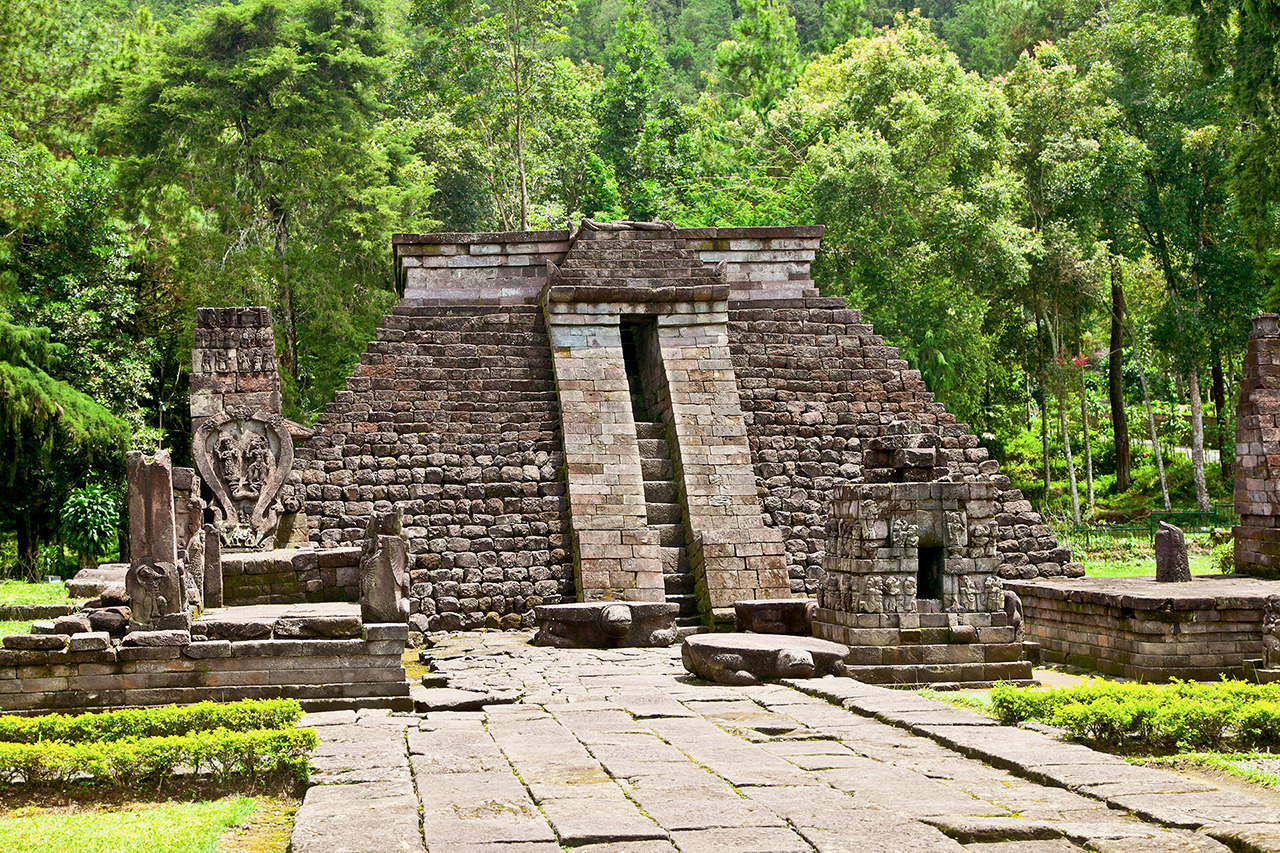
On the slopes of Mount Batukaru in Tabanan, this 11th-century directional temple stands at 1,300 m altitude in the heart of a tropical forest.
The Luhur Batukaru temple rises on the slopes of Mount Batukaru, in Tabanan, in western Bali. Its name literally means "the rock shaped like a coconut shell." Perched at 1,300 metres altitude in the heart of a tropical forest, it ranks among the six directional temples (sad kahyangan) that structure the sacred geography of Balinese Hinduism.
Why visit Luhur Batukaru temple
The site stands apart from most Balinese temples through its isolation and forest atmosphere. Far from the crowded tourist circuits of southern Bali, it retains an intact religious function: inhabitants of neighbouring villages come to leave offerings during ceremonies, and its role as spiritual guardian of western Bali remains vibrant.
- A major directional temple, still active in religious practice
- A rare high-altitude jungle setting in Bali, populated by frangipani, cempaka, camboja, ixora and hibiscus
- A starting point for climbing Mount Batukaru, Bali's second-highest peak at 2,276 m
- Moderate visitor numbers compared to temples on the south coast
Temple history
The original structure is believed to have been built around the 11th century by Mpu Kuturan, a renowned Balinese architect and spiritual figure who helped shape Balinese-Hindu worship. The sanctuary was dedicated to Mahadewa, a deity associated with Mount Batukaru.
In 1604, the king of Buleleng, a neighbouring kingdom to the north, invaded the region, plundered the sanctuary and demolished it. The temple remained in ruins for more than three centuries, before undergoing restoration in 1959, followed by a second campaign in 1991. The main pagoda dedicated to Mahadewa, rebuilt in 1959, dates from this first phase of restoration.
What you'll see on site
The three enclosures
Like other major Balinese temples, Luhur Batukaru is organised into three concentric zones:
- Nista Mandala: outer enclosure, a space of mundane transition
- Madya Mandala: middle enclosure, dedicated to ritual preparation
- Utama Mandala: central enclosure, the most sacred, where the pagodas are concentrated
A long three-tiered stairway, crossed by a traditional Balinese gateway, connects these spaces.
The Mahadewa pagoda
At the centre of the sacred enclosure stands the main pagoda, dedicated to Mahadewa. Built in 1959, it consists of seven storeys with superimposed thatched pyramidal roofs, supported by wooden pillars. It is the tallest structure in the complex.
The pool and offering island
A large pool contains at its centre a small island linked to the shore by a submerged stone pathway. Only high priests are permitted to cross it. The island supports a small temple intended for offerings dedicated to Mahameru, the cosmic mountain of Hindu mythology.
The forest setting
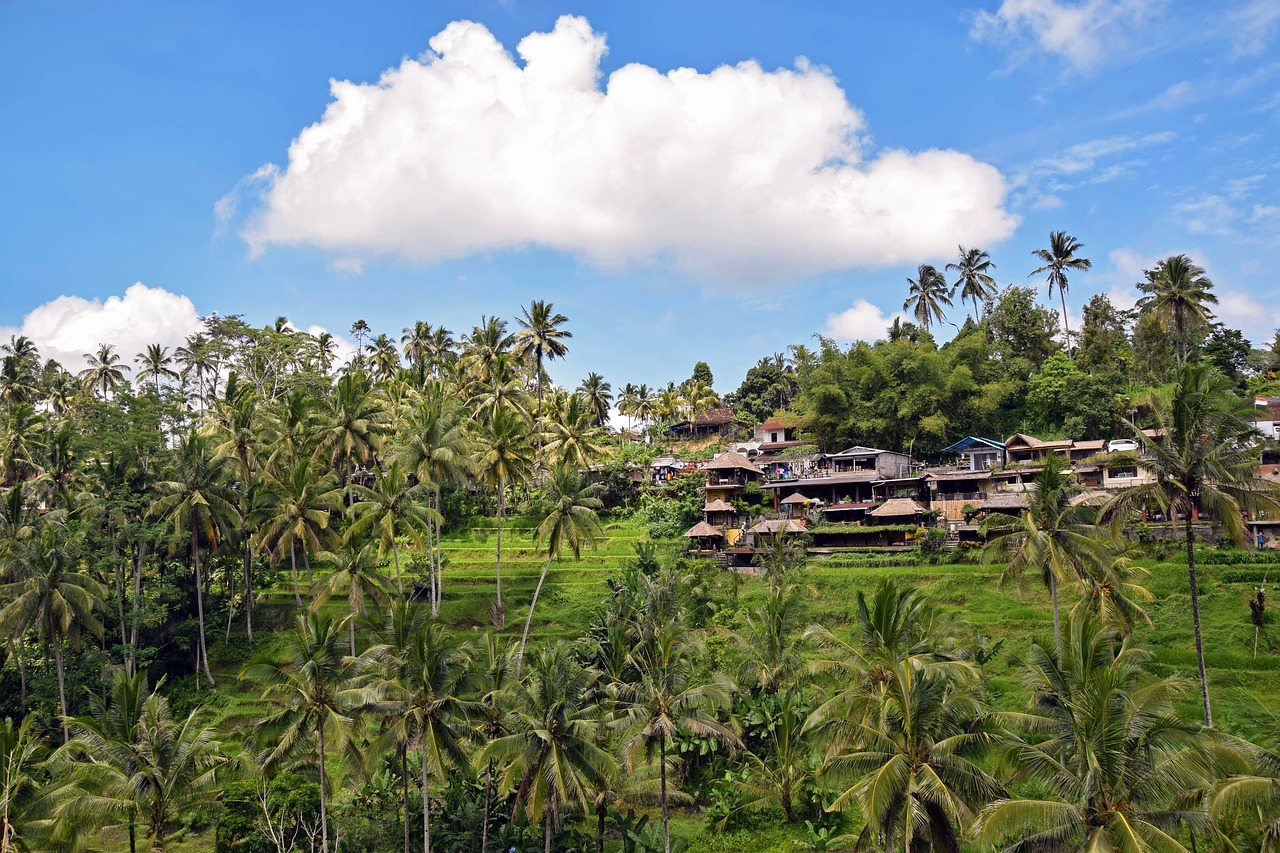
The sanctuary is enveloped in a humid tropical forest where frangipani, cempaka, camboja, ixora and hibiscus predominate. Altitude clouds that frequently descend over the site give the place a particular visual quality, very different from lowland temples.
Practical information
- Dress code: wearing a sarong is mandatory. Rental is available at the entrance for a modest fee if you don't have one.
- Entry fee: a modest entry ticket is requested on site.
- Hours: the temple is generally accessible during the day, from morning until late afternoon.
- Duration of visit: allow 1 to 1.5 hours on site, longer if you combine it with a hike.
- Respect for worship: this is an active temple, ceremonies may be underway. Remain discreet and follow staff directions.
When to visit
The dry season, from May to September, offers the best conditions: trails are passable, visibility is clear over Mount Batukaru, altitude mists are less frequent in the morning. During the monsoon season (November-March), rain is frequent in the late afternoon and vegetation makes the surroundings slippery; come early in the morning to minimise the risk of showers.
The morning is in any case the best time: light filters through the canopy, visitor numbers are low and clouds have not yet enveloped the site.
How to get there
The temple is located in Tabanan regency, to the northwest of the Denpasar–Ubud axis. There is no direct public transport.
- From Ubud: approximately 1.5 to 2 hours' drive via Tabanan and Penebel
- From Denpasar or Kuta: allow 2 to 2.5 hours depending on traffic
- Easiest solution: car with driver for the day, a common arrangement in Bali. Local drivers know the way.
- Scooter: possible for experienced riders, but the road climbs steeply and can be slippery after rain.
Nearby
Western Bali lends itself to combinations for a day or two:
- The terraced rice fields of Jatiluwih, a UNESCO World Heritage site, a short distance away
- The Bali Botanic Garden in Bedugul, to the east of the massif
- To extend your discovery of the archipelago, Komodo island and Rinca island in the Lesser Sunda Islands
Frequently asked questions
Frequently asked questions
Include Luhur Batukaru in your trip
The temple naturally integrates into a Bali itinerary that moves away from the touristy south to reach the highlands and west coast. To build a tailor-made route incorporating Tabanan, Jatiluwih and the Batukaru massif, explore our trips to Indonesia.
Interested in this visit?
We can include it in your personalised itinerary.