Maubara Fort
Maubara Fort
A Dutch colonial fortress built in 1756 on the northern coast of Timor island, Maubara Fort tells two centuries of rivalry between the VOC and the Portuguese.
Maubara Fort is an 18th-century Dutch colonial fortress situated on the seafront along the northern coast of Timor island. Important note: despite the administrative classification of this page, Maubara is located in Timor-Leste (Liquiçá municipality), not Indonesia — a detail worth keeping in mind when planning your regional itinerary.
Why visit Maubara Fort
The site encapsulates nearly two centuries of colonial rivalry between the Dutch and Portuguese on Timor. Its rectangular shape, iron cannons trained seaward, and still-standing walls make it one of the rare tangible testimonies to the VOC (Dutch East India Company) presence on what was, for nearly two centuries, Portuguese Timor. The visit will appeal equally to colonial history enthusiasts and travelers seeking a peaceful coastal stop between Dili and the Indonesian border.
- An atypical Dutch enclave at the heart of Portuguese Timor
- Original cannons engraved with Dutch colonial markings
- A coastal setting perfect for a roadside pause
- Local management overseen by the Maubara Mós Bele Association
Fort history: two centuries of colonial rivalry
Maubara allied with the Dutch in 1667, establishing a Dutch enclave within Portuguese Timor. The fort itself was built in 1756 by the Dutch as a small rectangular stone fortress.
Portuguese attacks and their allies
As early as 1758, Maubara was attacked by two ships from Sikka, Portuguese allies. The VOC sent reinforcements from Kupang to defend the town, then led by José Xavier Doutel. The following year, in 1759, the fort was enlarged under the command of Jacob Pietersz, with the arrival of European and Balinese soldiers. The walls reached six feet in thickness.
In 1760, a new Portuguese offensive was repelled thanks to a VOC ship's intervention alongside the Maedijkers, an ethnic community from the Dutch Indies. In 1790, the Topasses, under Pedro da Hornay's direction, launched another attack in Portugal's name — also repelled. Between 1796 and 1799, Maubara fought alongside the Grand Sonba'i against the Portuguese.
Passage to Portuguese control
The rivalries were ultimately settled by the 1859 Treaty of Lisbon, within the framework of a broader territorial exchange. The official handover of the town to the Portuguese occurred in April 1861. The fort was already in poor condition: in 1869, the Portuguese captain of the corvette Sa de Bandeira described it as built of loose stones, equipped with a single rusted cannon. Maubara rebelled several times against Portuguese authority until 1893, when resistance was extinguished.
What you'll see on-site
The fort is organized around an interior courtyard. The rusted entrance gate opens onto the rectangular enclosure. Several elements merit attention:
- Iron cannons: ancient pieces engraved with Dutch colonial markings, still trained toward the ocean, bear witness to the fort's defensive function.
- The interior building: dating from the second half of the 20th century, it was once the local administration headquarters and now houses a restaurant — convenient for combining historical exploration with a lunch break.
- Walls and defensive angles: the rectangular structure remains legible, with thick wall sections inherited from the 1759 enlargement.
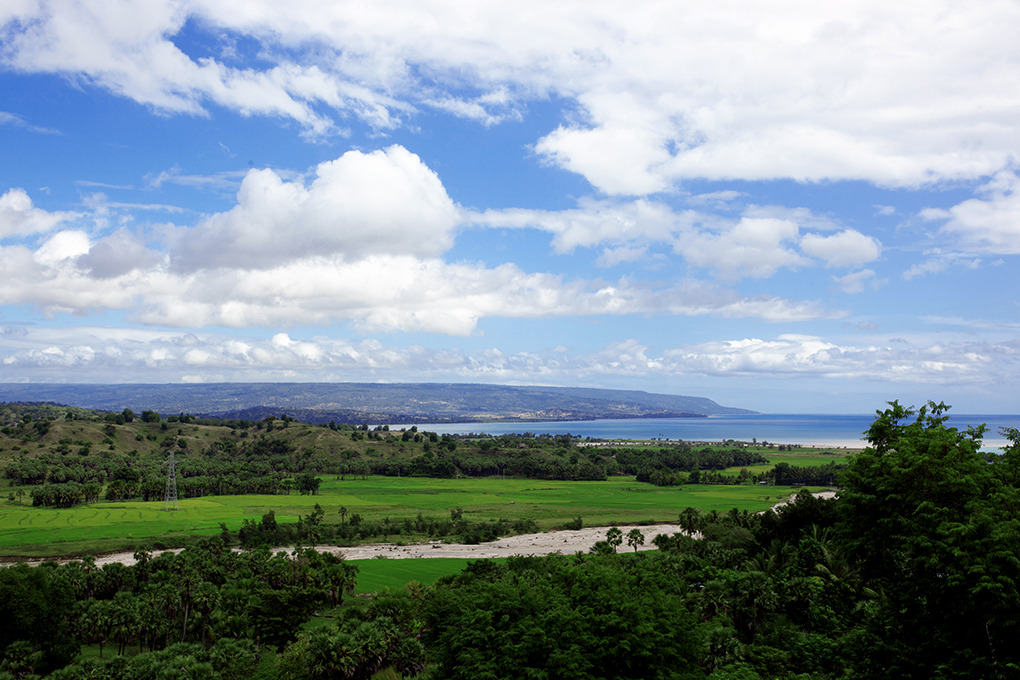
- Coastal views: the fort opens directly onto Maubara Bay and the Savu Sea.
Practical information
Location
The fort is located in Maubara, suco of Vaviquinia, in the Maubara administrative post (Liquiçá municipality, Timor-Leste). It sits at the town's entrance, along the main coastal road connecting Dili to Liquiçá and beyond.
Access
Access is by car or microlet (local minibus) from Dili, approximately one and a half hours' drive away. The main road is paved and well-maintained. The fort is visible from the road and easily accessible on foot once you're there.
Visiting
Site entry is managed by the Maubara Mós Bele Association, a local organization. Plan about an hour to tour the enclosure, observe the cannons, and enjoy the view. The restaurant in the interior building allows you to extend your stay. Modest entrance fee, to be confirmed on-site.
When to visit the fort
Maubara is worth visiting year-round, but the dry season (roughly May to October) remains the most comfortable: passable roads, clear skies over the bay, and manageable temperatures for outdoor exploration. During the rainy season (December to March), tropical showers can complicate travel and limit coastal visibility. Mornings generally offer gentler light for walking the sun-exposed enclosure.
Surroundings
The Liquiçá region offers a few natural extensions to your fort visit:
- Maubara Beach: just below the fort, popular for a seaside pause.
- Weaving villages: Maubara is known for its tais (traditional Timorese textiles) craftsmanship, sold directly by local cooperatives.
- The coastal road to Liquiçá and Dili: a scenic route dotted with small coves and views over the Savu Sea.
If you explore the region more widely, Jaco Island, at the eastern tip of Timor-Leste, is another highlight of the country.
Frequently asked questions
Frequently asked questions
The fort is located in Timor-Leste, in Liquiçá municipality, not Indonesia. The confusion may arise from the fact that the two countries share Timor island: the western half belongs to Indonesia (West Timor), the eastern half to Timor-Leste, independent since 2002.
Plan about an hour to tour the enclosure and observe the cannons. With a break at the restaurant in the interior building, you can easily spend two hours here.
Maubara is approximately one and a half hours' drive west of Dili along the coastal road. The journey is by private car, taxi, or microlet. The main road is paved and well-maintained.
Plan your trip
Maubara Fort fits naturally into a regional itinerary on Timor island. To prepare your discovery of the region and insular Southeast Asia, explore our Indonésie circuits covering nearby destinations such as Bali, Komodo, and Flores.
Interested in this visit?
We can include it in your personalised itinerary.