Lake Toba
Lake Toba
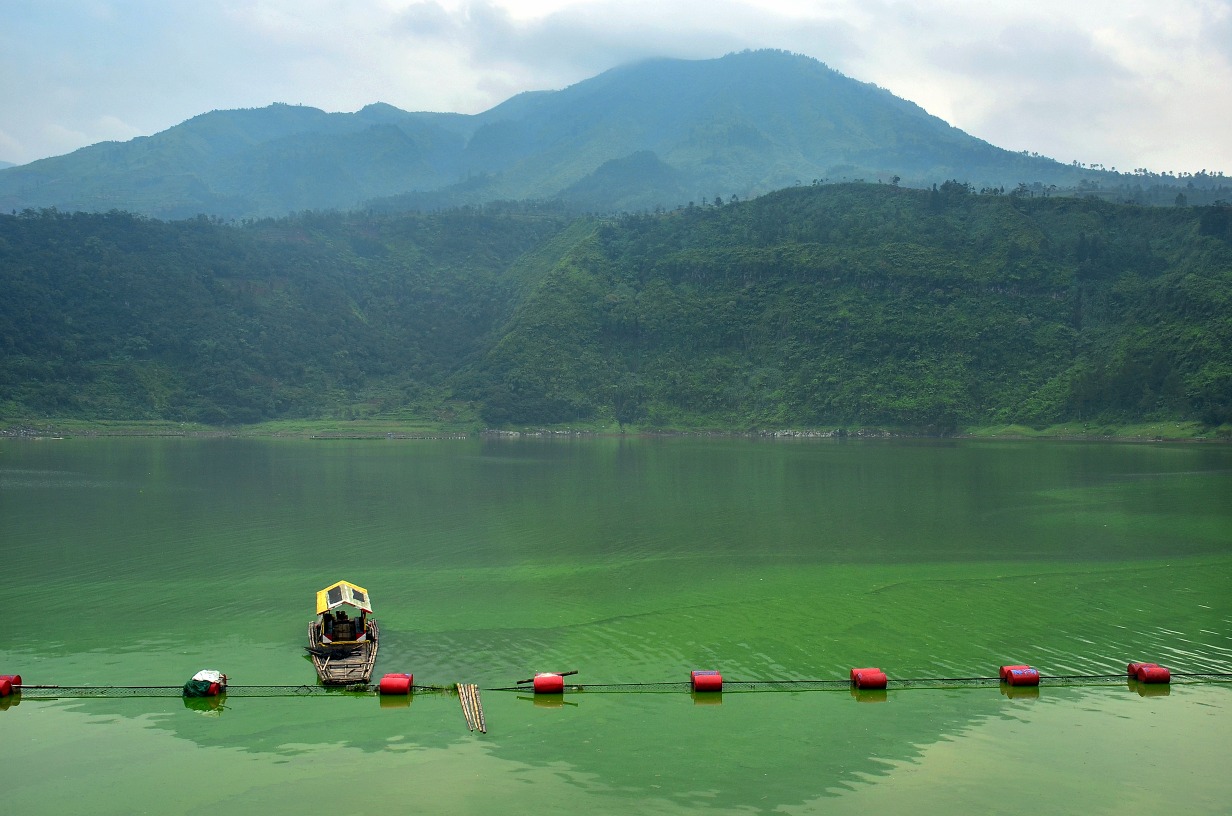
The world's largest volcanic lake, Lake Toba in northern Sumatra, is home to Samosir island and the living heritage of the Batak people.
Lake Toba, located in northern Sumatra at 905 meters altitude, is the world's largest volcanic lake. Stretching 100 km long and 35 km wide, it occupies a caldera formed approximately 75,000 years ago. At its center lies the Samosir peninsula, vast as an island, inhabited by the Batak people who primarily earn their livelihood from fishing. The gateway city of Parapat, on the eastern shore, has traditionally served as the entry point to this region where volcanic geography and Batak culture converge.
Why visit Lake Toba
Lake Toba combines three rarely gathered assets: spectacular geography born from a super-eruption, living Batak heritage (architecture, ritual dances, gastronomy), and a pleasant temperate climate year-round. Unlike the saturated beach destinations scattered throughout the archipelago, the lake remains removed from major tourist flows. Since 2016, the Indonesian government has listed it among its priority development destinations, which has already led to the opening of an airport nearby and the gradual improvement of infrastructure.
History: the Toba catastrophe
The lake was born from the last eruption of the Toba volcano, which occurred approximately 75,000 years ago. Geologists consider this event one of the most powerful eruptions of the Quaternary; some estimates place it at a magnitude several thousand times greater than the 1980 Mount St. Helens eruption, although the exact scale remains debated.
According to the Toba catastrophe theory, the eruption would have projected enough ash and sulfur into the atmosphere to trigger a global temperature drop of 3 to 3.5 °C, and 10 to 15 °C in temperate regions. The volcanic winter that followed would have lasted 6 to 10 years, severely testing the hominid populations of the time. This hypothesis, still debated, was long associated with a genetic bottleneck in human species.
Today, the Batak people inhabit the shores and island of Samosir. Fishing, rice cultivation, and more recently tourism form the primary economic activities.
What to see and do at Lake Toba
Samosir Island
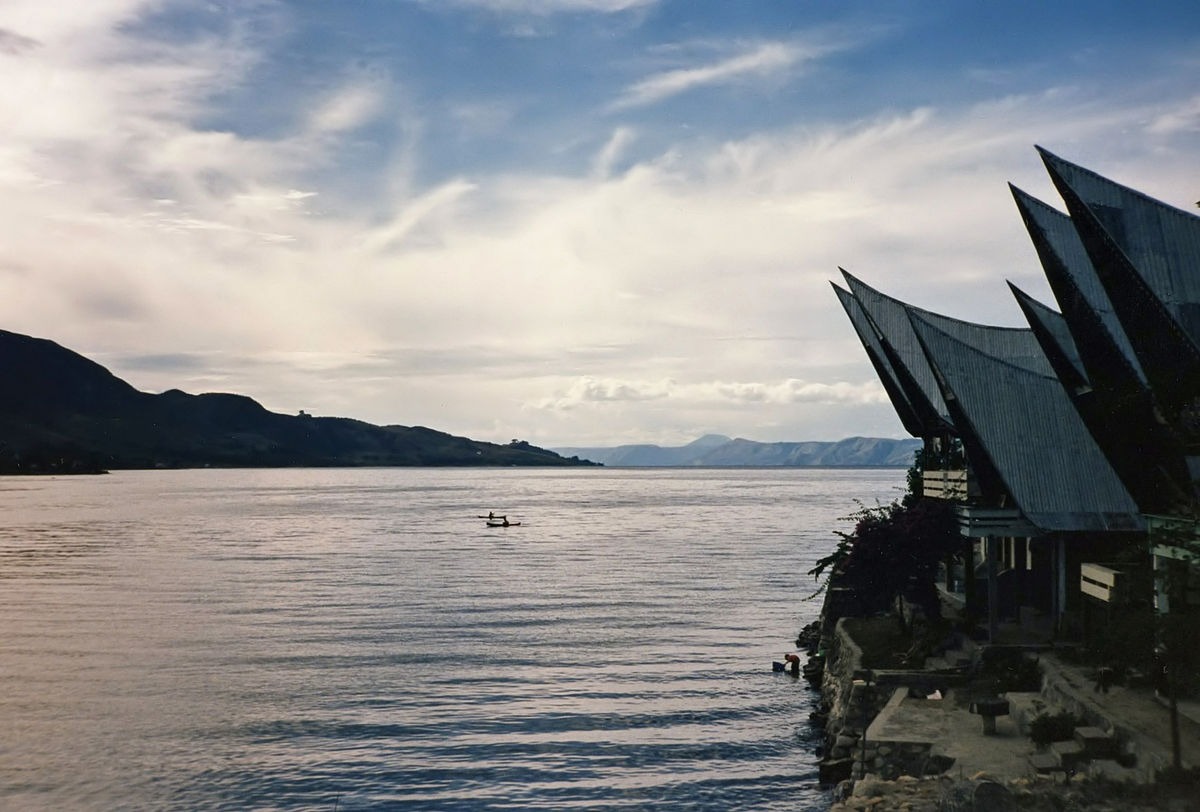
At the center of the lake, Samosir is the cultural heart of the Batak. Tuktuk Siadong, the peninsula's main town, concentrates most accommodations and restaurants. Traditional Batak house architecture can be observed here, featuring roofs shaped like ship prows. The village of Simanindo, in the north of the island, houses a museum installed in the former residence of a Batak king; cultural performances are organized there regularly.
Beaches and swimming
The lake waters are calm and conducive to swimming. The beaches of Parbaba, Pandan, and Carolina are the most frequented, equipped and accessible from Tuktuk by motorbike or local transport.
Cruising and kayaking
Several operators offer lake crossings and tours, in small or large boats, over varying durations (from a few hours to a full day). Kayaking is particularly pleasant in the morning, when winds are light.
Batak cuisine
Batak gastronomy stands out from classical Indonesian cuisine. Three dishes deserve tasting: Napinadar (chicken served with a blood-based sauce), Naniura (raw marinated fish, sometimes compared to ceviche), and Arsik (grilled fish with andaliman spices). In Tuktuk Siadong, LEO's Restaurant is a reference address for these specialties. Coffee cultivated on Samosir's volcanic soils, appreciated in several lakeside cafés, rounds out the experience.
The Sigale-gale
The Sigale-gale is a life-sized wooden puppet, dressed in traditional clothes and animated by a puppeteer. Originally used during Batak funeral rites to communicate with the deceased, this performance is now presented to visitors on Samosir, for a modest contribution.
Pusuk Buhit Hill
Considered by the Batak as the birthplace of a mythical king, Pusuk Buhit hill is a sacred site. The ascent takes approximately 5 hours round trip, via a trail that crosses several villages. From the summit, the panorama over the lake is unobstructed.
Sipiso-piso Waterfall
On the northern shore, near the village of Tonggiang, the Sipiso-piso waterfall plunges 120 meters from a cliff, fed by an underground river from the Karo plateau. A trail allows descent to the base of the fall; budget sustained effort for the return climb. The overlook located above offers a comprehensive view of the waterfall and the lake.
Menara Pandang Tele
This three-story observation tower, situated on the heights of Samosir, provides a panoramic viewpoint over the lake. It is a commonly used site for observing sunrise or sunset.
Practical information
- Allow a minimum of 2 to 3 days to enjoy Samosir and the main sites.
- The Parapat–Tuktuk crossing is done by public ferry; rotations are frequent during the day.
- Travel on Samosir is organized by scooter, bicycle, or with a local driver.
- Budget for cash: ATMs are rare outside of Parapat and Pangururan.
When to visit
The dry season, from May to September, offers the most stable conditions: temperatures between 20 and 30 °C, low rainfall, calmer lake waters. The rainy season (November to March) does not prevent visits but makes hiking and boat outings less predictable. The altitude (905 m) keeps nights cool year-round: a windbreaker remains useful.
How to get there
The traditional route passes through Medan, capital of northern Sumatra: 4 to 6 hours of driving separate Kualanamu airport from Parapat, the boarding point for Samosir. Since November 2017, a new airport located east of the lake serves the region directly: it is approximately 30 minutes by car from Balige. Daily flights connect this airport to Medan and Jakarta, and since June 2018 international flights have opened to Penang and Kuala Lumpur, simplifying access from Malaysia.
Nearby attractions
A trip to Indonésie allows you to combine Lake Toba with other major sites in the archipelago. On the eastern side, Komodo island and Rinca island are home to the famous dragons and offer coastal landscapes contrasting with the cool highlands of Sumatra. In Bali, the Bali botanical garden and Kerta Gosa of Klungkung complement a cultural itinerary.
Frequently asked questions
Frequently asked questions
Two to three days are sufficient to visit Samosir, enjoy the lake and taste Batak cuisine. Four days or more allow you to include the Sipiso-piso waterfall and the ascent of Pusuk Buhit.
Public ferries connect Parapat to Tuktuk Siadong several times a day. The crossing takes approximately 30 to 45 minutes.
The waters are calm and swimming is widely practiced, particularly on the developed beaches of Parbaba, Pandan and Carolina. As depth is substantial near the shores, remain attentive if swimming with children.
From May to September, during the dry season: temperatures of 20 to 30 °C and limited rainfall.
Yes. Since 2017, the airport located east of the lake (30 minutes from Balige) is served by flights from Jakarta, Medan, Penang and Kuala Lumpur.
Preparing your trip
Lake Toba fits naturally into an itinerary in Sumatra or into a wider circuit across the archipelago. To build your custom program, consult our trips to Indonésie.
Interested in this visit?
We can include it in your personalised itinerary.