Kerta Gosa of Klungkung
Kerta Gosa of Klungkung
The former supreme court of the Klungkung kingdom in Semarapura, Kerta Gosa preserves an exceptional collection of ceiling paintings in kamasan style.
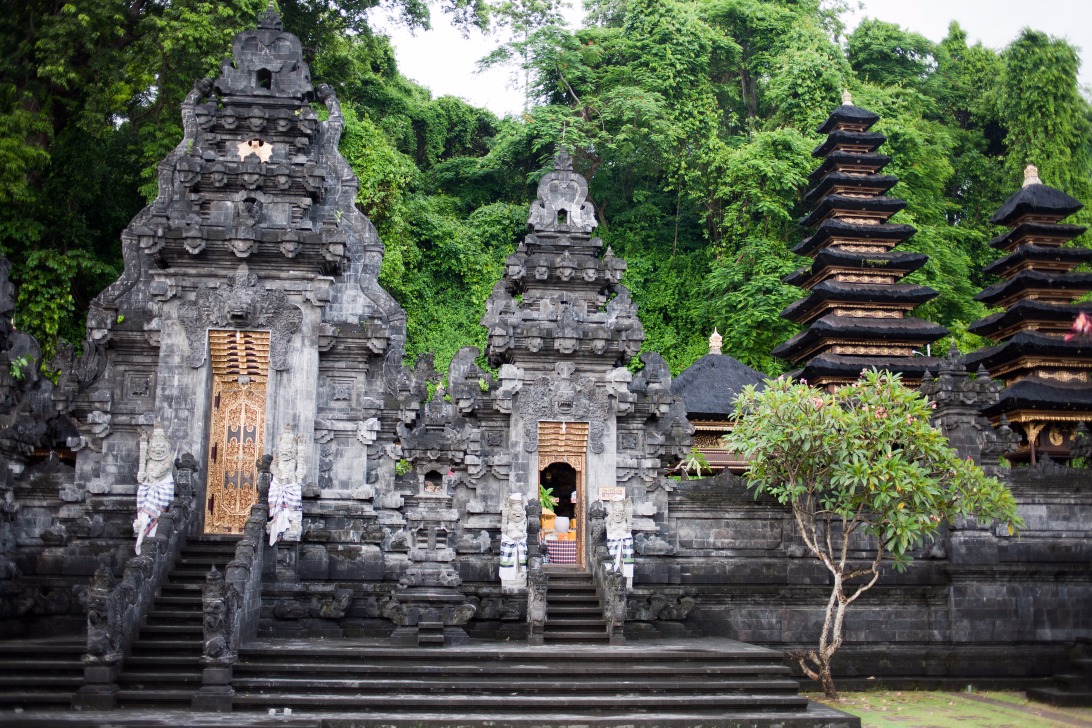
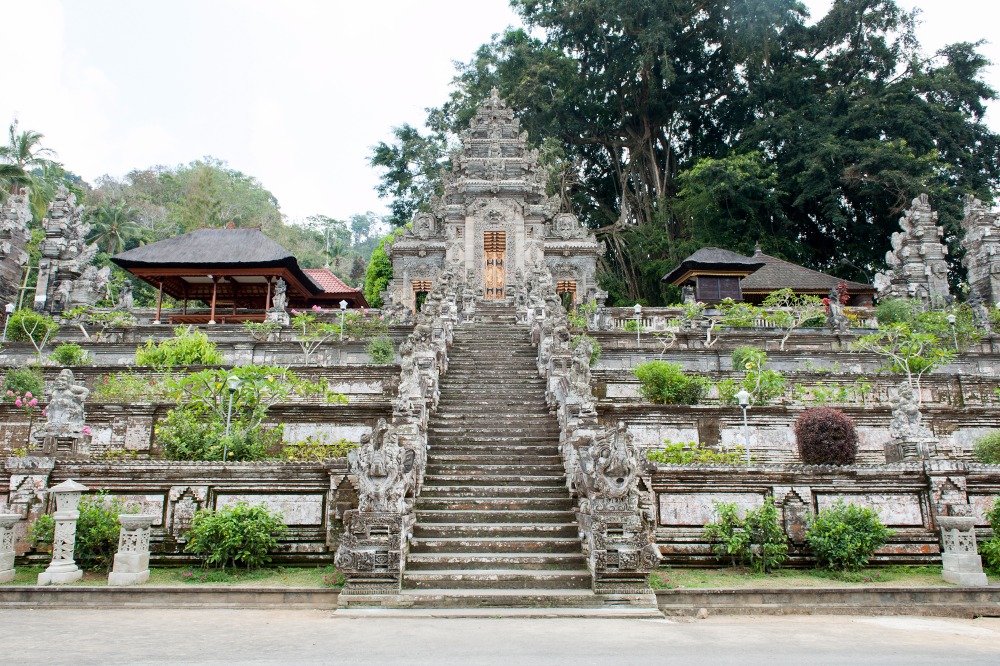
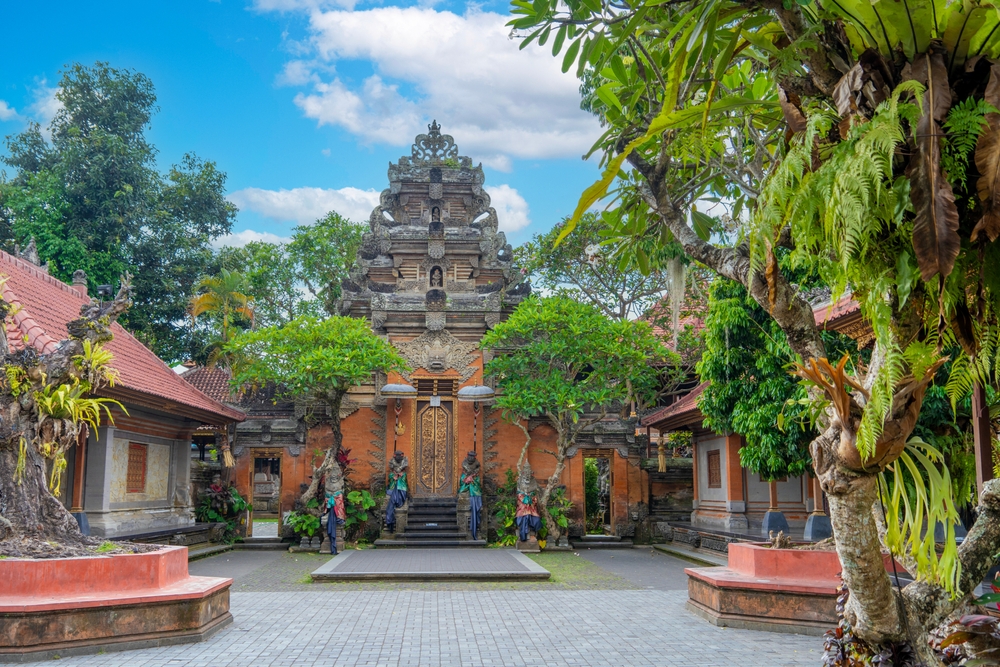
Kerta Gosa, the former supreme court of the Klungkung kingdom, stands in the heart of Semarapura, in eastern Bali. A vestige of the puri (royal palace) built in the 17th century, the site comprises two open pavilions whose painted ceilings constitute one of the most complete collections of kamasan art preserved on the island.
Why visit Kerta Gosa
The site distinguishes itself through three aspects rarely found together elsewhere in Bali:
- a singular historical function: it was the highest court of justice in the Klungkung kingdom, where Hindu princes and Brahman judges settled important matters;
- an exceptional didactic pictorial collection, designed to instruct litigants about good, evil, and their consequences in the afterlife;
- a rare architectural testimony to the Balinese royal palace before Dutch conquest, most of which has disappeared.
A visit remains brief (plan for 1 to 1.5 hours) and complements a day in eastern Bali nicely.
History of the Klungkung Royal Palace
The Klungkung royal palace was founded in 1686 by King Dewa Agung Jambe I, who established the kingdom's new capital here after Gelgel's decline. The Kerta Gosa functioned for more than two centuries as a supreme tribunal: serious offenses were tried here, and the iconography painted on the ceiling served literally as a pedagogical tool for the accused.
The Dutch colonial period (1908-1942) proved fatal to the complex. During the conquest of Klungkung in 1908, nearly all the palace buildings were destroyed; only the Kerta Gosa, the bale Kambang, and the Kori Agung gate survived. In 1971, an earthquake damaged the site; the subsequent reconstruction focused on restoring the wall and ceiling paintings in their original style.
What to see on site
The Kerta Gosa pavilion
An open pavilion on all four sides, the bale Kerta Gosa houses the most celebrated pictorial collection on the site. The frescoes are read starting from the south panel, clockwise, to the north panel. They depict episodes from the Mahabharata and contrast the torments inflicted on the impure with the rewards promised to those who lead a righteous life. The function is explicitly moral and didactic: the litigant, looking up during their trial, saw the fate that awaited them.
The style employed is kamasan art, originating from the Balinese village of Kamasan, a few kilometers to the south. This ancient and codified pictorial tradition is recognized by its profile figures, ochre colors, and scenes arranged in superimposed registers.
The bale Kambang
The bale Kambang ("floating pavilion") sits in the middle of the Gili Park pond, surrounded by lotus flowers. Reserved for the royal family, it served as a place of reception and entertainment. Its ceiling paintings are distributed across three levels:
- the Balinese astrological calendar (palelintangan), associating signs with destinies;
- scenes of social and daily life on the island;
- episodes from the legend of Sutasoma, a hero of Balinese Hindu-Buddhist mythology.
The site's museums
The complex houses a small museum of objects related to traditional Balinese tribunals (furnishings, instruments, documents). Outside the Kori Agung courtyard, the Semarajaya museum occupies the former Dutch secondary school building, whose architecture blends Dutch and Balinese influences. It documents the region's history, including the puputan of 1908 (the king's suicidal resistance against the Dutch).
Practical information
- Required dress code: sarong and sash, provided on-site with your entrance ticket.
- Fee: modest entrance fee, expect a few tens of thousands of rupiah per person, garment rental included.
- Visit duration: 1 to 1.5 hours for both pavilions and museums.
- Best time of day: early morning to avoid heat and tour groups.
When to visit
Bali can be visited year-round. The dry season, from April to October, offers the most comfortable conditions for traveling in eastern Bali. The rainy season (November-March) remains feasible, with showers mainly in late afternoon. The site, being covered, can be visited even in rain.
How to get there
Semarapura is located about 40 km east of Denpasar. From Ngurah Rai international airport, expect 2 to 3 hours of driving depending on traffic, which is often heavy around southern Bali. From Ubud, access is quicker (about 1 hour). A car with driver or scooter are the most common options; no train serves the island.
Nearby
Eastern Bali lends itself well to a combined itinerary. You can extend your visit with other natural and cultural Indonesian sites:
- the Bali Botanical Garden, on the heights of Bedugul;
- Balangan Beach, on the Bukit peninsula;
- Mount Galunggung, in Java, to extend your journey beyond Bali.
Frequently asked questions
Frequently asked questions
Yes. Since the site is linked to a former royal palace, visitors are required to wear a sarong and sash. Both items are provided on-site and included in the entrance fee.
Plan for 1 to 1.5 hours to tour both pavilions (Kerta Gosa and bale Kambang), the small museum of traditional tribunals, and the Semarajaya museum located just next door.
From Denpasar or Ngurah Rai airport, expect 2 to 3 hours of driving for 40 km, with traffic often heavy. From Ubud, access is more direct, about 1 hour by car.
The paintings depicting the torments of the impure can be striking for young children. For visitors interested in history or Balinese painting, however, the site is very engaging.
Including Kerta Gosa in your itinerary
Kerta Gosa fits naturally into a circuit in eastern Bali, between Ubud, Mount Agung, and the Candidasa coast. To plan your stay, consult our suggestions for customized travels in Indonésie.
Nearby
Interested in this visit?
We can include it in your personalised itinerary.