Tangkuban Perahu
Tangkuban Perahu
Just 30 km from Bandung, Tangkuban Perahu is an active volcano with three accessible craters: Ratu, Domas and Upas. Complete guide to planning your visit.
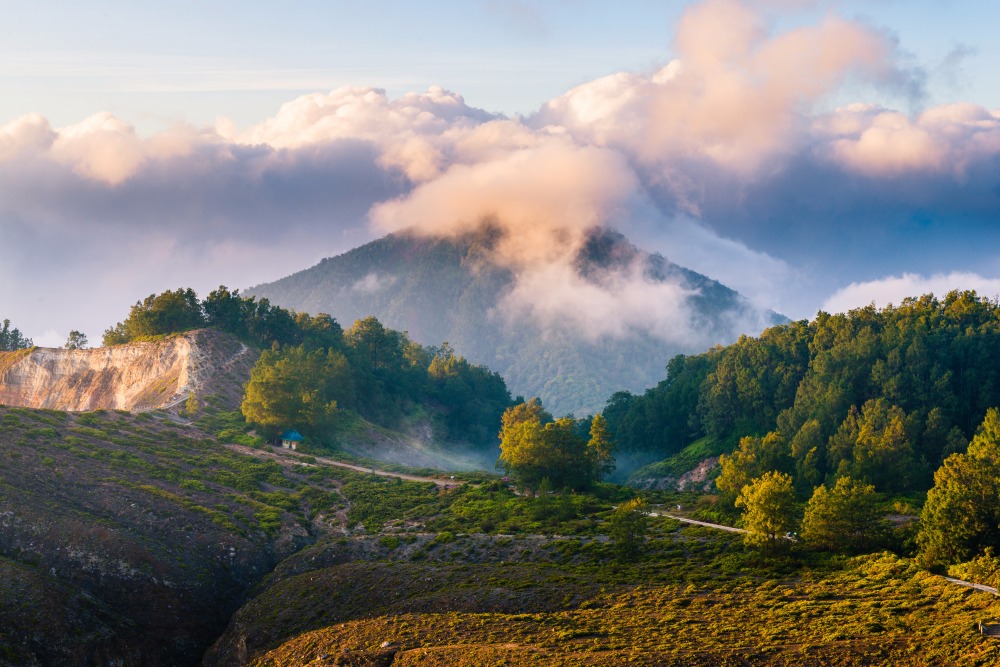
Located 30 km north of Bandung, in West Java, Tangkuban Perahu (Gunung Tangkuban Perahu in Indonesian) is one of Indonesia's most accessible volcanoes. Its three craters, fumaroles and hot springs can be explored in half a day from the capital of West Java, making it a natural stop on circuits combining nature and Sundanese culture.
Why visit Tangkuban Perahu
Tangkuban Perahu offers a tangible glimpse of the archipelago's geological activity without requiring lengthy or technical trekking. Unlike other Javanese volcanoes that demand nocturnal ascents, here you can drive to the rim of the main crater, then choose your level of exertion based on the trails you explore.
The site combines three attractions: living geology (tephra, sulfurous springs, hot ground), a caldera landscape with mineral hues, and a Sundanese legend that explains its name and remains deeply rooted in local culture.
History and eruptive activity
The first historically recorded eruption of Tangkuban Perahu dates back to 1826. The volcano experienced several episodes of significant activity in the 19th and 20th centuries, notably in 1829, 1846, 1926 and 1983, alternating phreatomagmatic and phreatic eruptions.
In 2005, intensified activity (rising temperatures and gas emissions) led authorities to close crater access as a safety measure. Geological surveys estimate that over the past 40,750 years, the volcano has awakened at least 30 times, alternating between minor and major eruptions, with tephra deposits found up to 3 kilometers around the edifice.
More recently, on July 26, 2019, eight minor eruptions led to temporary site closure, before reopening after activity stabilized.
The legend of Sangkuriang
Tangkuban Perahu means "upturned boat" in Sundanese. The name comes from a popular local legend widespread in West Java.
Dayang Sumbi, a woman of exceptional beauty, banished her son Sangkuriang following an act of disobedience. Moved by her sorrow, the gods granted her eternal youth. Years later, Sangkuriang returned home without recognizing his mother, fell in love with her and asked for her hand in marriage.
Upon discovering the truth through a birthmark on her son's body, Dayang Sumbi attempted to prevent the marriage by imposing an impossible condition: he must build a dam across the Citarum river and construct an immense boat before sunrise. With the help of mythical creatures, Sangkuriang was on the verge of success. To trick him, Dayang Sumbi had large red cloths spread across the horizon, simulating dawn. Believing he had failed, Sangkuriang kicked the boat over: this overturned vessel is said to have formed the volcano's silhouette.
The three craters to see
Tangkuban Perahu has three main craters, each with its own character and level of accessibility.
The Ratu crater
This is the largest of the three and the most visited, accessible directly by vehicle. It is viewed from its rim, where platforms allow you to admire its walls with monochromatic hues (grey, ochre, sulfur yellow) and a floor several hundred meters below. Descent is not permitted for safety reasons.
The Domas crater
Reachable by a 1 to 2 hour hike from the Ratu rim, Domas is the most immersive crater. You descend to observe up close the sulfurous hot springs, some of which can reach nearly 90°C. Guides often offer to cook eggs there to illustrate the ground's heat.
The Upas crater
More difficult to access, Upas rewards hikers with an alpine trek. Early morning walkers find interesting viewpoints at sunrise, when slanting light reveals the caldera's relief.
Practical information
- Duration: allow 2 to 3 hours for Ratu crater alone, half a day if you add Domas, a full day with Upas.
- Level: easy for Ratu (no mandatory walking), moderate for Domas, more challenging for Upas.
- What to bring: closed-toe shoes, windbreaker (altitude makes mornings chilly), water, scarf or mask (marked sulfur odors near fumaroles).
- Fees: entrance fee to the site, with differentiated pricing for foreign visitors; vehicle surcharge. Check locally, as amounts are regularly updated.
- With children: the Ratu crater area is suitable, provided you supervise proximity to the edges.
When to visit
The best period is the dry season, ideally between June and September, when crater visibility is optimal and trails are passable. During the rainy season, mist can obscure Ratu for hours and the Domas paths become slippery. Favor an early morning visit (arrival around 7-8 AM): the sky is clearer, crowds reduced and sulfur odor less concentrated.
How to get there
From Bandung
The site is approximately 30 km north of the city. Main options include minibus (economical but with transfers) or a private car with driver, allowing you to drive up to the Ratu crater parking area. Hiking enthusiasts can take the 4.5 km route from the main gate, or the steep alternative trail via Kawah Domas, walkable in about an hour through the jungle.
From Jakarta
Day excursions are available from Jakarta, but the drive is long (4 to 5 hours each way). To enjoy the site without pressure, better to spend a night in Bandung.
What to see nearby
The Bandung region offers several natural extensions to your volcano visit:
- The Ciater hot springs, about twenty minutes from Tangkuban Perahu, to relax after your hike.
- The Subang tea plantations and their rolling green hill landscapes.
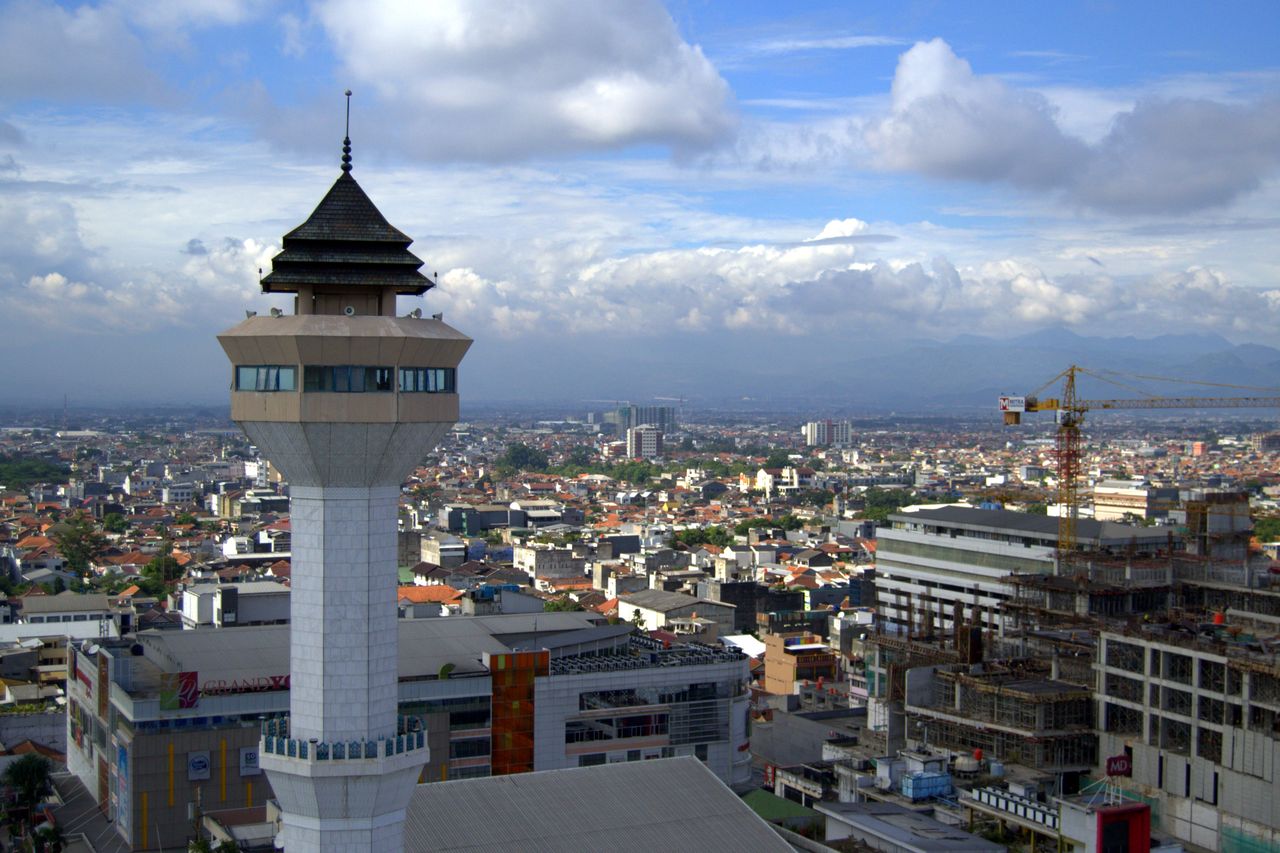
- The city of Bandung itself, its art deco architecture and local product markets.
- To extend into Central Java, cultural sites like the Selogriyo temple or the Kraton of Yogyakarta complement an itinerary blending volcanoes and heritage.
Frequently asked questions
Frequently asked questions
Include Tangkuban Perahu in your trip
The volcano fits naturally into a Java circuit combining Bandung, Yogyakarta and the Bromo or Ijen volcanoes. To build a tailor-made itinerary blending nature, archaeological sites and local encounters, consult our Indonesia travel packages.
Interested in this visit?
We can include it in your personalised itinerary.