Western Bali National Park
Western Bali National Park
At Bali's western tip, 190 km² of forests, mangroves and reefs surrounding Menjangan Island, sanctuary of the endemic Bali Starling.
At the western tip of Bali, the Western Bali National Park (Taman Nasional Bali Barat) protects approximately 190 km² of tropical forests, savannas, mangroves and coral reefs. Accessible from Gilimanuk port, this territory is home to the Bali Starling, an endemic species in critical danger, as well as around a hundred coral species surrounding Menjangan Island.
Why visit Western Bali National Park
The park covers roughly 10% of Bali's total area when including the additional protected reserve of 580 km² located in the mountains to the east. It brings together several interests rarely found in one place on the island:
- An ornithological sanctuary for the Bali Starling (Leucopsar rothschildi), at the heart of an active conservation programme.
- A coastline and protected marine environments around Menjangan Island, featuring 12 dive sites and a 19th-century wreck.
- Discrete cultural heritage with ancient temples and a historic hot spring.
- Low visitor numbers compared to southern Bali, with access regulated by permit and mandatory guides.
History and protection status
The region's ecological value was recognised as early as 1917 by Balinese authorities of the time, who identified its mangroves, dense forests and mountainous zones as worthy of protection. The park was officially established in 1941, following Bali's incorporation into Indonesia.
Its initial area of around 740 km² was redefined in 1985 to reach 190.03 km², with the excluded zone being reclassified as a protected reserve. The park is now the subject of discussions concerning its designation as a biosphere reserve under UNESCO's "Man and the Biosphere" programme, a project aiming to more closely involve local communities in conservation.
Geographically, the park extends across the Prapat Agung peninsula, in the kabupaten of Jembrana and Buleleng. It is bordered to the west by Gilimanuk and to the east by the villages of Cekik and Banyuwedang. Its topography is marked by the remnants of Pleistocene volcanoes: the Patas, Merbuk, Kelatakan and Prapat Agung mountains.
What to see and do
The Bali Starling and birdlife
The Bali Starling exists in the wild only within this park. The lowest estimates recorded around 6 individuals in 2021, but populations have since increased thanks to conservation efforts, and a reintroduction programme has been established in Nusa Penida. The park is home to around 160 species of seabirds and shorebirds, including the Crested Serpent Eagle, the Woolly-necked Stork and the Sacred Kingfisher. The Teluk Brumbun trail is particularly suited to birdwatching.
Mammals and land fauna
The dry forest of northwest Bali hosts several large mammals that have become rare elsewhere on the island:
- The Banteng, a wild bovine close to traditional Balinese livestock.
- The Java deer and Indian muntjac (barking deer).
- The wild boar, clouded leopard and Javan lutung.
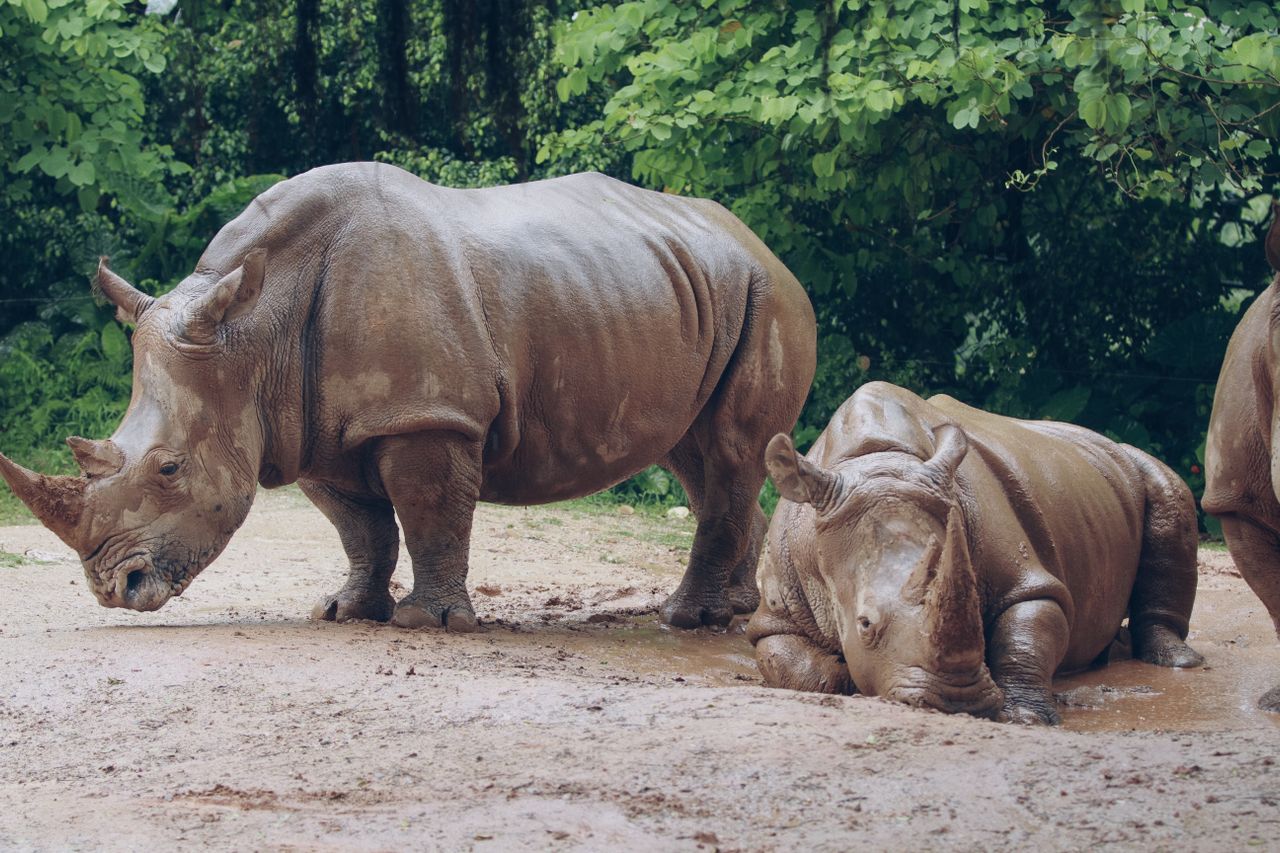
- The large flying fox and long-tailed macaques, more docile than elsewhere on the island.
A reintroduction programme for the Sumatran Tiger is planned for around 2030, the Bali Tiger having disappeared since the 1930s.
Coral reefs and Menjangan Island
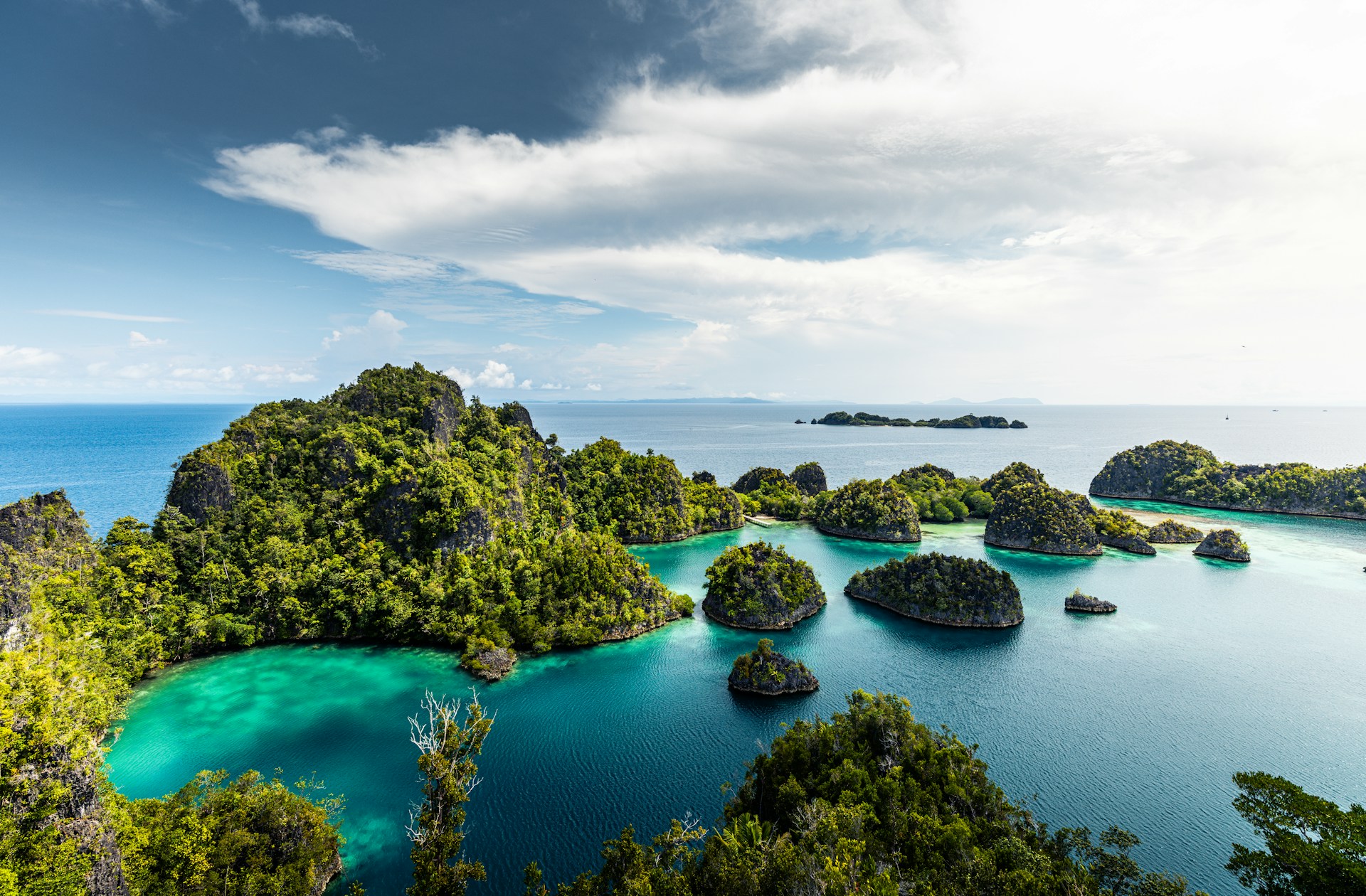
The park's marine zone is home to more than 110 coral species, including 22 mushroom corals. Menjangan Island, accessible by boat from Labuan Lalang, is renowned for its drop-offs, shallow coral gardens, hawksbill turtles and water monitors. A wreck dating from the 19th century completes the 12 recorded dive sites.
Flora
The park is home to approximately 200 plant species, 14 of which are threatened. Notable species include Indian sandalwood, Chinese laurel, candlenut, Mundu Tree, Buah Kepel, stinking sterculia, Hasselt's dipterocarp, the Dita tree, Bali persimmon, Indian rosewood and cassia fistula.
Temples and heritage
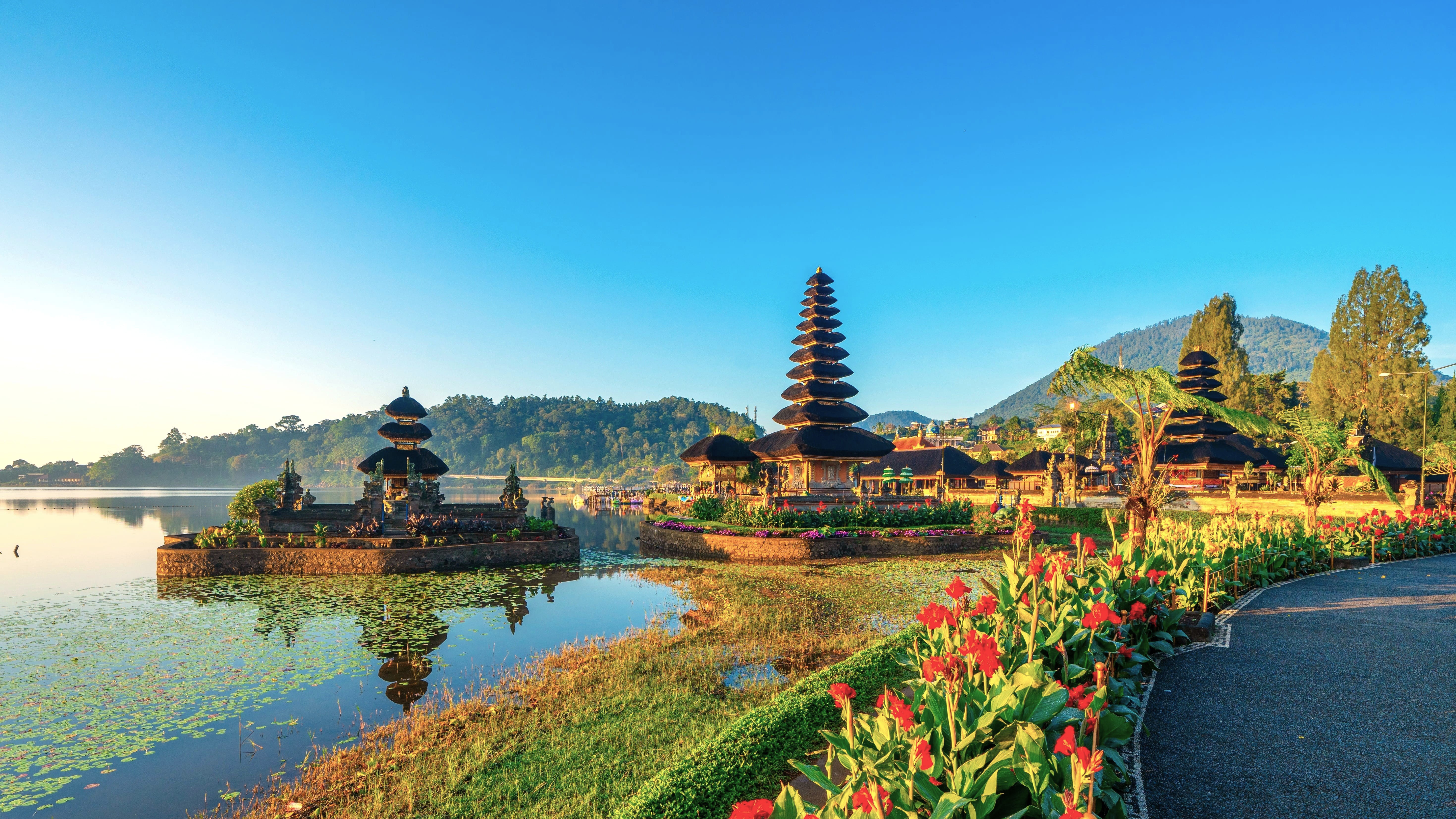
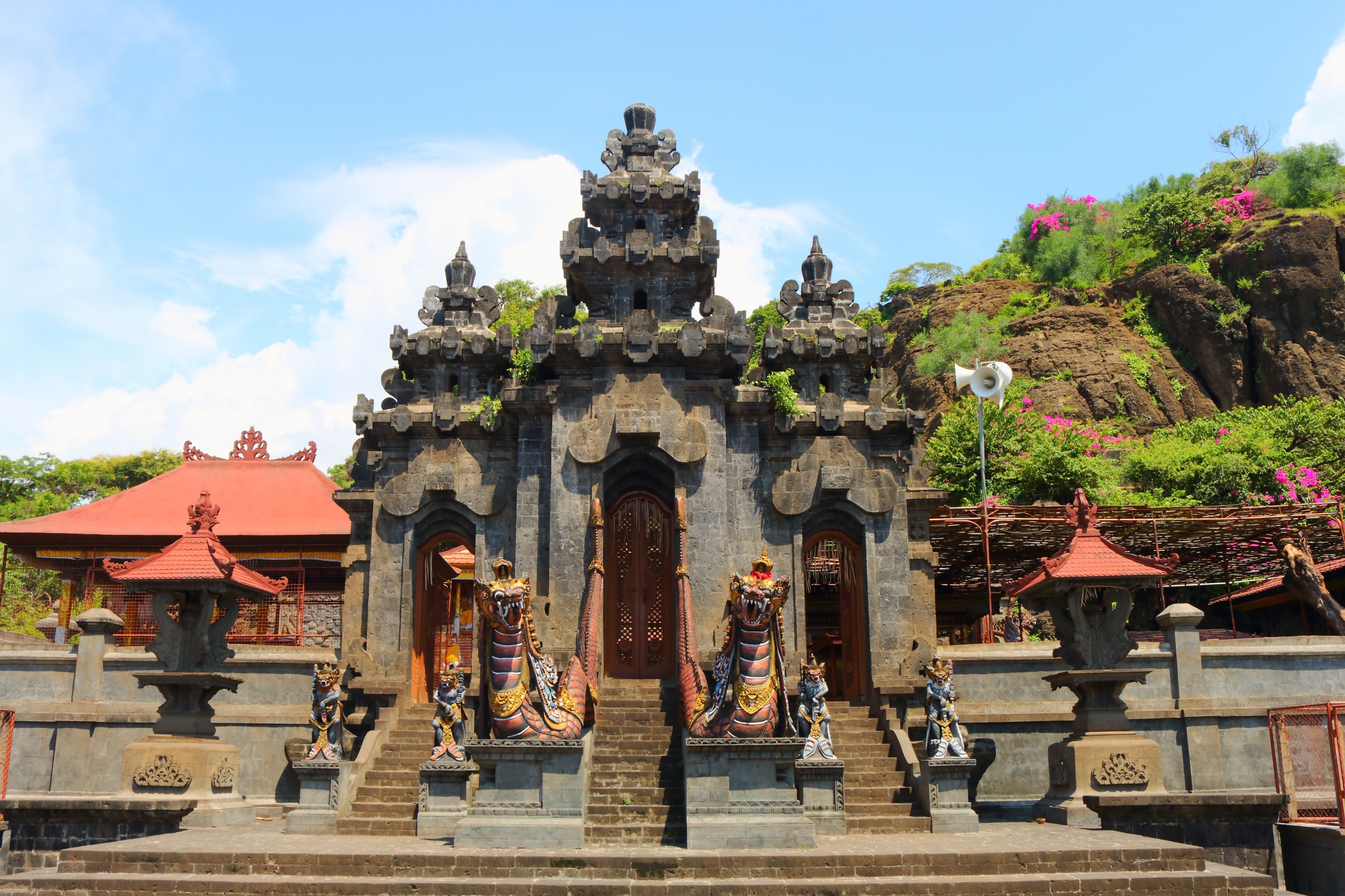
The Pura Gili Kencana stands on Menjangan Island. North of Prapat Agung, the Dang Kahyangan temple houses a sacred pool whose water changes colour; rediscovered in 1990, it is mentioned in the Dwijendra Tatwa, a text recounting the journey of the sage Dang Hyang Nirartha.
Banyuwedang hot spring
Located on the park's eastern border, the Banyuwedang spring reaches 40°C, making it one of Bali's hottest. Once reserved for Balinese royal families, it is now accessible to visitors.
Hiking trails
- Tegal Blunder (approximately 2 hours): an accessible walk through dry forest.
- Gunung Klatakan (approximately 8 hours): a demanding climb through dense jungle.
- Teluk Brumbun: a route dedicated to birdwatching.
When to visit
The park can be visited year-round, but the dry season (May to October) remains the most comfortable period: trails are passable, underwater visibility around Menjangan is optimal, and wildlife observation is enhanced near water sources. The wet season (November to April) intensifies vegetation and bird activity, but can make some trails muddy and limit diving.
The park remains closed during Nyepi, Bali's Day of Silence, whose date varies each year according to the Saka calendar.
Practical information
Access is strictly regulated. Only part of the territory is open to the public and visits must be undertaken with an official permit and official guide. Permits and entrance fees are paid at one of the park's two offices:
- Cekik, south of Gilimanuk, for hikes and land-based access.
- Labuan Lalang, on the north coast, for boat excursions to Menjangan.
A ranger station is also located in Sumber Klampok, between the two offices. Prices vary depending on activities (hiking, snorkelling, diving). Opening hours are roughly from late morning to mid-afternoon; it's best to arrive early to have enough time for an excursion.
How to get there
The park is located at Bali's far northwest corner, several hours' drive from Denpasar and Ubud. Main options:
- By road from Denpasar, Singaraja or Lovina, in a private car with driver or with a specialised operator.
- By ferry from Ketapang, on Java Island, to Gilimanuk port, located at the park's western entrance.
For diving and snorkelling at Menjangan, departure is from Labuan Lalang. An organised tour is the simplest option; for more flexibility, hiring an official guide and private vehicle allows for a bespoke visit.
What to see in the region
To extend a nature-focused stay in Indonesia, several sites complement a visit well:
- The Bali Botanical Garden, on the heights of Bedugul, to deepen your knowledge of tropical flora.
- Komodo Island and Rinca Island, in the Lesser Sunda archipelago, to observe the Komodo dragon.
- The Sipiso-Piso waterfall, in North Sumatra, another highlight of Indonesia's landscapes.
Frequently asked questions
Frequently asked questions
Yes. Visits are only permitted with an official guide and a permit purchased at one of the entrance offices (Cekik or Labuan Lalang). This rule applies to hikes and sea excursions alike.
Sightings remain rare because the species is in critical danger. However, guides know the most favourable areas, particularly around Tegal Blunder. A reintroduction programme is also underway in Nusa Penida.
The dry season, from May to October, offers the best underwater visibility. Conditions remain generally suitable for much of the year.
Yes, via the ferry connecting Ketapang (Java) to Gilimanuk. The port is located in the immediate vicinity of the park's western entrance.
A day allows for a short hike or a snorkelling trip to Menjangan. To combine diving, hiking and birdwatching, allow two to three days in the area.
Planning your trip
Western Bali National Park fits naturally into an itinerary combining Bali, Java and the Lesser Sunda Islands. To plan a tailor-made trip including this site, consult our trips to Indonesia.
Interested in this visit?
We can include it in your personalised itinerary.