MEETING WITH THIERRY ROBINET (who will lead the "Shamans of the Night" circuit from October 6-22, 2024)
"THE FLOWER MEN OF SIBERUT LIVE IN ANOTHER WORLD, BECAUSE THEY ARE IN DIRECT CONTACT WITH THEIR ANCESTORS!"
"THE FLOWER MEN OF SIBERUT LIVE IN ANOTHER WORLD,
BECAUSE THEY ARE IN DIRECT CONTACT WITH THEIR ANCESTORS!"
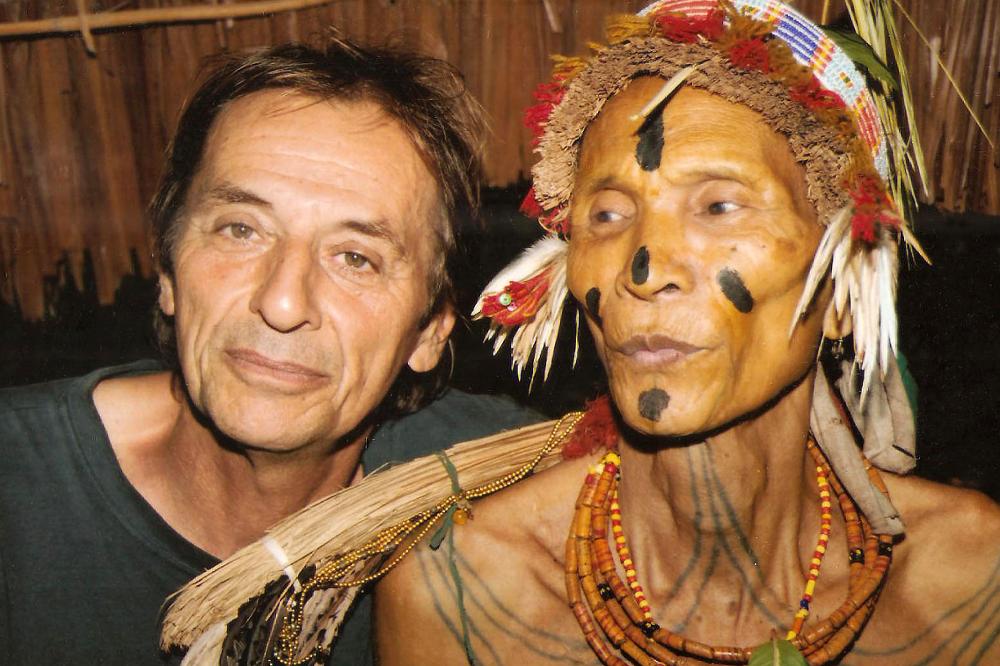
Dominic Clarisse : Hello Thierry, I'm delighted that you've agreed to meet with us, so that clients of Azimuth Adventure Travel Ltd can get to know you better and thus appreciate your work more. May I ask you to introduce yourself in a few words?
Thierry Robinet : My name is Thierry Robinet. I'm originally from the Dauphiné-Savoie region in France, and I've been living in Bali, Indonésie, since 1977. From a very young age, I had a deep attraction to nature—I spent time in the trees from the age of six—and I was also fascinated by our planet. That's why I studied maps over the years, memorized the world's capitals, and starting in the late 1960s and early 1970s, during the era of major movements to either America or Asia, I took to the road beyond my Chartreuse mountains and traveled the legendary Hippie Trail to Kathmandu in Nepal. This marked the beginning of my great adventure and truly, the beginning of my life itself. One thing led to another, I studied tourism, became a travel agent, which allowed me to fly and transform my childhood dreams into reality, traveling through Asia—a continent that has always been my favorite destination.
When I arrived in Indonésie by chance in 1977, I became a correspondent for a French travel agency, particularly on the island of Sumatra, off whose western coast lies the Mentawai archipelago, where I encountered absolutely extraordinary populations, perhaps the most extraordinary I've encountered across all of Asia: the people known as the flower men.
Having become a specialist in Indonésie, I had the opportunity to explore places where others don't venture, notably the island of the flower men. I also had the chance to discover the Indonesian part of Borneo, where I completed a west-to-east crossing that remains etched in my memory because I lived through hellish moments in the jungles. I even traveled to Papua, where I encountered peoples equally extraordinary, such as stone-tool makers or tree-dwelling peoples.
DC : I remember we first met in the early 2000s, when you were working for the Ushuaïa television program. You had completed several documentaries and reports about Indonésie (Kawah Ijen, Irian Jaya, etc.). Can you tell us how you came to work in television, particularly for the Ushuaïa program? What impact did these collaborations have on your personal and professional life?
TR : Television came into my life when Nicolas Hulot and his Ushuaïa program approached Terres d'Aventure. They said, "We want to shoot in Indonésie, and we're looking for someone who knows the country very well." Since I was also the correspondent for Terres d'Aventure in Indonésie at the time, they got in touch with me, and a collaboration of more than 20 years began with Ushuaïa, during which I participated in numerous reports and documentaries about Indonésie, and also across the world—many in Southeast Asia, and even in Africa, America, and elsewhere.
From this collaboration with Nicolas Hulot, I've maintained a wonderful friendship with him, as he regularly visits me in Bali. This collaboration also allowed me to meet other remarkable people, notably Yann Arthus-Bertrand, with whom I worked on his films "The Earth from Above", "Home", "Planet Ocean", "Woman", "Human", and more.
So, for me, television generated extraordinary encounters with people from all walks of life, particularly regarding Indonésie. I've collaborated with "Thalassa", "Faut pas rêver", and worked for National Geographic, Animal Planet, and many other channels.
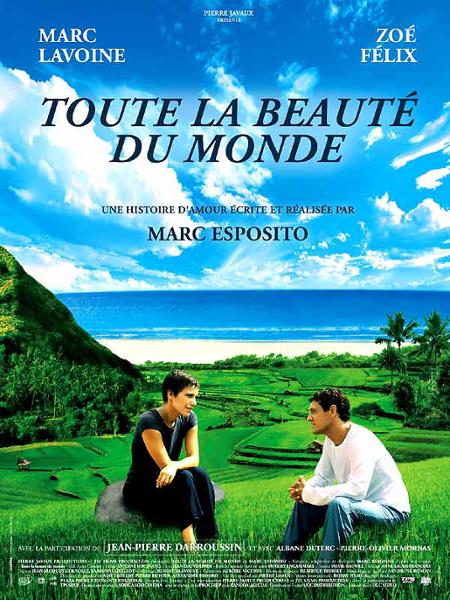
DC : You also worked as a production manager on the film "All the Beauty of the World". Can you share some filming anecdotes, particularly about your interactions with the director and actors?
TR : Television also opened doors to cinema for me. They were looking for an Indonésie specialist, particularly regarding the island of Bali (since I live in Bali), so I worked on the film "All the Beauty of the World" directed by Marc Esposito, working alongside notably Jean-Pierre Daroussin and Marc Lavoine.
I had very good relations with them, particularly musical ones, if I may say so, and especially with Marc Lavoine, who knew Bali well. Since we had mutual friends, that brought us closer, and I remained in regular contact with him, though as time passed, things naturally faded somewhat. The important thing is that the friendship remains.
What I appreciated about Marc Lavoine was that all participants in the shoot were treated as equals, whether French or Indonesian.
I was also very fortunate and delighted to have met Marc Esposito, who is an acclaimed director in France. First, I encountered a man deeply attached to the island of Bali, which allowed us to maintain a special relationship with him. And, since Marc Lavoine was also a regular visitor to the island, it was very interesting to discuss with both of them: we shared the same vision.
I was also touched that Marc Esposito chose my wife, Agung, to play a small role in a few sequences of the film, particularly in Ubud.
This is why I have an excellent memory of that film's production. Spending 90 days with a film crew is never straightforward, and I retain the image of a charming director, very kind. He never raised his voice.
Certainly, when working on a feature film or television documentary, things are completely different, because a cinema crew can number up to 60 people, whereas when I worked for Ushuaïa, for example, we were often only 10, 15, or at most 20.
There were of course many anecdotes during a film where I spent 90 days, in Bali and Lombok, particularly evenings with Marc Lavoine playing guitar, since I'm myself a musician, and those are memories that stayed with me.
I also remember the relationship between Zoé Félix and Marc Lavoine, who are very much in love in the film. Sometimes this created small tensions between them, discussions about how to conduct themselves, and so on. It's fair to say the film was quite particular.
I also recall moments when the crew couldn't find certain natural locations, particularly for a scene in the Balinese forest (in the film, Marc Lavoine's character owns a timber concession in Thailand). So I went to the assistant director and said, "Come on, let's go into the forest." Marc Esposito followed us, and I showed them a fabulous place I knew from a friend. The assistant told me "Well done," and his team was able to shoot scenes there with birds and wildlife.
I also remember the epic journey to get to Lombok. We were 90 people with numerous trucks that had to be loaded onto the ferry, while the sea was rough. Not to mention the incident when production staff drilled holes in a minibus I'd rented from my friend Gusti. I had to reassure him, and the bus was indeed returned to him fully repaired and repainted.
DC : You left to travel the world at a very young age. Was it a visceral need to escape your daily routine? Why did you ultimately "land" in Bali and never leave?
TR : I believe that, personally, I've been a traveler at heart since childhood. I've always loved seeing what's happening elsewhere. Even as a small boy in my village in Dauphiné-Savoie, I had all the Chartreuse mountains and snow before me, and beyond those mountains lay the road to India, the road to Asia, and since childhood, I've always wanted to see what lay beyond.
So it took the hippie movement, the backpacker movement heading to Asia in the mid-1960s, to shape my vision of my future life.
I took to the road in the very early 1970s, as soon as I came of age. I left my village in Isère and hitchhiked all the way to Kathmandu in Nepal. Sometimes hitchhiking was challenging, but I discovered extraordinary countries and people, particularly Afghanistan, a country that left a profound mark on me. Nepal is also, in many ways, my favorite land, because the Himalayas remain among the great subjects of this world whenever adventure is mentioned.
Over time, after all these personal adventures, I found this opportunity to come to Indonésie, and when I arrived there, I felt like I was coming home.
You should know that Indonésie is the world's largest archipelago: 17,000 islands spanning 5,000 kilometers from west to east! It's therefore an extraordinary country with islands like Sumatra, Sulawesi, Borneo, Papua, Java, and thousands of smaller islands…
Things happen there, the peoples are diverse, and the more diverse peoples there are, the more diverse customs there are… This fascinated me greatly.
I then settled in Bali. Why Bali? Because Bali was an island that was different from the others, where life felt more "laid-back." You have to admit the lifestyle here was more relaxed; we lived by the sea, which was important to me, along with the smiles of the people, and the Hindu festivals that occurred regularly throughout the island. The volcanoes also made me think, "Well, I'll stay here." Plus, the Balinese are very hospitable to Europeans; we were always welcome, as we were throughout the rest of Indonésie, where foreigners are always welcomed, and that's something special in Asia: there aren't many countries in Southeast Asia or even Central Asia that are as warm as the Indonésians.
Myanmar is also a country similar to Indonésie, but Myanmar today has so many problems that it's very complicated.
I settled in Indonésie and said, "I'm going to stay here," and I started a family. I met my wife here, and this allowed me, because I was immersed in the island, to learn the Indonesian language and some dialects as well, then to go discover fabulous peoples: the Dayaks of Borneo, for example, or the Una of Papua, who still make stone axes as they did 50,000 years ago. These are things you can't invent.
Indonésie is such a diverse, beautiful country! And then there's plate tectonics, earthquakes, volcanic eruptions… I've always been fascinated by volcanic eruptions. When you see Semeru, Merapi, or Krakatoa, which are all massive volcanoes on the island of Java, it's something truly impressive.
DC : As a tour guide and organizer of television and film shoots, you've been fortunate to travel through many countries and, especially, many regions of Indonésie. Which part of the world has marked you most, and why?
TR : I love Indonésie, that's clear since it's my adopted homeland. I particularly love Bali, since I met my wife there and became Hindu myself. I followed my wife and so I had to undergo the ceremonies of three days, three months, and three years to become Hindu. My wedding was also something extraordinary: I was surrounded by hundreds of people I practically didn't know. I was also dressed as a prince, which was remarkable, because you don't typically experience such tradition, especially when you're European.
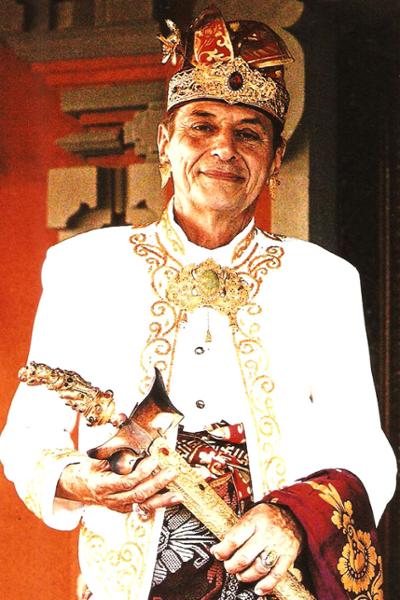
I also underwent the tooth-filing ceremony, because every Balinese person must have their canines filed down so as not to resemble an ogre, which symbolizes an evil spirit.
What I love about Bali is that I have many friends everywhere—at Lake Batur, in Munduk, in Pemuteran, in Candi Dasa, and in Amed—who are extraordinarily kind. And these are things you can't take away. Once you love people and they love you, they also show you how much they care about you. This creates strong relationships and they remain strong through the end. It's the same throughout the rest of Indonésie!
DC : After all these years traveling the world and the Indonesian archipelago, you still seem unsated. What continues to motivate you to "rush" up hill and down dale?
TR : I'm 71 years old and I still have the same desire to discover the world as I did at age 15. It's innate, it can't be explained—that's just how I am. I must have been bitten by the bug when I was very small.
Staying young—what does that mean? It means first being physically fit, so doing sport.
I spent 40 years of my adventure travels on foot. I've always prioritized walking, whether challenging or easy, and I believe that's ultimately been the key to staying regularly in shape and avoiding particular problems. Everything else happens in your head.
When you stay young in your mind, there are no problems. When you want to meet others, appreciate them, and know how to observe with your eyes, I think you can live—not forever of course, but you can live until 80 without problems and keep going.
Great explorers such as Cousteau, Paul-Émile Victor, or Mallory (recently deceased) all lived their passion until after 80, and perhaps that's partly what awaits me.
Visiting the flower men of Siberut or finding myself, perhaps soon, at the Everest base camp in the Himalayas or elsewhere—that's my motivation, that's my engine.
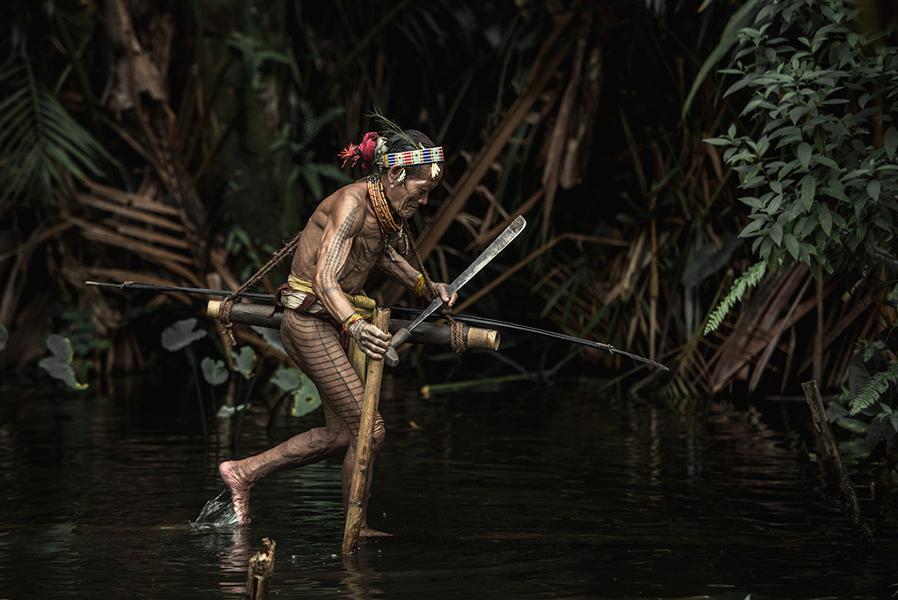
So staying young means also knowing how to open your eyes and knowing how to keep smiling. I may be a man of the past, but when it comes to adventure travel, I'm a man of the present. I love meeting others, I love encountering people who have something to naturally show me.
So I love going where others don't go. I've had a passion for travel since I was very young.
DC : To finish, can you tell us more about the "Shamans of the Night" circuit that you'll be leading from October 6-22? Is this a way for you to make the hidden treasures of Sumatra better known to the general public? Is it also a way to promote a somewhat more "intellectual" form of tourism (compared to, say, "Instagram" tourism)?
TR : The Mentawai archipelago is one of the most extraordinary places in Indonésie for me. I'm fortunate to have been among the first to discover this archipelago, which I reached in 1978, hidden on a boat.
I remember the year very well—the one after my arrival in Indonésie—because it was then that I met a priest who came from Vietnam. He had been expelled by the Viet Cong and left Saigon, otherwise he would have been killed on the spot.
He told me he had a priest friend living in northern Siberut and showed me a few photos. When I saw them, I thought, "I have to go there," and so I went by boat, hidden under tarps, because at the time, the destination was forbidden to foreigners. Barely having disembarked, the first person I met was a police officer, a government agent. He asked what I was doing there. I answered that I was a tourist wanting to discover the island. He replied that Siberut was forbidden to foreigners, so I slipped him some money to let me in…
After several trips, I managed to penetrate into the interior of the island, and there I met absolutely fabulous people. I notably made the acquaintance of the great shaman, who became a great friend, with whom I traveled forests and rivers and with whom I had so many discussions. He explained the role of the forest, that it was the theater of ancestors. He taught me how to gather eggs from trees, how to eat ferns, how to hunt, and so on. And I lived in his long house, his lamin, through fabulous moments.
I notably witnessed meetings between shamans coming from all corners of the forest to enter into discussion and cooperation with the ancestors. I believe these were the strongest shamanic dances and rituals I've been privileged to witness.
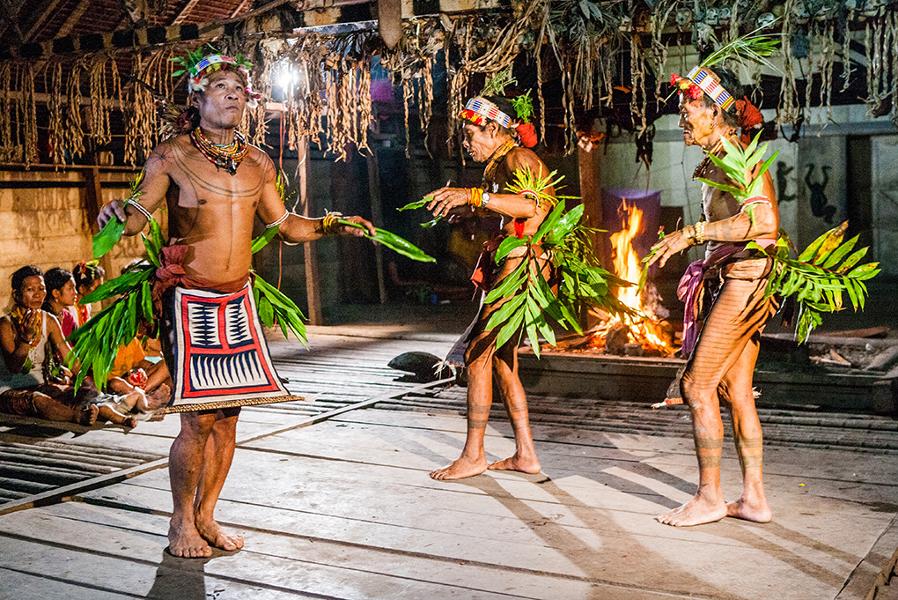
Perhaps stronger even than in Borneo, stronger than in certain parts of East India, and stronger than in Nepal.
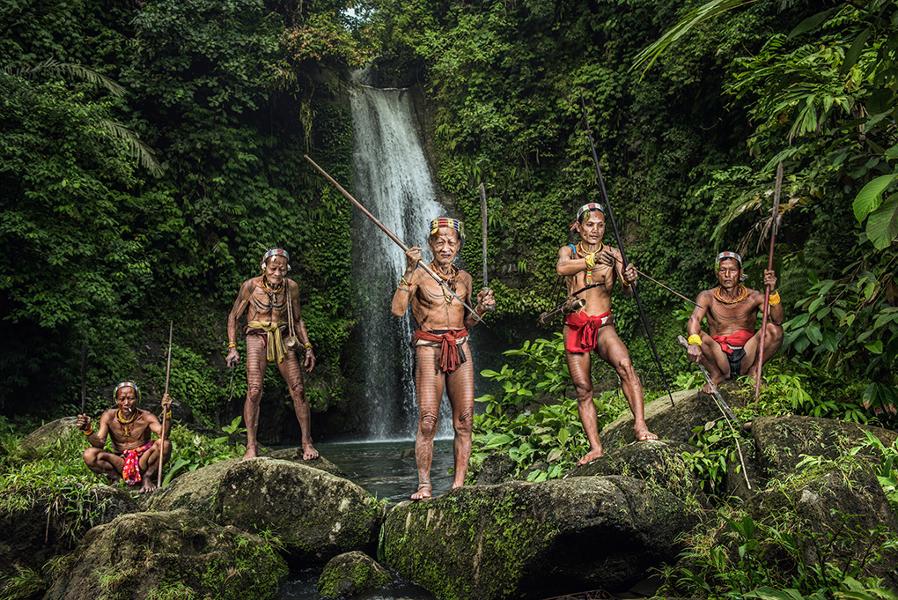
The flower men of Siberut are peoples who live in another world. They come from another world and they live in another world.
Each time I travel to Siberut, fabulous encounters await me. They are moments of sharing with these people who have nothing other than what the forest provides them. They are moments of sharing an existence you don't find anywhere else.
So for me, it's fabulous, and that's why I'll be leading this journey among the "Shamans of the Night" for Azimuth Adventure Travel Ltd, because I want to share my knowledge with a few clients. I want them to meet shamans, men who are other than normal people, who are very kind people, and to have them share moments of life with them, in their homes: living with the women, going fishing, conversing, sitting and observing, listening to the sounds of the forest. I think going out with the shamans to seek plants to heal patients is a journey that leaves marks, and I'll make sure that everyone leaves the island of Siberut with strong emotions, especially since the circuit will end on dream-like beaches, we'll go fishing, we'll eat delicious fish…
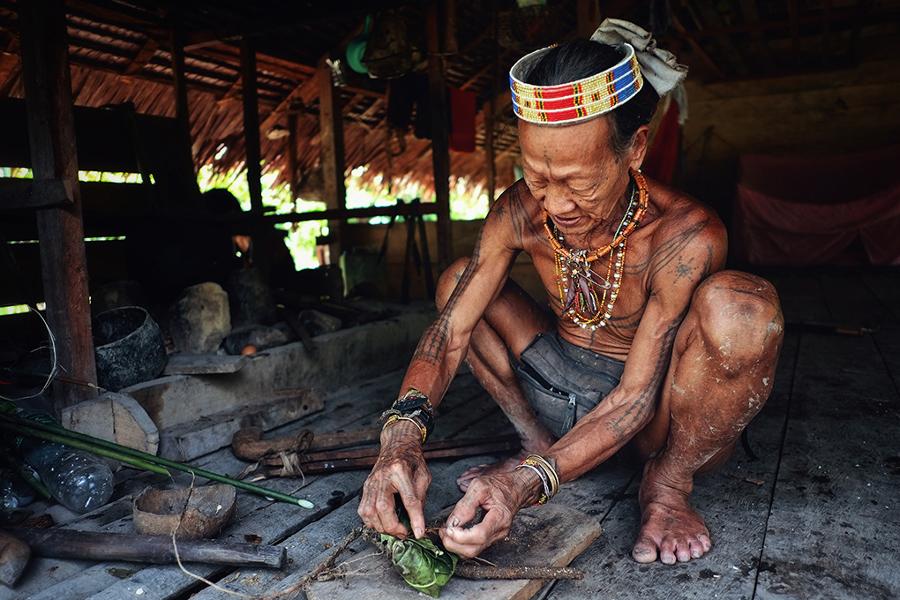
Journeys among the flower men are, in my view, among the most exceptional journeys in Southeast Asia.
The flower men of Siberut are a people who are, as I said, extraordinary. They are people who live in another world, who live in another galaxy, because they are in direct contact with their ancestors. For them, nature is everything and they speak to trees. When they want to cut a tree to build, for example, a house or a canoe, they speak to the tree, they perform ceremonies for it, they say, "Excuse me, little tree, I'm going to cut you because I need you." But, if the flower men don't need the tree, they will never cut a tree, nor even one of its branches.
They are peoples who live in another galaxy. And that's what I want to make known to travelers who will join this circuit: I want them to see what true life is. Because now, with tourism, Facebook, Instagram, we can communicate in two minutes, in ten seconds, we can communicate something. You have an idea and, boom, you share it with your buddy or your friend. But that's for real adventure.
I live in Bali, I see well what Bali is. Bali is an extraordinary island too, but people always do the same things, when there are still so many extraordinary things yet to discover.
In Siberut, tourism barely exists, practically not at all, so that's where you need to come. You need to come with me, and with confirmed shamans, we'll venture into the forest to discover what nature is. The shamans will have us listen to the sound of birds, the sound of trees, the sound of water, they'll explain to us the relationship between humans and the cosmos, their cosmos, where ancestors are called, during great shamanic ceremonies, to come back home.
And those are things that travelers will see with me, that they'll keep forever, because it will be difficult for them to witness elsewhere: they won't see this particular relationship between humans and spirit anywhere else!
DC : Thank you, Thierry, for taking some of your precious time to tell us about your passion for travel and Indonésie.
SIGN UP NOW FOR THE "SIBERUT: SHAMANS OF THE NIGHT" CIRCUIT FROM OCTOBER 6-22, 2024!