Pura Puncak Mangu
Pura Puncak Mangu
Hindu temple perched at 2096 m on Mount Catur, Pura Puncak Mangu is one of the six spiritual pillars of Bali, accessible by hiking from Pelaga.
Pura Puncak Mangu is a Balinese Hindu temple established at the summit of Mount Catur, at 2096 meters altitude. It is located in Banjar Tinggan, in the village of Pelaga, district of Petang (Badung regency). The sanctuary is among the Sad Kahyangan Jagat, the six temple pillars of Bali, and also belongs to the Catur Loka Pala group as guardian of the island's north.
Why visit Pura Puncak Mangu
Unlike the grand coastal temples, this site remains discreet and frequented primarily by Balinese pilgrims. Three elements justify the detour: its spiritual significance (one of Bali's six cardinal temples), its historical depth (lingga-yoni remains of probable megalithic origin, foundation linked to the Mengwi Kingdom in the 18th century) and its setting, accessible only by mountain trek through Pelaga's forest.
The temple is dedicated to Ida Sang Hyang Wighi Wasa in his manifestation as Dewa Sangkara, god of vegetation and fertility. Worship is also rendered to Hyang Danawa, Hyang Manikumayang and Hyang Sangkara, divinities associated with lakes Batur, Buyan and Tamblingan.
History
The sanctuary's origins likely date back to the megalithic era, as suggested by lingga-yoni discovered in the main courtyard. These sacred stones, symbols of the union of Shiva and Shakti, indicate that the summit served as a place of worship even before the formation of Balinese kingdoms.
The temple acquired its historical role in the 18th century. At that time, Bali was divided into several warring kingdoms. I Gusti Agung Putu, founder of the Mengwi Kingdom, suffered defeat at the hands of I Gusti Ngurah Batu Tumpeng of the Tabanan Kingdom. Captured then released, he undertook an ascetic retreat at the summit of Mount Catur. According to tradition, it was there that he practiced tapa brata (ascetic meditation) and received a mystical revelation near the sacred lingga, an experience that restored his strength to reclaim his territory and officially found the Mengwi Kingdom. In gratitude, he had the sanctuary restored and enlarged.
The site weathered several trials: the 1927 earthquakes prompted a restoration campaign between 1934 and 1935, and violent winds in 1978 caused damage again requiring reconstruction works.
What to see on site
The complex comprises several pelinggih (sanctuaries), each dedicated to a divinity or aspect of the sacred.
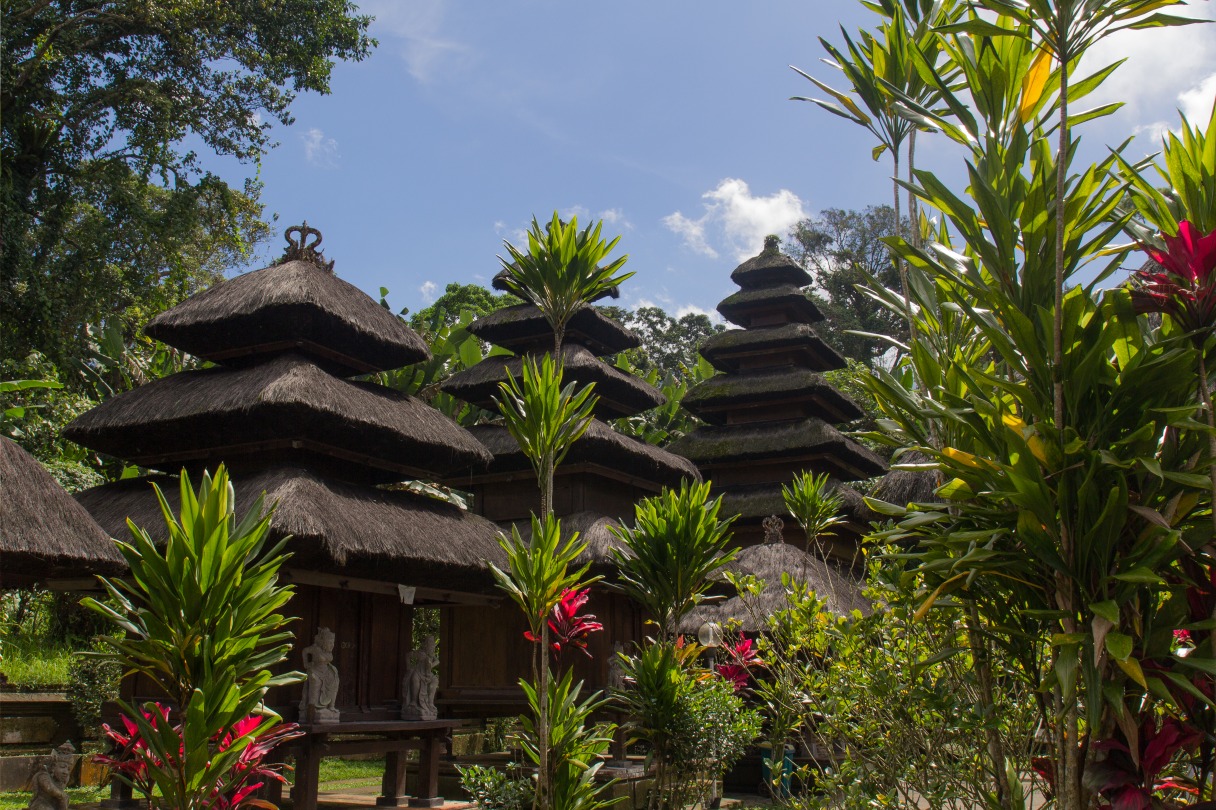
- Meru Tumpang Lima: tower with five superimposed roofs, dedicated to Batara Pucak Mangu, erected during the reign of Cokorda Nyoman Mayun.
- Meru Tumpang Tiga: tower with three roofs, dedicated to Batara Teratai Bang.
- Padma Capah: five-chambered altar representing the Panca Resi, oriented toward the four cardinal directions with a central chamber.
- Lingga Yoni: main altar, in natural stone, 60 cm in height and 30 cm in diameter. Its rectangular, octagonal and round forms symbolize respectively Brahma, Vishnu and Shiva. The faithful deposit their offerings (banten) here.
The oldest structures are today covered in moss, a testament to the humid high-altitude climate.
Place in Balinese spiritual system
Pura Puncak Mangu is among the Sad Kahyangan Jagat, the six spiritual temple pillars of the island. It also belongs to the Catur Loka Pala, the four cardinal protective temples: Pura Lempuyang to the east, Pura Andakasa to the south, Pura Batukaru to the west, and Pura Puncak Mangu to the north.
Ceremonies and ritual life
The sanctuary remains an active place of worship. The main celebrations are the Purnama Sasih Kapat and Purnama Sasih Kapitu, which mark full moons of the Balinese calendar. The Ngebekin ritual, dedicated to Dewa Sangkara, honors the fertility of nature. The days of piodalan and pujawali also gather the faithful who come to express their gratitude and receive blessings.
Other names of the temple
The sanctuary bears several names. Puncak Pangelengan refers to the founding meditation, during which the sovereign was invited to ngelengan (look around). Puncak Beratan references Lake Beratan situated to the east-northeast. Finally, residents of the village of Tinggan, who guard the temple, call it Puncak Tinggan.
Practical information
- Type of visit: high-altitude trek to an active sanctuary. Allow a half-day to full day depending on the trail chosen.
- Difficulty: moderate. The elevation gain remains reasonable compared to climbs of Mount Batur or Mount Agung, but certain sections are steep and slippery after rain.
- Clothing: hiking shoes, covering clothing. A sarong is expected to enter the sacred grounds.
- Entry fees: free donation as is customary for Balinese temples. No formal ticket at the start of the Pelaga trail.
- Camping: common practice among residents at the summit; possible for equipped trekkers.
When to go
The dry season, from May to October, offers the best conditions: passable trails, clear visibility from the summit over Lake Beratan, the village of Pelaga and Mounts Batur and Abang on the Kintamani side. The rainy season (November to April) makes hiking more difficult, with muddy passages and increased risk of landslides. To attend a ceremony, inquire about the piodalan calendar with residents of Tinggan.
How to get there
The trailhead is located approximately 1 hour 30 minutes drive from Denpasar. Three trails lead to the summit:
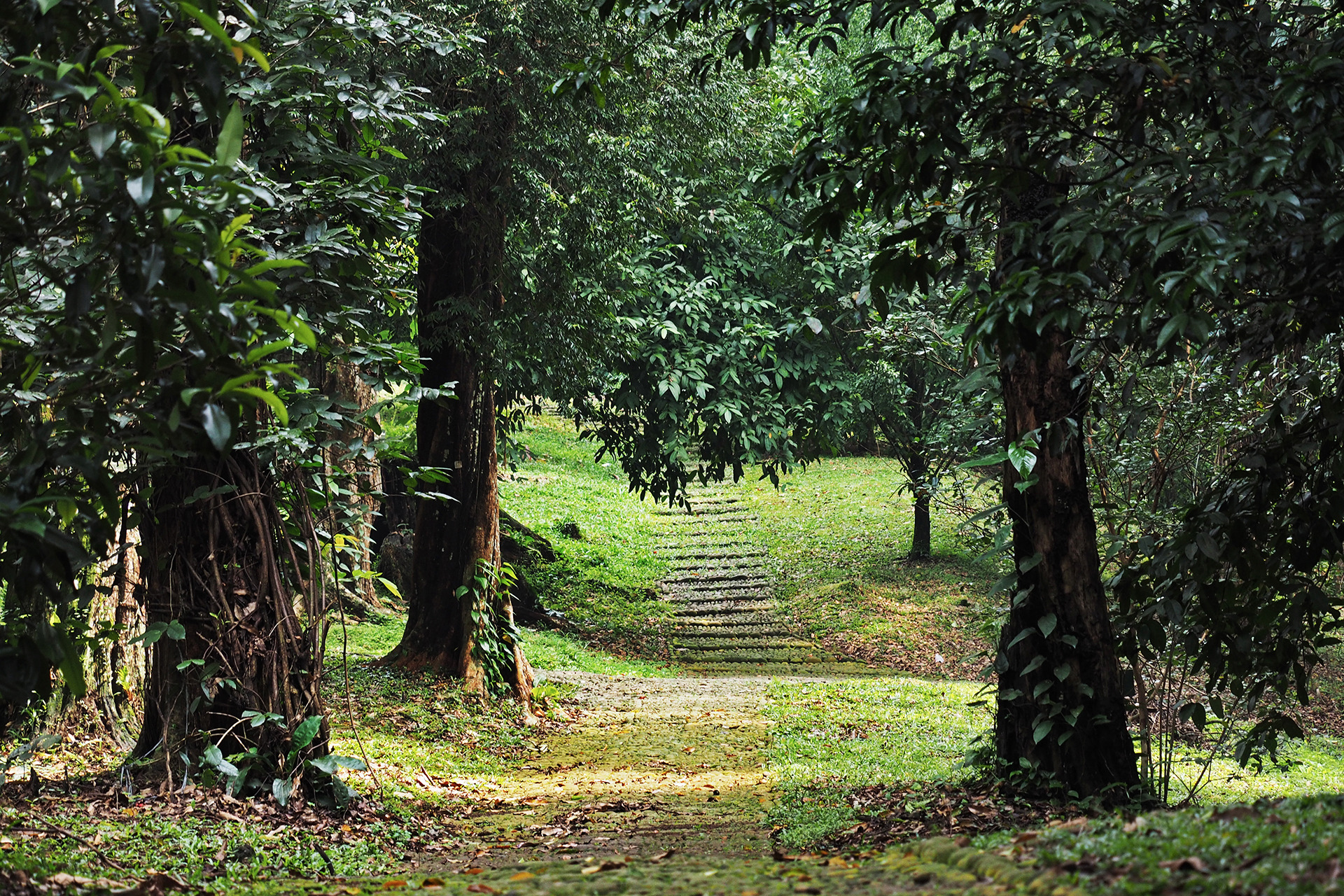
- Pelaga trail (east): the most popular, used during ceremonies. Equipped with stone steps, supported by Badung regency government and Puri Mangwi. Four rest stops punctuate the climb. Some sections are degraded by erosion.
- Bedugul trail (southwest): a more forested alternative.
- Wabagari trail (northwest): less frequented.
A local guide is recommended, particularly for less-marked trails and during the wet season.
Nearby
The Bedugul region, to the southwest, groups several sites complementary to a visit to Pura Puncak Mangu. The Bali Botanical Garden allows you to extend your day in a high-altitude setting, near Lake Beratan. For those wishing to continue exploring the archipelago after Bali, Komodo Island and Rinca Island offer a completely different face of Indonésie, with a naturalist focus.
Frequently asked questions
Frequently asked questions
Yes, the site is open to respectful visitors. Wearing a sarong is expected within the sacred grounds and you should avoid visiting during private ceremonies without accompaniment.
Allow several hours round trip from the Pelaga trailhead, with four rest stops marking the ascent. Duration varies depending on pace and weather conditions.
The Pelaga trail is equipped with stone steps, making it more accessible than climbs of Mount Batur or Mount Agung. Some sections remain steep and slippery; good physical condition is nonetheless required.
Three names coexist: Puncak Pangelengan (linked to the founding meditation), Puncak Beratan (in reference to the nearby lake) and Puncak Tinggan (name given by residents of the guardian village).
Yes, the practice is common among residents. Equipped trekkers can spend the night at the summit, respecting the sacred character of the site.
Include Pura Puncak Mangu in a Bali trip
Pura Puncak Mangu lends itself to a cultural hiking stop off Bali's classic circuits. To build an itinerary combining spiritual sites, mountains and islands, explore our customized trips to Indonésie.
Nearby
Interested in this visit?
We can include it in your personalised itinerary.