Krakatoa's History: August 27, 1883, the Day the Earth Exploded!
In early May 1883, at dawn, the captain of a German warship spotted a plume of ash rising above the uninhabited island of Krakatoa. At that moment, he had no idea he was witnessing
In early May 1883, at dawn, the captain of a German warship spotted a plume of ash rising above the uninhabited island of Krakatoa. At that moment, he was undoubtedly unaware that he was witnessing one of the very first eruptions to be documented scientifically in at least two centuries.
Over the two months that followed, numerous merchant and cruise ships would become privileged witnesses to the same spectacle: explosions, swirling ash clouds, and eruptions of incandescent volcanic bombs. Several scientific expeditions, conducted by Dutch colonists, were then mounted, and the population living on the coasts of the Sunda Strait was so impressed by what they heard that they organized regular festivities. It was only much later that they would come to understand that these eruptions were merely the prelude to one of the greatest catastrophes in human history. 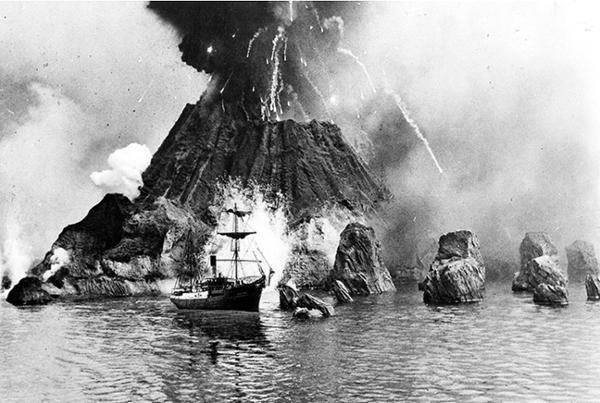
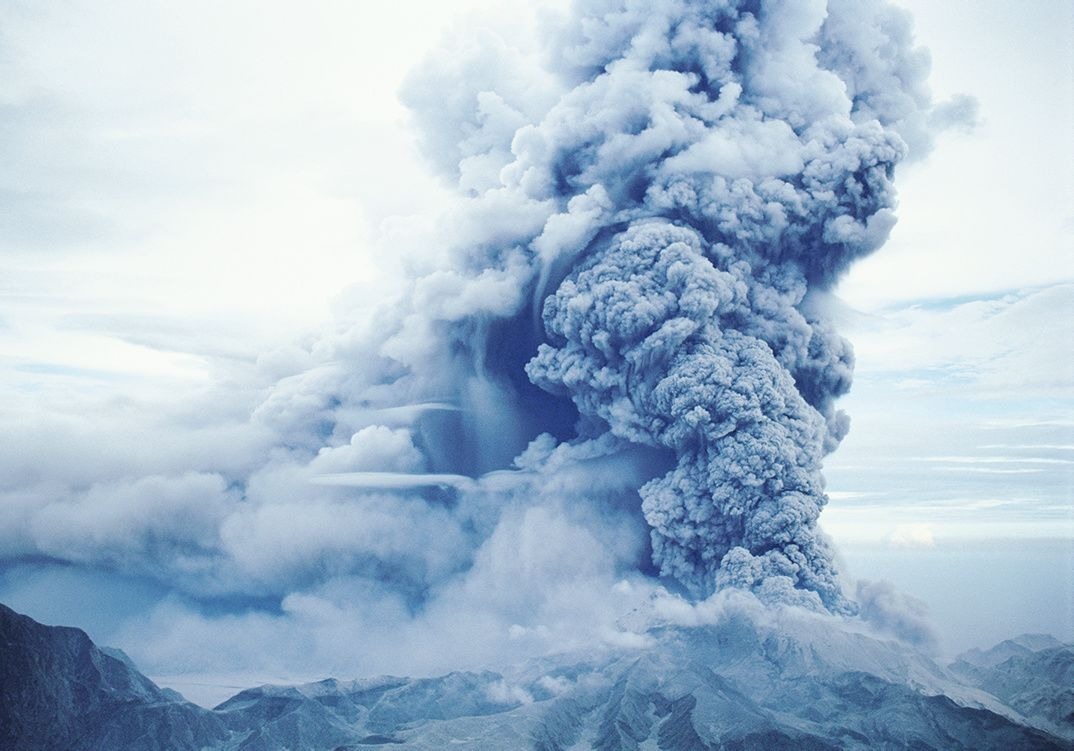
Following a series of explosions, a colossal eruption occurred on August 26, 1883, which caused the collapse of two-thirds of the island's northern section, a series of lava flows, and immense tsunamis that carried their devastating waves toward nearby coasts. By the evening of the two days that followed, more than 35,000 victims had been counted and approximately 200 coastal towns and villages had been destroyed.
Days of Darkness
At the peak of the cataclysm, the pyroclastic flows reached heights of 80 kilometers and covered an area of more than 800,000 km2. The region was also plunged into darkness for two and a half days. The ash drifted through the atmosphere and caused halo effects around the Moon and Sun. One of the other consequences was the drop in temperatures in the months that followed (they would not return to normal until 5 years later). The final explosion produced moreover the loudest sound ever recorded: it was heard over 10% of Earth's surface! Reports of "distant gunfire" from Australia and Mauritius, located more than 4,500 kilometers from Krakatoa, were thus filed. Within hours, pressure waves actually circled the globe multiple times and triggered measurement instruments in the United States and Great Britain. And when Krakatoa collapsed into its magma chamber, the final explosions hurled volcanic rock fragments more than 20 kilometers away. The collapse of a large portion of the remaining island then caused an underwater caldera approximately 6 kilometers in diameter. Scientists later estimated that Krakatoa's phenomenal eruption generated a pyroclastic flow that destroyed almost everything in its path. These fiery clouds—as they are more commonly called—contain indeed a very dense mixture of lava blocks, pumice stones, and volcanic ash, and their speeds, which can reach up to 80 km/h, as well as their temperatures (between 200 and 700o Celsius) caused the destruction of everything they engulfed. 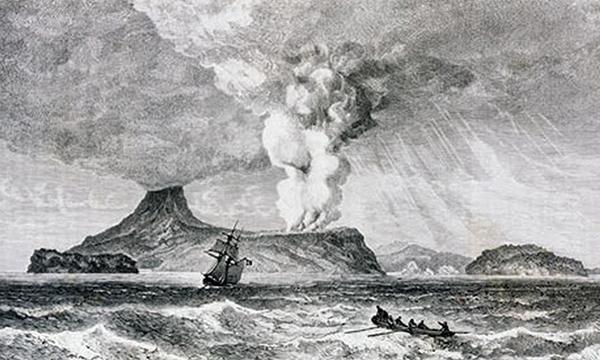
Even more devastating were the tsunamis that swept onto the coasts of Sumatra and Java. The highest wave was estimated at 41 meters, and the series that followed destroyed more than 200 coastal towns and villages. Local flora and fauna were devastated, numerous infrastructures were swept away by the waves, and more than 35,000 people lost their lives in the catastrophe, with 34,000 of them meeting their end from the tsunamis! After the 1883 cataclysm, volcanic activity remained calm until the mid-1920s, when new eruptions gave birth to the son of Krakatoa, "Anak Krakatau" in Indonesian, in the middle of the underwater caldera that had formed at that time. Krakatoa's offspring then experienced rapid growth and has shown continuous activity ever since. It grows nearly 5 meters per year, and each eruption regularly raises fears of a catastrophe identical to that of 1883. The most recent one, on December 22, 2018, triggered a tsunami that claimed more than 400 lives, despite the fact that Anak Krakatau is considered a scientifically well-monitored and studied volcano.