Toraja Land
Toraja Land
Boat-shaped dwellings, cliff tombs, and funeral ceremonies unlike anywhere else on earth: Toraja Land is Indonesia at its most mysterious, nestled high in the peaks of Sulawesi.
The Toraja are undoubtedly among the most emblematic indigenous peoples of Indonesia. Everything about their history and culture sets them apart from the other inhabitants of the Indonesian archipelago. Living on the central highlands of Sulawesi island, this community has long captivated researchers, explorers, and travelers alike. If you're planning a journey to Toraja Land in the near future, you'll find all the essential information about this remarkable people here.
History
The Toraja are classified among aboriginal ethnic groups. They inhabit the mountainous regions of South Sulawesi. In 1919, they decided to consolidate their settlements on the central highlands to strengthen group cohesion and protect themselves against the Bugis, who occupied the southwest region of Sulawesi and were attempting invasions at the time.
According to legend, Toraja ancestors arrived on the island by sea, traveling from southern China via Indochina. This maritime heritage explains why their houses feature boat-shaped roofs. Once scattered across the mountains, the Toraja are now concentrated in Tana Toraja, located 300 kilometers north of Makassar, in South Sulawesi.
Caste System
Much like in India, the Toraja adopted a three-tier caste system: the nobility, the warriors, and the commoners.
- The Nobility:
Nobles are direct descendants of the Toraja ancestors, regarded as sacred and venerated to this day. They hold wealth and power throughout the region.
- The Warriors:
Positioned between nobles and commoners, warriors are tasked with village protection and ensuring the safety of the nobility. They are also considered influential members of society.
- The Commoners:
Of the three castes, this is the poorest and most disadvantaged. Although they represent the majority of the population, commoners have little influence over society's broader affairs.
- Note:
While it is impossible for the lower caste to advance, an individual may lose their rank if they incur gambling debts or behave inappropriately in society.
Architecture
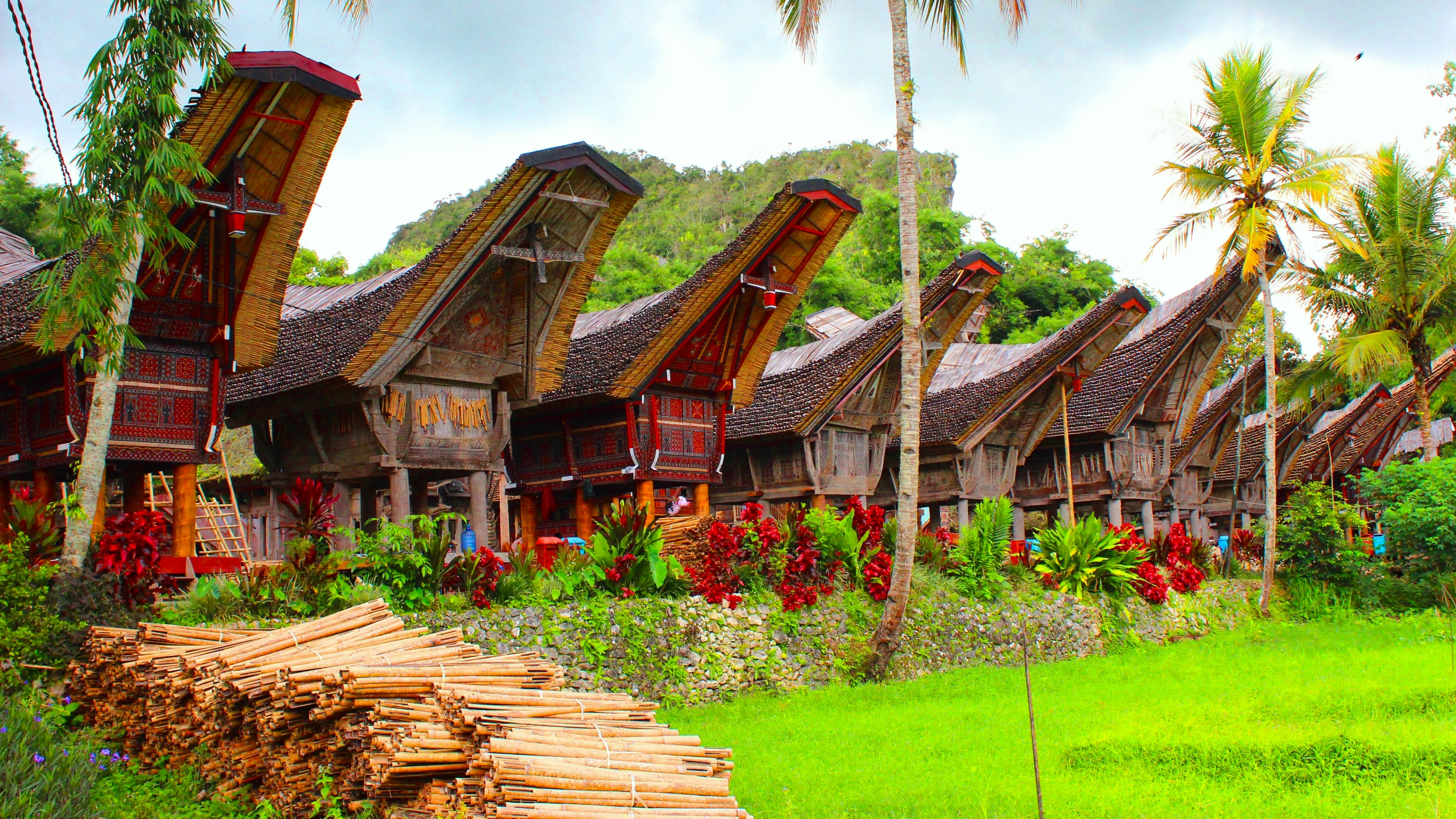
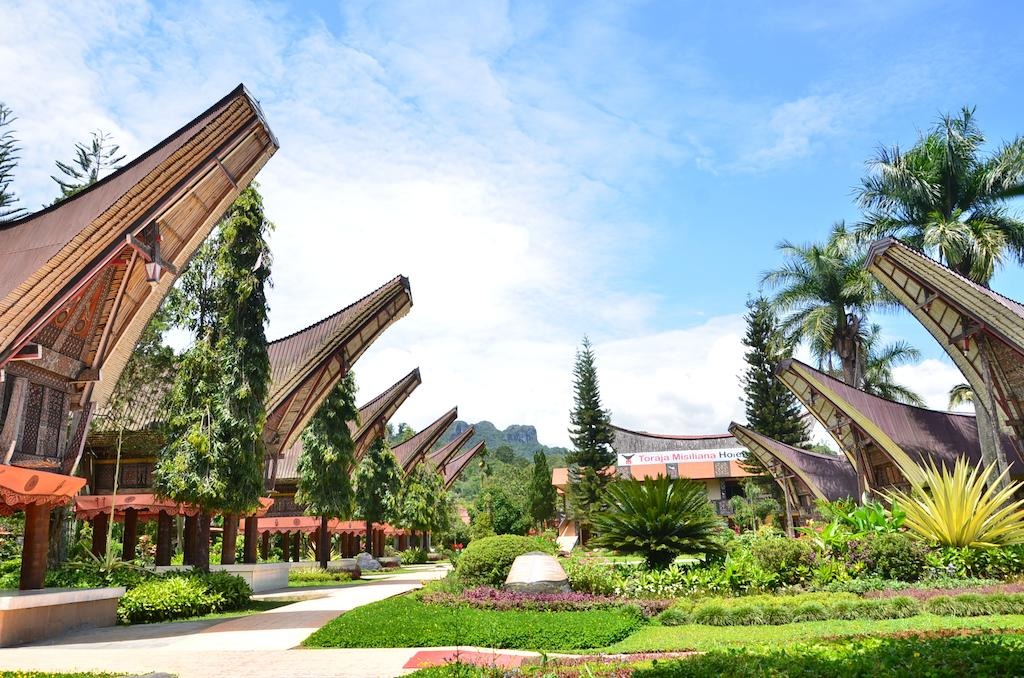
One of the defining characteristics of the Toraja people is their distinctive architectural style. Known as "Tongkonan," their houses are built according to strict ancestral rules. For some, the roof's shape evokes the boats their ancestors used to sail to Sulawesi. Others believe it represents buffalo horns—an animal sacred to the region. Houses are further adorned with wood carvings featuring geometric patterns. The four symbolic colors of the Toraja people are black, red, white, and yellow. Black symbolizes darkness and death. Red represents blood and life, white signifies bone and purity, and yellow embodies power and divine approval.
Originally, only nobles had the right to build tongkonan. Commoners lived in smaller, less decorated dwellings called banua. Today, anyone may build their own home. The number of buffalo horns nailed to a beam at the front of the house marks the family's social rank and wealth. Tongkonan are typically accompanied by one or more rice granaries.
Religion
The Toraja were originally animists, practicing a belief system called "Aluk" or "Aluk To Dolo," meaning the way of the ancestors. With the arrival of the Dutch, the social and religious model gradually transformed into a Christianized society. Today, the majority of the population is Christian, with the remainder Muslim. However, despite the strong presence of Christianity and Islam among the Toraja people, they continue to honor their ancient traditions and funeral rites.
Funeral Rites
The Toraja are particularly renowned for their funeral rites. When someone passes away, burial does not occur immediately. Funerals must be marked by an elaborate ceremony. Thus, until the deceased's family has saved enough money for the funeral proceedings, the body is kept in its coffin. This can take months or even years. During this time, the family continues to care for the deceased as though they were still part of the living world.
Tourism in Toraja Land
Long isolated from the outside world, the Toraja people gradually opened up starting in the 1970s. They quickly became a subject of study for countless anthropologists and an unmissable destination in South Sulawesi. Indeed, these ancestral traditions continue to fascinate travelers seeking authentic experiences. However, from the 1990s onward, Toraja culture has evolved as tourists have flocked to the region, gradually losing its originality and becoming increasingly commercialized. It is a challenge the government continues to work to address.
To reach Toraja Land, you must first travel to Makassar. From there, the journey takes between six and eight hours by road.
Also discover
Want to discover this destination?
Our local advisors design your tailor-made trip.