Cirebon
Cirebon
An overlooked royal city of Java, Cirebon blends kratons, batik, and seaside cuisine. Our complete guide to exploring this historic port town.
Among Java's most celebrated royal cities, Cirebon often remains overshadowed by Yogyakarta and Surakarta in the eyes of travelers. Yet this city played a vital role in shaping the island's international maritime commerce. A fusion of European, Indian, Javanese, Oriental, and Chinese influences, the architecture of its principal monuments truly deserves attention. History, art, culture, and gastronomy all await!
History
Cirebon is a port city located in the region of West Java. It lies four hours' drive from Jakarta and northeast of Bandung. A crossroads of cultures, it was once a center of immense economic, political, and religious importance, particularly from the 15th through 17th centuries. The city proudly claims three cultural heritages: Muslim, Hindu, and Chinese. Its culture closely mirrors those of Banten and Semarang.
According to historians, Cirebon already existed in the 13th century during the era of the Majapahit kingdom. It thus became the birthplace of Islam's massive diffusion throughout Java. Indeed, one of the most renowned figures in the region remains Sunan Gunung Jati, one of the nine saints known as Wali Sanga who played a crucial role in spreading Islam across the island.
Once governed by royal lineages, the city long resisted Dutch arrival and colonization. It was eventually ceded to the VOC (Vereenigde Oost-Indische Compagnie), the Dutch East India Company, by one of the last sultans in the early 18th century. The Dutch chose to modernize the port and elevate it to a major maritime center.
As a royal city, its fame also stems from the flourishing arts patronized by the reigning dynasties. Thus, shadow puppet theater, music, and traditional dances form an integral part of its cultural heritage. The masked dance known as Tari Topeng Cirebon originated here and draws inspiration from the legendary cycles of the Javanese hero Panji.
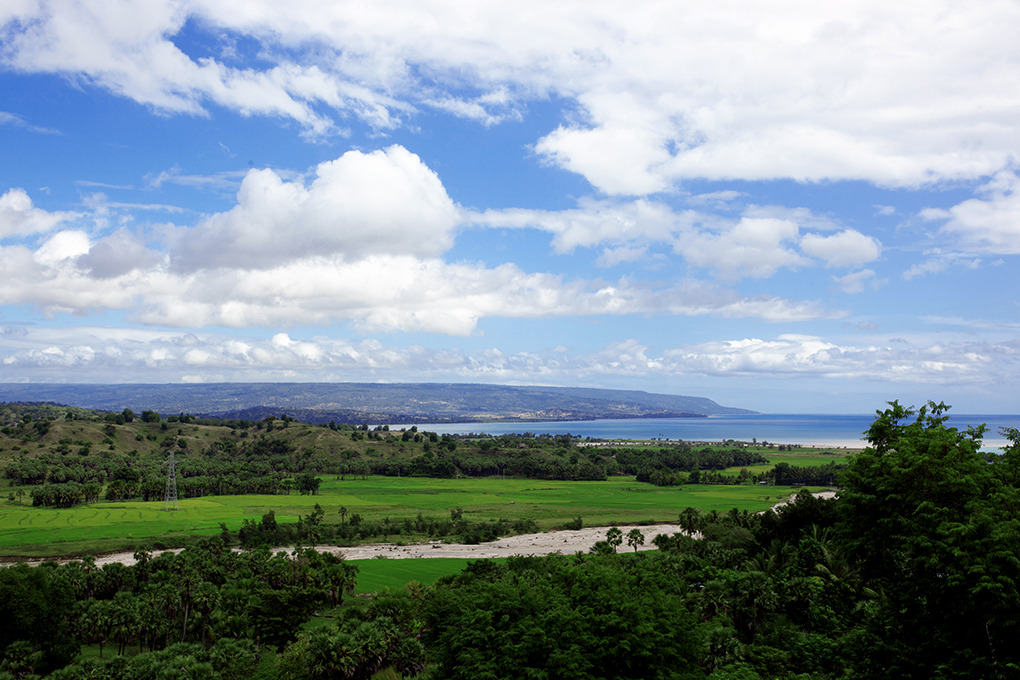
Cirebon is renowned for the quality of its seafood and traditional cuisine. Indeed, Javanese inhabitants call it the "City of Shrimp." Like most Indonesian regions, the city is dominated by a volcano—in this case, Mount Cereme, which rises above 3,000 meters in altitude.
Cirebon Today
Modern and equipped with contemporary facilities, Cirebon remains open to the world and the rest of the Indonesian archipelago. You'll find an airport, a highway, a train line, and a maritime port here. Local residents also live from agriculture, with the region being an important producer of tea, rice, tobacco, essential oils, and peanuts.
Visiting Cirebon is rather like visiting one of France's renowned gastronomic cities: you absolutely must taste the local culinary specialties. As a port city, many elements of local cuisine originate from the sea: fish, shrimp, octopus—there's everything to discover! We particularly recommend trying nasi lengko (rice accompanied by bean sprouts, fried tofu, and tempe) or ayam panggang (roasted chicken).
Cirebon is furthermore divided into five administrative districts: Pekalipan, Kesambi, Kejaksan, Harjamukti, and Lemahwunghuk. With roughly 300,000 inhabitants, it ranks among the most significant major cities of North Java. Its economy centers primarily on commerce, hospitality, food and beverage, and the service sector.
What to Do in Cirebon?
As mentioned earlier, Cirebon offers something for everyone: markets, palaces, mosques, artisanal boutiques, and excellent restaurants. Truly something to delight all travelers!
We also recommend visiting the four royal palaces: the Kasepuhan Kraton, the Kranoman Kraton, the Kacirebonan Kraton, and the Kaprabonan Kraton. Built by different royal lineages, they serve to promote the artistic and historical culture linked to Cirebon. The heirs of these families remain highly respected by the city's inhabitants today.
A visit to the Trusmi zone is essential if you wish to discover the artisanal center of Cirebon batik! Vibrant and influenced by Chinese culture, its batik is highly renowned throughout Java. The same applies to glass painting, a discipline derived from Islamic art.
Monuments and public spaces certainly abound in Cirebon! Plenty to enjoy while discovering the local culture!
Want to discover this destination?
Our local advisors design your tailor-made trip.