Restaurants in Bali
At Bali, all your senses come alive and your taste buds will certainly confirm it! It cannot be said often enough: you eat wonderfully well in Bali. Like the arts, the tourism industry has helped Bali attract and integrate many cuisines and talents from around the world.
At Bali, all your senses come alive and your taste buds will certainly confirm it!
It cannot be said often enough: you eat wonderfully well in Bali. Like the arts, the tourism industry has helped Bali attract and integrate many cuisines and talents from around the world. The average quality level surpasses anything offered in Europe, all at considerably lower prices. You can easily find excellent and authentic Indonesian, Thai, Japanese, Italian, and Australian restaurants. Ingredients are varied, fresh, and mostly produced locally. Cooking is done to order, cooks are competent, and often quite talented.
We're not necessarily talking about sophisticated dining and upscale restaurants here, but mainly everyday dining. Once again, the alchemy of this country with its rich flora, open-minded mentality, and love of beauty and attention to others, works wonders.
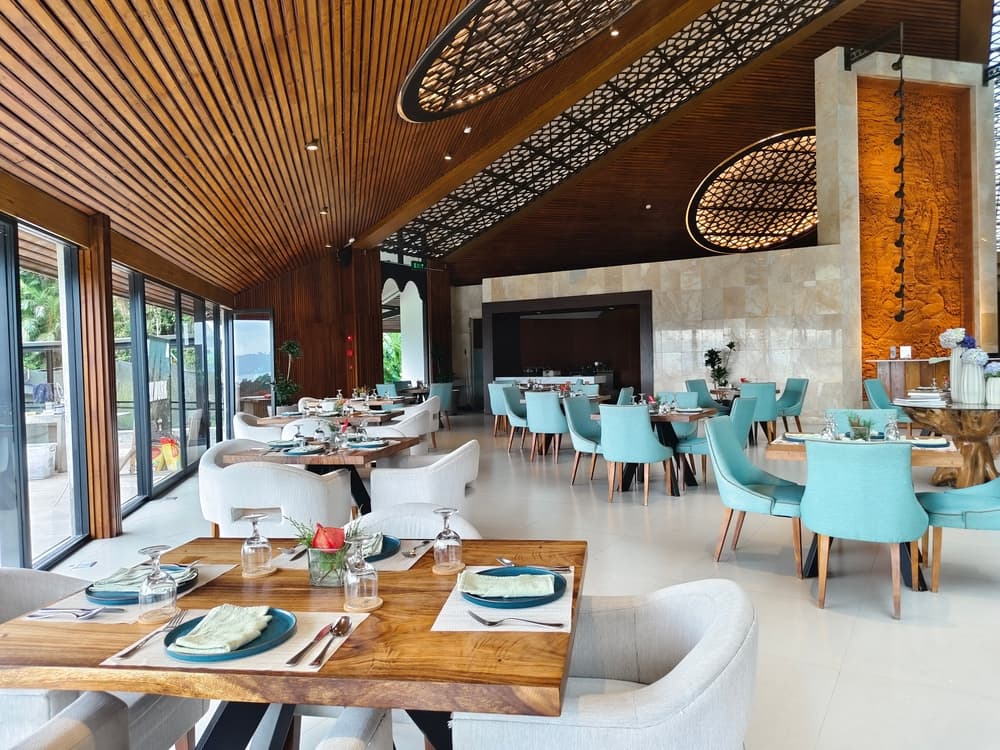
And there's the setting and service. To the delights of the palate, Bali's restaurants add wonderful settings: dining rooms are often set in flowering gardens, along beaches or rice paddies. Servers deploy treasures of kindness and attentiveness.
Different types of restaurants
Warungs for locals
These are small family-run restaurants primarily frequented by Balinese. Sometimes ramshackle, they serve Nasi/Bami Goreng, Nasi campur, Satays, and Baby Guling. Very inexpensive (less than 20,000 Rp per meal), it must be said that these restaurants often only meet the taste, comfort, and sometimes hygiene standards of true backpackers. But it would be a shame to avoid them: their cuisine can be excellent and they offer an opportunity to immerse yourself in the country's culture. Bringing your custom to these restaurants is also a way to support the purely local economy, which is not always thriving.
In the same category, add the street vendors: these small carts that roam the streets selling soup, Bami, and other Bakso. Some have a reputation that draws connoisseurs.
Tourist warungs
In a higher but still low price range, up to 50,000 Rp for a meal with a drink, these warungs have adapted in terms of comfort, menu, and service to the standards of tourists and more affluent locals. The menu often offers an assortment of Balinese dishes and Western fare (pasta and pizzas) to satisfy just about all tastes and ages. Operating essentially on Bali's resources, even if sometimes run by expatriates, they should be prioritized as they constructively feed the local economy.
The service is friendly, somewhat haphazard, but so attentive and smiling! For us, these are the ideal canteens. And you eat cheaper here than at the local McDonald's (yes, McDonald's has arrived in Bali!).
Tourist restaurants
Clearly oriented toward tourists seeking more reassuring standards, they try to move beyond the warung concept to offer a more internationally calibrated environment and menu. For 100,000 Rp, you're still well beyond the usual value-for-money ratio in our regions. Most specialize in one cuisine (Italian, Thai, Mediterranean...), while offering Balinese classics.
Fine dining restaurants
Sometimes housed within large hotels, they offer you the best of Bali and the world in sumptuous settings. Real chefs, mostly from abroad, lead the kitchens and offer creative menus based on refined local and international cuisine, at the price of a good restaurant in Europe. Even if their menus and reputations can sometimes seem overblown compared to what some warungs offer, it would be a shame to deny yourself such pleasure during a stay here. You can sometimes barely see the Balinese servers looking uncomfortable in the role of the obsequious, meticulous, and professional maître d', but not everyone will complain!
A few tips to make the most of your culinary experience
Consume local
Make an effort to consume local products. Prefer locally produced fish, poultry, or pork over imported beef* and lamb. In general, all fresh products, fruits, and vegetables are produced in Bali and Indonesia.
Be patient
In Bali, a dish is prepared to order. Order homemade mashed potatoes at Warung Satia and stick your head in the kitchen: you'll see them mashing potatoes by hand.
Make sure your order is well understood
Balinese staff in warungs often have quite limited English. A wide smile from the server doesn't mean they understood correctly! Have them repeat your order twice rather than once, or even better: verify what they've written down. Double-checking the bill is not always a luxury, even though errors are more often due to mistakes in notation than dishonesty.
Children at the restaurant
Some people, particularly children, may be unreceptive to the spiced delights of local cuisines. Many restaurants offer mixed menus (pizza, pasta, meats...). Rarer are those offering children's portions: always ask if they can prepare one, and it will likely be possible. Avoid fresh vegetables and fruits in small warungs or from street vendors, as hygiene can sometimes be questionable.
Bon appétit!
* In warungs, beef is most often locally produced and often excellent.