Mount Agung's Threat to Bali Is Far From Over
Activity at Bali's Mount Agung has decreased over the weekend, yet volcanologists still fear an explosive eruption similar to the catastrophic one in 1963 that claimed thousands of lives.
Activity at Mount Agung in Bali has declined over the weekend, yet volcanologists continue to fear an explosive eruption similar to the catastrophic one in 1963 that claimed numerous lives.
According to the French embassy website in Indonésie, as of today (12/11/2017), the alert level for Mount Agung remains at level 4 (the highest level). Nearby air services continue to be disrupted due to volcanic ash projections into the sky. Safety guidelines remain unchanged: it is prohibited to approach within 8 km of the crater and 10 km in areas located to the North, North-East, South, South-East and South-West.
Mount Agung is often described as temperamental by volcanologists who sometimes struggle to predict its future activity. The volcano could at any moment unleash a violent explosive eruption producing pyroclastic flows (massive clouds of extremely hot, highly pressurized gases carrying significant quantities of recent or ancient lava debris).
"Continuous ash projections are sometimes accompanied by explosive eruptions and faint rumbling sounds," explained the National Disaster Management Agency in a statement. "Fire flashes are becoming increasingly visible at night. This indicates that conditions for a more powerful imminent eruption are being met," it added.
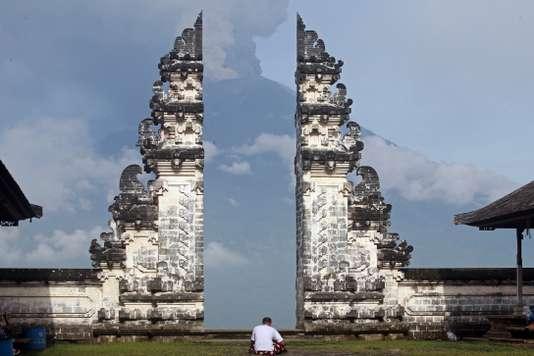
Mudflows mixed with volcanic rock debris, known as lahars in Indonesian terminology, are visible on the volcano's slopes. It is therefore crucial for Indonesian authorities to maintain the alert status and the safety zone around the volcano. No casualties have been reported so far, but evacuated families will unfortunately be unable to return home anytime soon.
An Agung Eruption Could Impact Global Climate
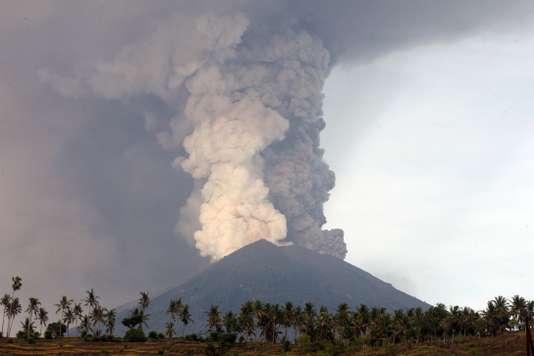
Should the Balinese volcano erupt, this eruption would very likely have a direct impact on climate. A major explosion could send volcanic debris into the stratosphere (above 15 km), thereby reducing global temperatures by a tenth of a degree.
The ash cloud produced by such an eruption would plunge Indonésie under a gray, heavy sky. We will keep you updated on the latest significant developments regarding the volcano.