Kawah Ijen, a must-see for volcano enthusiasts
Kawah Ijen is, along with Bromo, another must-see destination for volcano enthusiasts. Both located on the route between Java and Bali, travelers often combine the two climbs during a Java/Bali circuit.
Kawah Ijen is, along with Bromo, another must-see destination for volcano enthusiasts. Both located on the route between Java and Bali, travelers often combine the two climbs during a Java/Bali circuit.
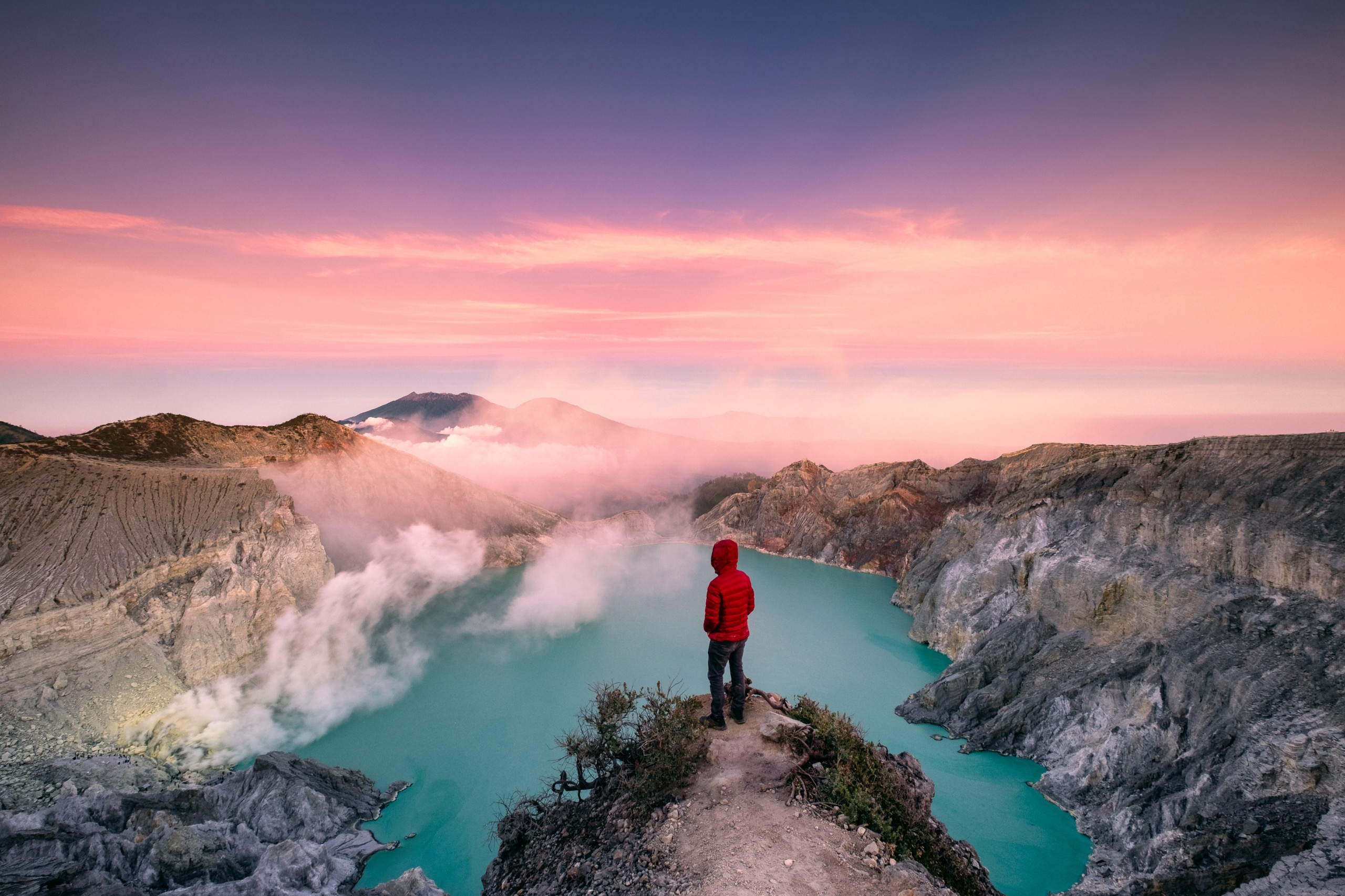
Located in the eastern part of Java, Kawah Ijen attracts visitors for the stunning beauty of its acidic blue lake, the opportunity to meet sulfur porters, its blue flames, and the breathtaking landscapes of the surrounding area.
Climbing Kawah Ijen during the day
Kawah Ijen is renowned for its acidic lake, the largest of its kind in the world. During the day, you can admire the turquoise lake beneath the crater and the surrounding landscapes shaped by numerous volcanoes and lush mountains whose beauty is simply breathtaking. You will also witness the daily work of the many miners operating on site, descending near the lake to harvest the abundant sulfur present in the crater. The difficult working conditions of these miners have been the subject of numerous documentaries, including The Volcano's Slaves, broadcast on France 5 a few years ago. (https://www.dailymotion.com/video/xv151s)
Night climb of Kawah Ijen
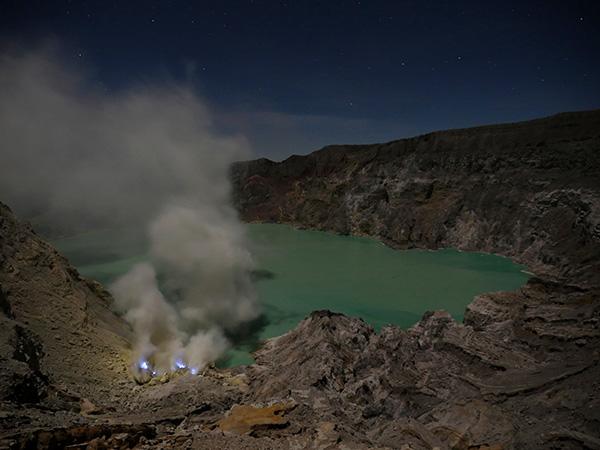
At night, you will be captivated by the spectacular sight before you: depending on pressure and ambient temperature, the sulfur ignites. In the dim light, the blue flames dancing in the darkness as they lick the volcano's slopes will transport you to another realm entirely. The flames are only visible in darkness, so remember to turn off your headlamp when you reach the crater's base. You can stay at the bottom of the crater and observe workers harvesting sulfur near the vents before making your way back leisurely to enjoy the sunrise over the volcano around 5:30 in the morning.
If you prefer excursions away from the crowds, we recommend climbing Kawah Ijen after the first wave of tourists, around 7 or 8 in the morning, rather than at 4 or 5 o'clock, as visitors who make the night climb to see the blue flames do. You will meet the first visitors beginning their descent, and you'll have the volcano almost to yourselves!
Discovering Kawah Ijen with Azimuth Adventure Travel
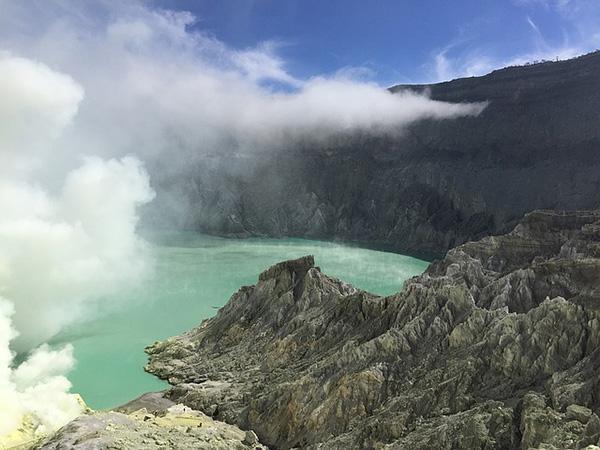
The Kawah Ijen circuit we offer you begins from Paltuding around 7 in the morning. After roughly an hour's walk, we reach the weighing station located on the outer flank of the volcano. This is where the sulfur porters coming back up from the crater stop to have their basket contents weighed. After a brief rest, we continue toward the crater rim, which we reach after another half hour of walking. Once at the top, you can, if you wish, descend into the crater to get closer to the acid lake. On the way back, we take time to stop and chat with the miners weighing their sulfur.
The fumes escaping from the volcano can sometimes be quite unpleasant. Your guide can provide you with masks to protect you from toxic vapors.
Difficulty level: Easy
Like Bromo, one of Kawah Ijen's strengths is that its climb is accessible to everyone. The first part of the ascent is on a track roughly 3 meters wide that extends for two kilometers. The elevation gain is quite substantial in the first kilometers, but the end of the route is much easier. The climb is also relatively short: approximately three hours to go up and return to the starting point.
When to go?
The Kawah Ijen climb is possible year-round. You will likely have fewer chances of encountering rain (but more chances of meeting other tourists!) between June and August.
Our tips for climbing Kawah Ijen
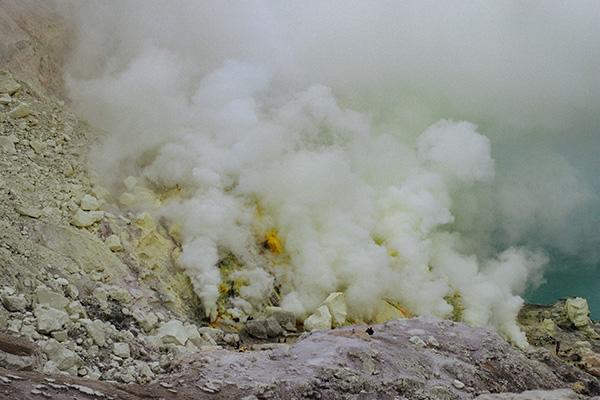
Bring a mask to protect yourself from fumaroles and sulfur emissions, especially if you plan to descend into the crater. If you stay at the top, the fumes will be less intense, but a mask can serve as a barrier against sulfur odors that may bother some people. It is also recommended for travelers with breathing difficulties to take their precautions.
Also plan for warm clothing if you intend to do the night climb. Temperatures can drop as low as 5 degrees Celsius. Equip yourself with good hiking shoes, especially for the descent into the crater. The path is less marked and can be quite chaotic in places, even slippery. For night climbs, a headlamp is highly appreciated.
Finally, if watching a documentary inspired you to help in some way the miners with very difficult working conditions, know that what they need most is money, and that any other form of aid may not be suited to their actual needs. Some travelers, for example, bring mountain hiking shoes in their luggage so miners can use them instead of their flip-flops or plastic boots. These shoes are often not used but resold to meet the family's financial needs. Don't hesitate to give them a small note if you wish to take their photo, but avoid bothering them while they're working.