A brief history of Mount Krakatoa… and its son!
·
Source:http://www.gsi.go.jp/cais/topic181225-index-e.html
Dec 28, 2018
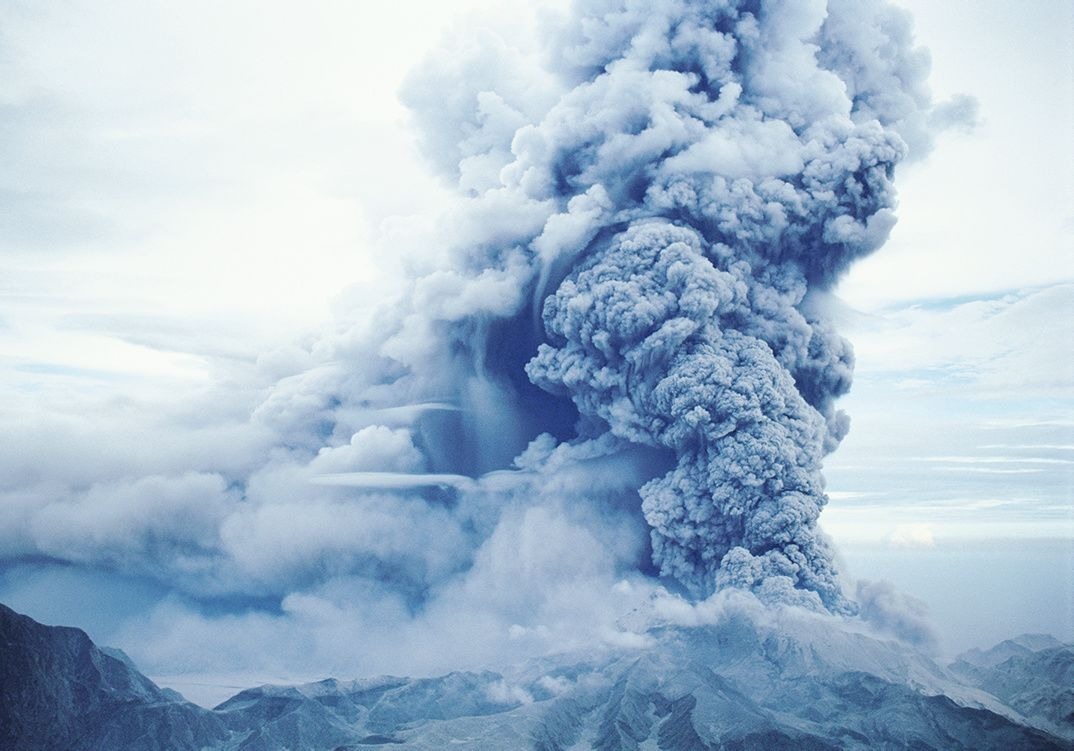
A tsunami devastated the coasts of Banten (west of Java) and southern Sumatra on Saturday, December 22, 2018. This natural event, caused by the collapse of a portion (64 hectares!) of the flanks of the volcano Anak Krakatau (which means "the child of Krakatoa" in Indonesian), tragically claimed the lives of over 400 people who had gathered on the region's stunning beaches to celebrate the weekend and the start of the year-end festivities.
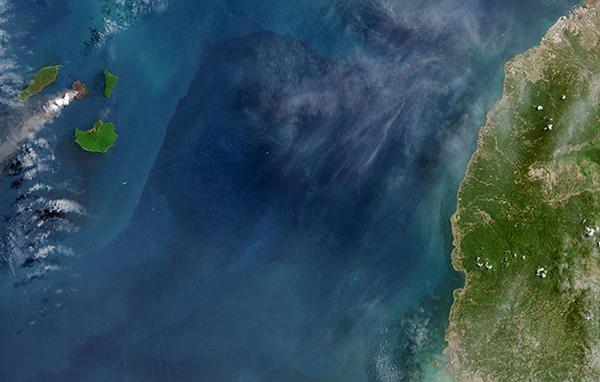
Anak Krakatau is an island volcano located in the middle of the Sunda Strait, which separates the islands of Java and Sumatra, and emerged in 1927 from the remnants of the famous eruption of Mt Krakatoa in 1883. The volcano has been in an escalating eruptive phase since July 2018, and the recent tsunami has raised fears of further catastrophes in the near or distant future.
Geomorphic changes following the December 22, 2018 eruption, which triggered a tsunami
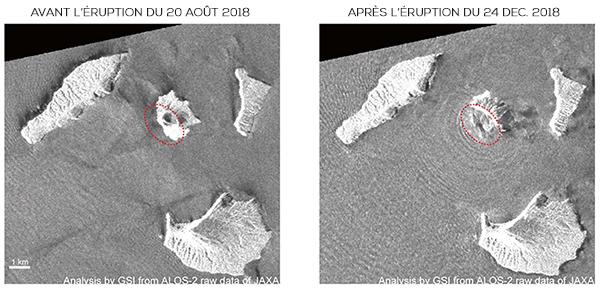
 The December 2018 tsunami, however, must be put into perspective.
 45 years later, "the Child of Krakatau" was born from the ruins of its mother and grew to its current height of just over 1,080 feet. This "child" has since continually shown troubling signs, and it was not until the early 1980s that an observatory was built at Pasauran (on the west coast of Java), located approximately 31 miles east of the volcano. It is therefore through seismic surveys and other visual observations that local scientific authorities can decide on preventive measures, but humanity remains powerless in the face of nature's force.
After the series of catastrophes that struck Indonésie in 2018 (earthquakes in Lombok, tsunamis in the Palu region and in the Sunda Strait), let us hope that the forces of nature will ease in the coming months, so that a great many travellers can explore the wonders that this gigantic archipelago has in store!
Join us next Thursday for a new article about the history of Krakatoa and its eruption on August 27, 1883.
Note: if the story of the 1883 Krakatoa eruption fascinates you, we invite you to read Simon Winchester's account, "Krakatoa: The Day the World Exploded: August 26, 1883" (published by Harper Perennial).
45 years later, "the Child of Krakatau" was born from the ruins of its mother and grew to its current height of just over 1,080 feet. This "child" has since continually shown troubling signs, and it was not until the early 1980s that an observatory was built at Pasauran (on the west coast of Java), located approximately 31 miles east of the volcano. It is therefore through seismic surveys and other visual observations that local scientific authorities can decide on preventive measures, but humanity remains powerless in the face of nature's force.
After the series of catastrophes that struck Indonésie in 2018 (earthquakes in Lombok, tsunamis in the Palu region and in the Sunda Strait), let us hope that the forces of nature will ease in the coming months, so that a great many travellers can explore the wonders that this gigantic archipelago has in store!
Join us next Thursday for a new article about the history of Krakatoa and its eruption on August 27, 1883.
Note: if the story of the 1883 Krakatoa eruption fascinates you, we invite you to read Simon Winchester's account, "Krakatoa: The Day the World Exploded: August 26, 1883" (published by Harper Perennial).
Source: http://www.gsi.go.jp/cais/topic181225-index-e.html
In 2012, the Geological Society of London had modelled the effects of a collapse of the unstable flanks of Anak Krakatau (cf. http://sp.lyellcollection.org/content/361/1/79#F1). The results showed that a collapse of just 300 m³ of the volcano's slope could potentially generate a wave of 43 meters, which would reach the neighbouring islands of Serting, Panjang and Rakata in 1 minute. It would then propagate radially, in 35-45 minutes and at a speed of 50-70 miles per hour, towards the western coast of Java, with an amplitude measured between 1.5 and 3.4 meters. The problem therefore lies in the speed of detection of such an incident by local scientific authorities, combined with an effective warning system on the coasts, which unfortunately does not appear to have been in place on December 22, 2018.Satellite photo of Anak Krakatau volcano, taken September 22, 2018 Source: https://earthobservatory.nasa.gov/images/92806/activity-at-krakatau
Flashback: the eruption of Krakatoa
Between August 26 and 28, 1883, the eruption of Mount Krakatoa and the numerous tsunamis that followed claimed the lives of more than 35,000 indigenous people along the coasts of the Sunda Strait. This cataclysm was one of the most powerful and devastating in recent volcanological history. One of the many tsunamis resulting from the volcano's eruption generated a wave of approximately 50 feet, which reached the coasts of Java in no less than 35-40 minutes. Nearly 200 villages were wiped off the map and many ships were carried several kilometres inland. This eruption remained etched in collective memory, as it altered the course of humanity. The volcanic ash from Krakatoa swirled around the Earth and caused a drop in global temperatures. The effects of the eruption were felt as far as Europe and its detonation heard as far as Australia, India, and beyond. Furthermore, the explosion of Krakatoa contributed to triggering the first uprising of fundamentalist Muslims against Dutch colonists.Lithograph (dating from 1888) of the eruption of Krakatoa in 1883 Source: https://fr.wikipedia.org/wiki/Éruption_du_Krakatoa_en_1883
Charlène Nomadays
An English-speaking SEO writer from the very beginning at Nomadays, who became content manager and head of the communications department, Charlène has accompanied the adventure with passion and loyalty since its inception. After spending seven years in Asia – from China to Thailand, passing through Mongolia and South Korea – she has made travel a way of being in the world. A lover of words, nature and human connection, she strives to convey in her writing a sensitive, committed and responsible vision of tourism. For her, each article is a bridge between curiosity, respect and wonder.