Traditional Sasak Villages
Traditional Sasak Villages
In the heart of Lombok, Sasak villages tell another story of Indonésie: mud-brick houses, hat-roofed rice barns, songket weaving and ancestral pottery.
If you're seeking authentic experiences during your stay in Indonésie, set your sights on Lombok and embark on a journey of discovery with the Sasak people, the island's first inhabitants. If you're planning to take part in this remarkable adventure, here's some essential information to help you make the most of your escape.
History
The Sasak are part of a community originally from Malaysia that settled in the central region of Lombok. Today, they form the island's largest ethnic group. Originally, the majority of the population practiced animism. However, during the 17th century, much of it converted to Islam. Nevertheless, a unique spiritual practice called watu telu persists—a blend of animist, Hindu, Buddhist and Islamic influences.
The Sasak live primarily from agriculture and fishing. They inhabit dwellings comprising several rooms: one that remains closed and provides access to stored crops on the upper floor, a room for women and children, and another, outside, reserved for men. They cook over wood fires in a separate space. The Sasak also perpetuate craftsmanship inherited from their ancestors. If you wish to encounter Indonesia's typical ethnic groups, this excursion is essential. It would be an opportunity to meet a people still deeply rooted in their traditions and their own way of life.
Today
Among the Sasak villages not to miss during your stay in Indonésie, Sade tops the list. Located on the road leading to Kuta, it is the most well-known and remains the most visited. You'll find traditional houses and a few souvenir shops there.
Then venture to discover the village of Banyumulek, specializing in pottery. There, you can get a glimpse of the methods used to craft kitchen utensils and other clay-based objects. Just as in Sade village, you'll have the chance to purchase handcrafted items, such as vases, bowls, pots and other pottery objects.
Continue your adventure to Sukarara village, this time renowned for its weaving art. This craft is passed down from mother to daughter. You'll likely see women weaving on their balconies, most often to create songket, an elaborately embroidered cloth interwoven with gold and silver thread.
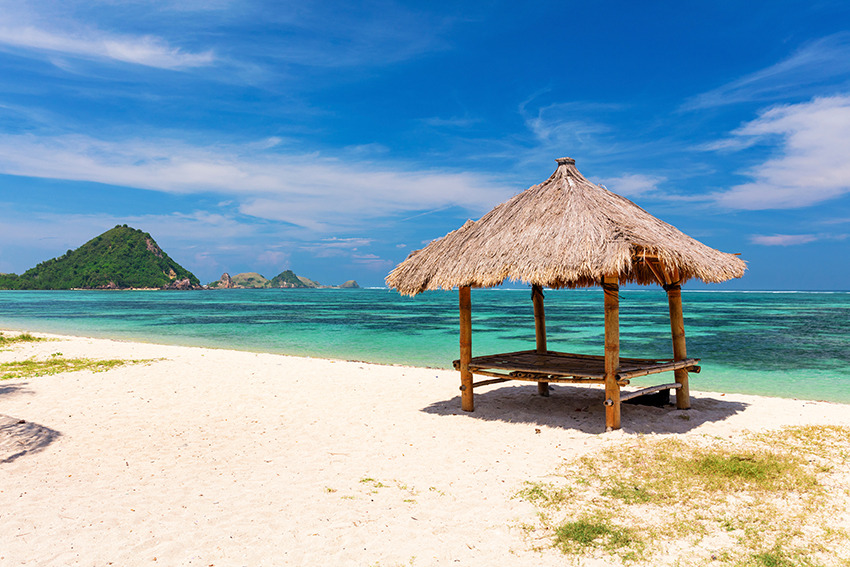
Finish this small escape at Rambitan village, famous for its traditional rice barns. These are elevated on wooden stilts with hat-shaped roofs. After this visit, take time to unwind on Kuta beach, its white sand and turquoise waters will offer you a paradisiacal landscape.
- Plane is the most convenient means of transport to reach Lombok island. Moreover, it is served by several flights, most of which originate from Denpasar (Bali).
- Lombok is also served by the Pelni maritime company. Ferries connect the island daily from Bali and Sumbawa.
- The best way to get around the island is by bus or scooter. However, be careful, as the roads are in poor condition and often very narrow. If you wish, you can also rent a car.
Also discover
Want to discover this destination?
Our local advisors design your tailor-made trip.