What Is Tempeh?
Originating from Indonésie, tempeh is a food product made from fermented soybeans. Rich in protein, it delights vegetarians and non-vegetarians alike! And despite its surprising and unusual appearance, tempeh promises wonderful taste discoveries.
Originating from Indonésie, tempeh is a food product made from fermented soybeans. Rich in protein, it delights vegetarians and non-vegetarians alike! And despite its surprising and unusual appearance, tempeh promises wonderful taste discoveries. Origin, manufacturing, nutritional benefits, preparation and Indonesian recipes... Discover everything you need to know about tempeh!
What Is Tempeh?
Tempeh (or tempe) is a specialty of Indonesian cuisine made from fermented soybeans. Unlike tofu, which is made from soy milk, tempeh is prepared from whole soybean seeds. These are cooked before being fermented for 24 to 36 hours using a fungus, rhizopus oligosporus. The fermentation process is similar to that used in the production of certain cheeses.
What Does Tempeh Taste Like?
Made in a block with soybean seeds, tempeh resembles nougat in appearance. It has a firm consistency, slightly rubbery and crunchy. As for its taste, it is more pronounced than tofu. It is generally attributed flavors of nuts, mushrooms, cheese and hints of yeast.
Where Does Tempeh Come From?
Tempeh appeared on the island of Java in the 17th century when Chinese immigrants introduced soybeans to the country. Its origin is linked to an accident during tofu production. At that time, soybeans were stored in humid environments, creating favorable conditions for fungal growth. Eventually, the fungi accidentally triggered a fermentation process. Indonesians realized the soybeans were still edible and began cooking them. This was the birth of tempeh.
For a long time, tempeh was associated with a poor man's dish for Indonesians. Gradually, it developed and today you can find it almost everywhere in Indonésie: on markets where it is sold fresh and wrapped in banana leaves, and on the menus of many restaurants and warungs, the famous local family-run establishments.
What Are the Nutritional Benefits of Tempeh?
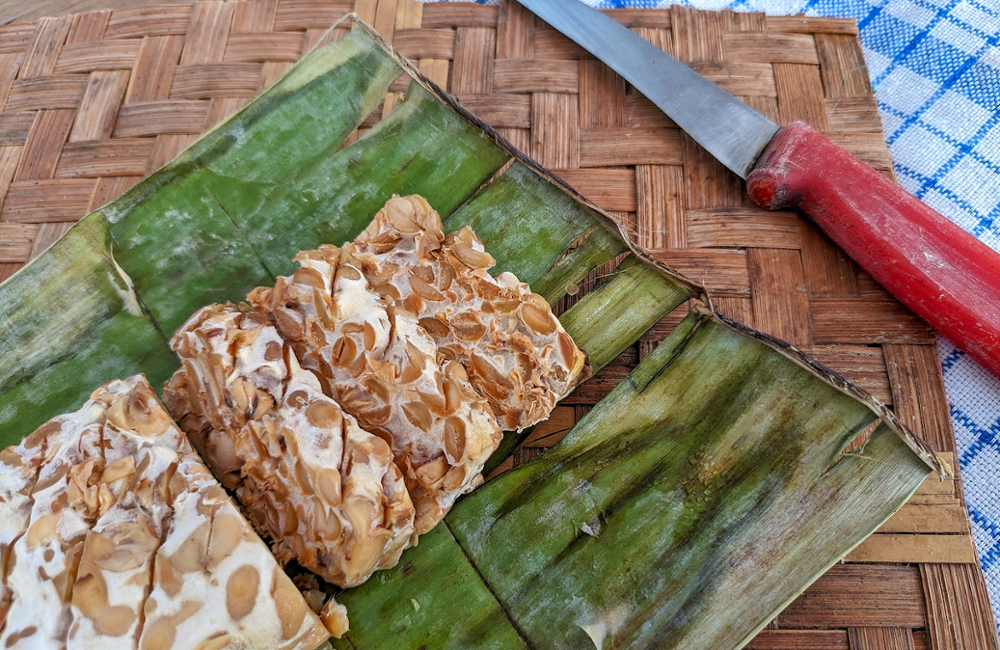
Tempeh is rich in protein: it is even (along with seitan) the plant-based product containing the most protein. As a guide, 100 g of tempeh contains 19 g of protein compared to 8 g of protein for the same amount of tofu. Moreover, the proteins contained in tempeh are said to be "complete" because they include all 8 essential amino acids (those that the body cannot synthesize on its own). As you can see, tempeh is an excellent substitute for replacing meat and fish.
Beyond its protein content, tempeh is rich in fiber, vitamins (most B-complex vitamins, vitamin E...), minerals (magnesium, phosphorus, calcium...), and is an excellent source of iron. Thanks to its fermentation process, it is also known to be very digestible.
How to Cook Tempeh?
Tempeh can be cooked in many ways. Presented in the form of a rectangular block, you can cut it into slices or cubes and steam it, fry it (in a pan or wok, in the oven or deep fryer), grill it (on a barbecue, a griddle or in a pan), simmer it in sauced dishes like a stew or curry... To give it even more flavor, you can also marinate tempeh with ingredients of your choice (peanut butter, soy sauce, coconut milk, rice vinegar, honey, satay, spices, chili...).
How Is Tempeh Eaten in Indonésie?
Indonesian cuisine uses tempeh in many ways. Among the most popular culinary specialties, we find:
- Fried Tempeh: generally, Indonesians marinate the tempeh beforehand in spicy soy sauce before frying it until it is crispy. Fried tempeh is served as a side dish with vegetables.
- Tempeh Satay Skewers: as the name suggests, this recipe involves marinating tempeh in satay sauce before frying it on a skewer.
- Sambal Tumpang: this is a creamy and flavorful tempeh curry prepared with coconut milk and spices (cumin, turmeric, curry, coriander...).
- Nasi Goreng with Tempeh: an emblematic recipe of Indonésie, the nasi goreng is a fried rice accompanied by proteins of your choice. You can therefore choose it with fried tempeh.
- Tempeh Kecap (or Sweet Tempeh): this is a sweet, salty and slightly spicy tempeh stir-fry. It is prepared with fried tempeh and peanuts coated in kecap sauce (a sweet soy sauce widely used in Indonesian cuisine) and aromatics.
- Gado Gado: an ultra-popular dish among vegetarians traveling in Indonésie, Gado Gado is a salad of cooked and crispy vegetables served with peanut sauce and accompanied by several sources of vegetable protein, namely hard-boiled eggs, tofu and tempeh!
You now know everything you need to know about tempeh! All that's left is to try it at home while you wait to taste the specialties during a trip to Indonésie!
Florine Dergelet