Geckos, a Common Encounter in Bali
Geckos are among the most common animal encounters in Bali. These lizards, elevated to symbolic status, colonize the walls of homes that they traverse while defying gravity, but also
The different types of Gecko found in Bali
Geckos are among the most common animal encounters in Bali. These lizards, elevated to symbolic status, colonize the walls of homes that they traverse while defying gravity, but also sarongs, jewelry shop windows, and display cases for decorative items. And as if that weren't enough, they make themselves heard as well!
The gecko family originates from Asia and dates back to the Jurassic period. The majority of its representatives are characterized by eyes without eyelids. In Bali, two main species are commonly encountered.
The Common Gecko, or Cicak
At a maximum of about twelve centimeters, it primarily appears at nightfall around light sources to hunt mosquitoes, both indoors and out. It produces a very distinctive sound: at first, one often mistakes it for a bird's cry.
The Tokay Gecko
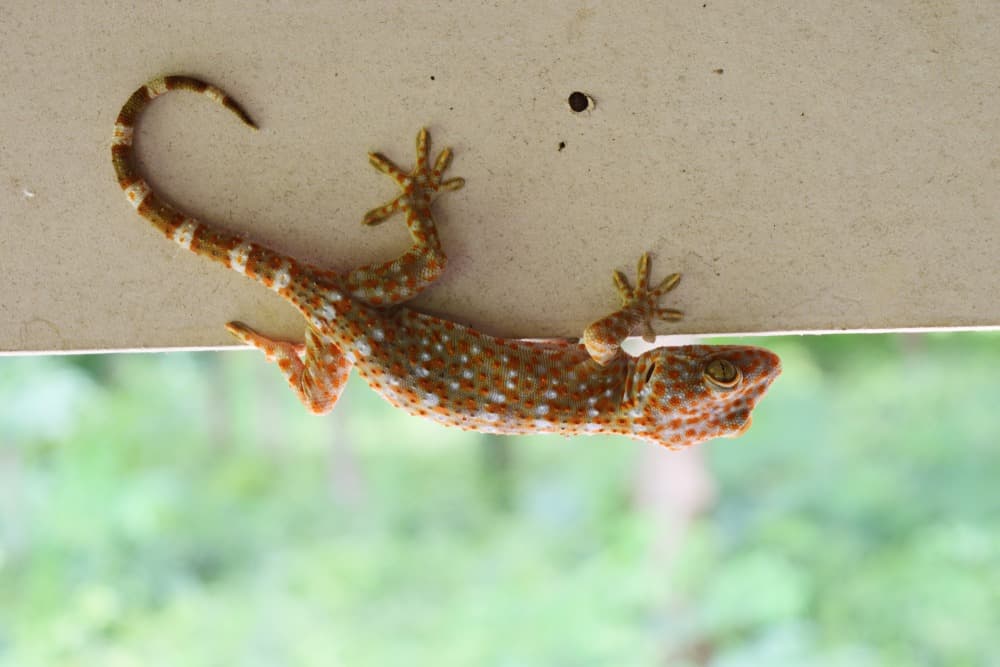
Much larger, the Tokay Gecko can reach thirty-five centimeters. Its coat speckled with orange spots is immediately recognizable. Like the Cicak, it is a nocturnal species. It sometimes happens that a Tokay takes up residence in a frequently visited room: it then becomes its territory, which it defends against any intrusion from competitors. It is quite a sight to see this large lizard emerge from behind a painting while you are dining.
Having a Tokay in the house is a real asset: it feeds on spiders and other insects, though it doesn't shy away from adding mice or bats to the menu. However, you're more likely to hear it than see it. It produces a very characteristic sound: it begins with one or two series of clicks, followed by a repetitive "Ge-ko, Ge-ko..." — some hear it as "To-Kay, To-Kay..."
Nevertheless, be wary of it: the Tokay Gecko is an aggressive reptile that bites readily when it feels threatened. There is no risk, however, if you leave it alone on its wall. It also has the ability to detach its tail to create a diversion in case of a predator attack.
This lizard can easily live in captivity and is sometimes tamed.