Driving in Bali, our advice
Renting a car in Bali and driving yourself is tempting, especially since it's inexpensive. However, it's best to know what to expect and prepare yourself accordingly, as it's a "different world"
Renting a car in Bali and driving yourself is tempting, especially since it's inexpensive. However, it's best to know what to expect and prepare yourself accordingly, as it's a "different world".
Licenses and Insurance
You must have an international driving permit, which is free and issued by your local prefecture. In Bali, keep it on you at all times, otherwise the police will be quick to seize the opportunity to issue you a citation (or rather, they'll propose an "immediate" fine to spare you a trip to the station; 50,000 IDR is the standard, though they may ask for more).
For motorcycle riding, verify that your international license includes motorcycle endorsement and the correct engine sizes. If you don't have a motorcycle license in your home country, you have no right to ride a scooter in Bali. You're therefore in an illegal situation, like the majority of tourists who are unaware of these rules. What you risk is a legal fine, or having to slip a 50,000 IDR note to the police officer to let you continue on your way. To avoid these situations, go to the main police station in Denpasar and purchase a scooter driving permit valid for one month—it will cost you around $25.
Travel with comprehensive insurance, as it's rare that "all-inclusive" rental insurance covers personal liability. Preferably pay for your car or scooter rental with a premium credit card, as these typically include insurance coverage (with possible medical evacuation). Keep your insurance provider's contact information on you. Remember that medical expenses in Bali are very substantial, and you'll be asked to provide insurance details before any treatment.
Also keep identification documents on you, your hotel's address, and copies of your identity papers. It's tempting to head out surfing with just your board and swimwear. The French consul recounted some years ago how an accident victim in a coma, struck after hitting a dog on the road and found with no identification documents on him, remained unidentified for several days and ultimately died because no one could identify him, authorize treatment, or settle the bill.
In the event of an accident, you'll most likely be held responsible. Especially because Balinese drivers are either uninsured or underinsured, and they know you are insured. Often rental cars and scooters come without full insurance; it's up to you to demand it, though it may not cover all damages you cause.
Know also that the rule is that regardless of where you're from or what happened, if you hit someone—even if they appeared from nowhere—you are responsible.
There are few accidents, no more than in France certainly. However, they tend to be more serious because motorcycles are often involved. You'll occasionally find trucks in ditches, probably after risky overtaking. You'll notice that Balinese vehicles are less dented than ours, testament to a generally more "careful" driving style despite appearances. Know, however, that scooter accidents are the number one cause of tourist deaths in Bali.
Driving Rules
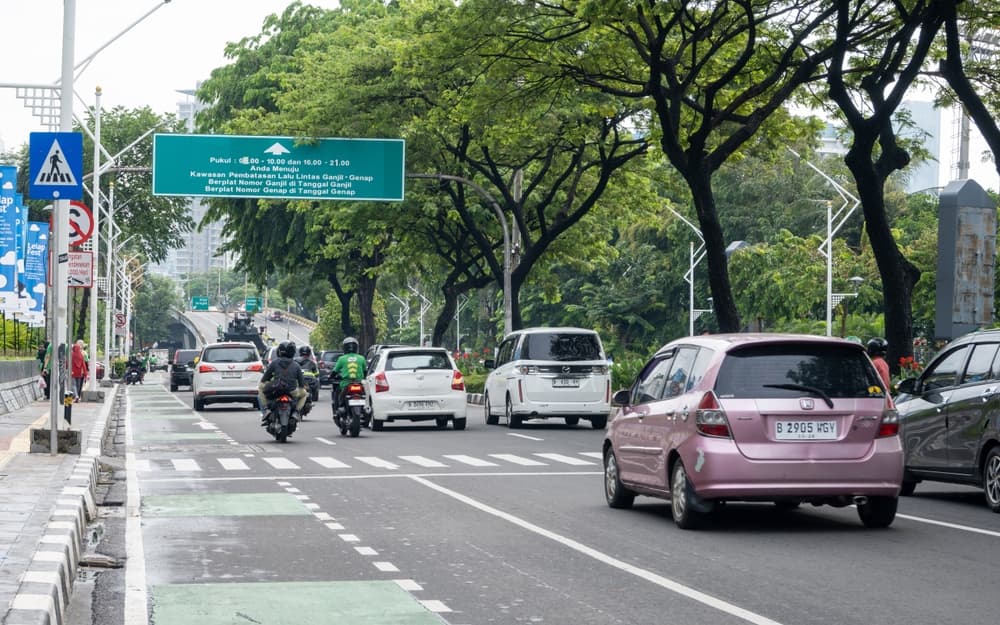
Driving in Bali is on the left side, which in itself is quite disorienting for drivers or riders unaccustomed to it. But more importantly, Balinese driving follows rules that aren't rules for us. Forget everything you've learned. You'll be surrounded on all sides by scooters that respect neither your turn signals, nor right-of-way, nor road markings. You'll likely be astounded by the apparent recklessness of Balinese drivers. They are fatalistic and believe in reincarnation, but when you see trucks occupying the center lane of a road meant for two cars, you might start believing in it too.
Roads are often scattered with trees, piles of sand from construction sites, not to mention the seemingly haphazard parking of cars, trucks, and scooters that appears to follow no rules whatsoever. You must also watch for various animals (chickens, dogs, cats, ducks) that frequently cross the road, day and night.
Also consider, in no particular order:
- Potholes (often truly enormous ones)
- Very poor signage for directions and hazards
- Congested city centers
- Lack of lighting at night outside major cities
- Numerous unmarked intersections without traffic lights or stop signs
- Steep ascents and descents on mountain roads with limited safety features
For all these reasons and more, it's discouraged for those inexperienced or unprepared to take the wheel or handlebars. Beyond disrupting traffic or struggling yourself, you could cause accidents. Alternatives exist, are widely available, and inexpensive: taxi and, of course, a private driver.
Driver with Vehicle
A driver with vehicle costs from 500,000 IDR per day, plus fuel. These drivers are entirely at your disposal and, what's more, they know the roads and are genuine guides. Often independent, you have the added satisfaction of directly employing a Balinese worker.
Taxi
For short distances, there's the taxi. In this case the meter is merely ornamental (you can ask the driver to use it); often the fare is negotiated beforehand. With the exception of Denpasar Airport, where you must go through an official booth: the fare is fixed there, which prevents inflated prices.
For others—those who enjoy driving and want their freedom of movement, those capable of adapting—driving in Bali can be a wonderful experience.
Balinese drivers actually drive very well. They don't have our rules, our signs, our traffic lights, but they possess an acute sense of responsibility, a marvelous assessment of trajectories and speeds, extreme attentiveness... which only works if no one else uses a different system or doubts it—you, for example.