Indonesian Batik
An ancient textile printing technique, batik remains one of Indonesia's principal cultural and artistic signatures. Born from a lengthy artisanal process, batik patterns vary according to
An ancient textile printing technique, batik remains one of Indonesia's principal cultural and artistic signatures. Born from a lengthy artisanal process, batik patterns vary according to regions and are equally delicate in every instance. An invaluable cultural heritage, UNESCO inscribed this textile art on the list of intangible cultural heritage of humanity in 2009.
History of Batik
Indonesia is not the only country practicing the batik technique. It is also found in other countries across Asia, Africa, and the Middle East, such as India, Côte d'Ivoire, and Malaysia. Nevertheless, the word « batik » originates from Javanese: « titik » which means « point ».
Batik originating from Java is considered one of the most refined and carefully crafted in the world. It remains intimately linked to the ancient kingdoms of the island, which houses the principal centers of traditional textiles. The royal cities of Yogyakarta, Surakarta, and Cirebon remain today major centers of batik production.
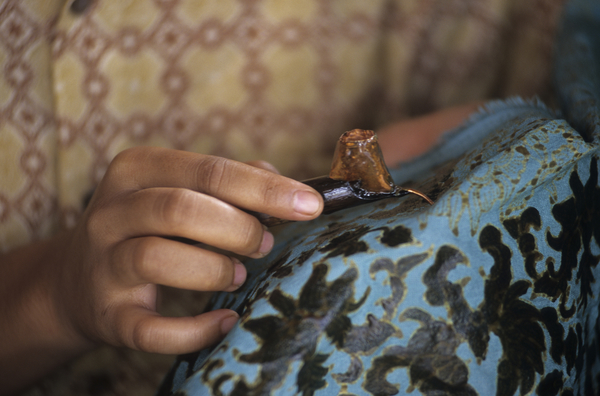
Batik manufacturing in Yogyakarta, photo © Shutterstock
In former times, certain patterns were exclusively reserved for royal families and court aristocrats. They indeed marked the influence of the reigning dynasty through precise symbols and colors. Traditionally, indigo, yellows, red, or brown are used. The patterns often serve to mark important and symbolic moments in the lives of Indonesians.
Batik design reached its peak during the nineteenth century but declined throughout the twentieth century, particularly after Indonesian independence and the country's westernization. Batik is customarily worn with traditional costumes, whether during traditional dances or for official and religious ceremonies.
Batik and Its Process
The batik technique remains globally the same across regions, with only the patterns differing. Generally, the artisan first draws the patterns on cotton fabric, preferably white. Then he carefully applies hot wax over his designs to protect them from coloring.
Next comes the application of dyes, an operation repeated several times to properly saturate the fabric with colors. Finally, the artisan removes the wax either using an iron or by soaking the patterns in boiling water.
He repeats this process as many times as the number of colors requires. The weavers work from the lightest colors to the darkest ones. It takes several days, even many weeks, to complete the manufacturing.
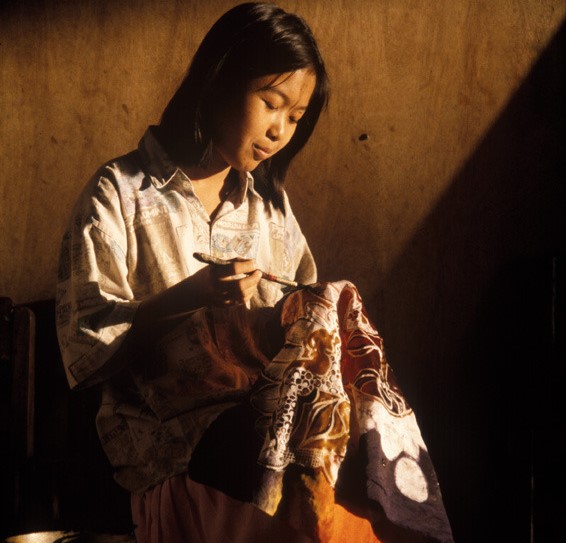
Young woman creating a pattern in Yogyakarta, photo © Dominic C.
Also, they use the canting, a copper tool equipped with a pouring spout from which the wax flows. The handle of the canting is made of bamboo and the artisan holds it like a pen.
Nowadays, batik is experiencing a revival, particularly on the international scene. Indeed, many contemporary artists are taking up the practice and modernizing it, especially in the world of fashion. Their objective also consists of promoting Indonesian culture and transmitting this centuries-old heritage to future generations. A fruit of delicate work, batik remains one of the artistic symbols of Indonesians. Reason enough to be proud of this invaluable art!