The Moluccan Archipelago
Welcome to the Moluccan Archipelago, a tropical paradise located in eastern Indonésie. With its 632 islands bathed in turquoise waters, this archipelago captivates with its natural beauty and rich h
Welcome to the Moluccan Archipelago, a tropical paradise located in eastern Indonésie. With its 632 islands bathed in turquoise waters, this archipelago captivates with its natural beauty and rich past as the Spice Islands. From pristine white-sand beaches to exceptional marine depths, alongside its blended culture, the Moluccas promise an unforgettable journey into a still-unspoiled corner of Indonésie.
The Moluccas, the spice paradise
Once coveted by Europeans for its spices, the Moluccan Archipelago is now part of Indonésie's many regions. It comprises over six hundred islands. They are divided into two provinces: Maluku, with Ambon as its capital, and North Maluku, administered by the city of Sofifi, on the island of Halmahera.
Located between Sulawesi to the west and Papua to the east, the archipelago spans 74,500 km². The Banda Sea to the south and the Molucca Sea to the west separate it from Nusa Tenggara and the Celebes.
The name "Moluccas," or Maluku in Indonesian, derives from the Arabic Jazirat al Muluk, meaning the "island of kings." This was the name given to the archipelago by Arab merchants when they controlled its natural resources in the 16th century.
The local economy is primarily based on fishing and agricultural production. The Moluccas are renowned for their spices, particularly harvests of cloves, nutmeg, coffee, coconut, and cacao. Residents also cultivate vegetables, cassava, sweet potatoes, and bananas. Beyond providing fish, the sea remains a significant source of wealth for the Moluccan people. They harvest resources such as mother-of-pearl and pearls.
Where is the Moluccan Archipelago located?
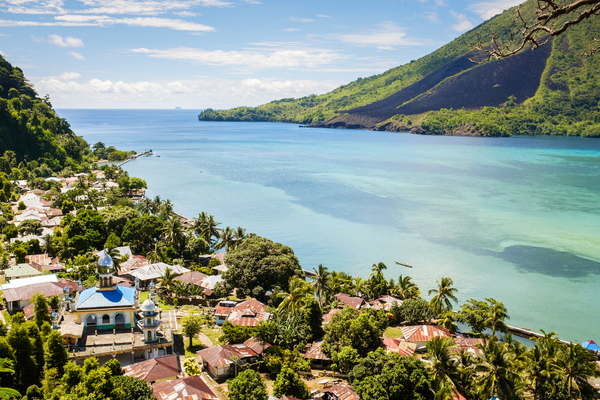
It sits in the heart of eastern Indonésie. Surrounded by the famous Banda Sea, it serves as a natural passage between Asia and Oceania. This unique location makes it a genuine crossroads of biodiversity. With its coral atolls and active volcanoes, it has been a center of spice trade, attracting explorers and merchants.
The Moluccan Islands, a center of ethnic and cultural blending
Currently, more than 2 million inhabitants reside across all the islands. Unlike other provinces of Indonésie, the Moluccas do not display specific ethnic groups because the archipelago has experienced extensive blending between Portuguese, Arabs, Chinese, Indians, Papuans, and Javanese peoples. The population remains highly westernized, and the largest city remains Ambon. This is notably due to the region's long Dutch colonial presence.
Various languages are spoken in the Moluccas. Most of these derive from Austronesian and Papuan language families. Ambonese Malay is thus a dialect derived from Malay. Moreover, the former Portuguese influence remains perceptible in Malay vocabulary.
The majority of the population in the northern archipelago is Muslim, while in the south, it remains predominantly Protestant. Each island offers its own traditional customs. Dances, music, and craftsmanship remain distinct from one place to another.
The archipelago has few mammals, only some marsupials like the wallaby. However, it is home to many bird species and bats. The islands are particularly well-suited for diving and snorkeling. Ambon thus features interesting dive sites. They are ideal for discovering marine fauna and flora.
It is possible to visit the battle sites and former military bases of the archipelago. The latter was an important strategic military point during World War II.
The Moluccan Archipelago is thus a region of Indonésie with something to offer everyone and conducive to numerous activities.
The main islands of the Indonesian archipelago
Ambon: The capital of the Moluccas
At the heart of the Indonesian archipelago, Ambon stands out for its cultural diversity. Its port recalls its historical role in the spice trade, and Pattimura University is an important academic center. Markets offer local products such as nutmeg and cloves. The Cathedral of St. Francis Xavier and the Al-Fatah Mosque demonstrate the coexistence of religions.
With its tropical climate, it enjoys pleasant temperatures year-round. From May to October, the dry season is perfect for discovering its beaches and dive sites.
Ternate and Tidore: The spice islands
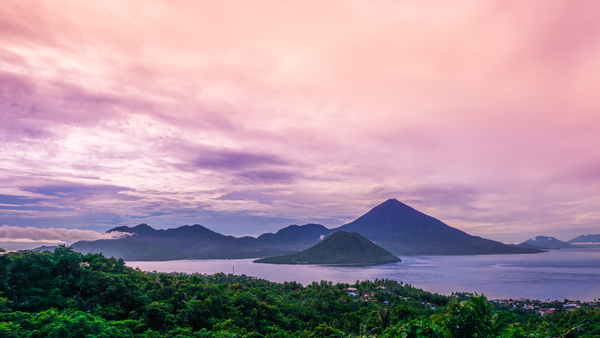
Ternate and Tidore are two volcanoes rising from the sea. They played a central role in the history of global trade. Their fertile soil enabled the exclusive cultivation of clove trees, attracting European coveting from the 16th century onward.
These former capitals of rival sultanates preserve numerous vestiges of their glorious past. Fort Oranje in Ternate and the Sultan's Palace in Tidore bear witness to this tumultuous era.
Today, these islands reveal breathtaking panoramas. Climbing Mount Gamalama in Ternate or Kiematubu in Tidore rewards hikers with spectacular views of the archipelago.
Diving enthusiasts will appreciate the crystal-clear waters around Maitara islet, situated between the two islands.
Halmahera: The largest island in the archipelago
Halmahera has a K-shape that resembles Sulawesi. This configuration creates great ecosystem diversity. Its tropical forests harbor unique species, such as the Halmahera oriole and the sulphur-crested cockatoo. It is a favored destination for birdwatchers. It is also linked to the spice trade. Its clove and nutmeg plantations attracted Europeans from the 16th century onward.
The Banda Islands: Jewels of South Molucca
In the heart of South Molucca, the Banda archipelago stands out for its colonial charm. Fort Belgica, a 17th-century fortress on Banda Neira, testifies to this history. Hikers can climb Mount Gunung Api to admire superb panoramas.
Nutmeg cultivation is still present and allows visitors to discover traditional harvesting methods. The black-sand beaches of Pulau Hatta seduce those seeking tranquility, while crystal-clear waters offer colorful marine life.
What to do?
Diving and snorkeling
Its crystal-clear waters offer an exceptional playground for diving and snorkeling enthusiasts. Renowned for its marine biodiversity, the Banda Sea is home to multicolored coral reefs and rare species such as the toadfish.
Among the must-visit spots:
- Pulau Hatta: renowned for its vertical drops and schools of parrotfish
- Ambon Bay: paradise of "muck diving" with strange creatures like the pygmy seahorse
September to October is particularly favorable, with optimal visibility and favorable weather conditions. Experienced divers will appreciate the stimulating currents around the Banda Islands, while beginners will find calm waters near Saparua.
Hiking and ecotourism
The Moluccas also offer hiking and ecotourism opportunities. You will find trails traversing varied landscapes, from lush tropical forests to volcanoes.
Aketajawe-Lolobata National Park on Halmahera Island offers guided treks allowing you to observe endemic fauna, particularly rare birds such as the white cockatoo.
On the island of Seram, Mount Binaya attracts experienced hikers with its summit rising to 3,027 meters. Participate also in community ecotourism projects such as sustainable nutmeg harvesting in Banda Neira.
Discovery of colonial heritage
Colonial vestiges are equally notable. In Ambon, admire Fort Victoria, an imposing Portuguese fortress from the 16th century. On Banda Neira Island, explore Fort Belgica, a masterpiece of Dutch military architecture.
Colonial buildings in Ternate bear witness to European influence:
- The Sultan's Palace, a blend of local and Western styles
- St. Willibrod Church, a neo-Gothic gem
Visit the Siwalima Museum in Ambon to discover the eventful history of the archipelago. The cobbled streets of Banda Neira, lined with colonial houses, will immerse you in the atmosphere of the former Spice Islands.
How to get to the Moluccas?
To get there, two major airports serve as entry points: Ambon in the center and Ternate in the north. Regular flights connect these destinations from Jakarta, Denpasar, or Makassar. Once there, ferry service is the preferred means of transport between the islands.
Book your tickets in advance, particularly during Indonesian holiday periods, to benefit from the best rates.