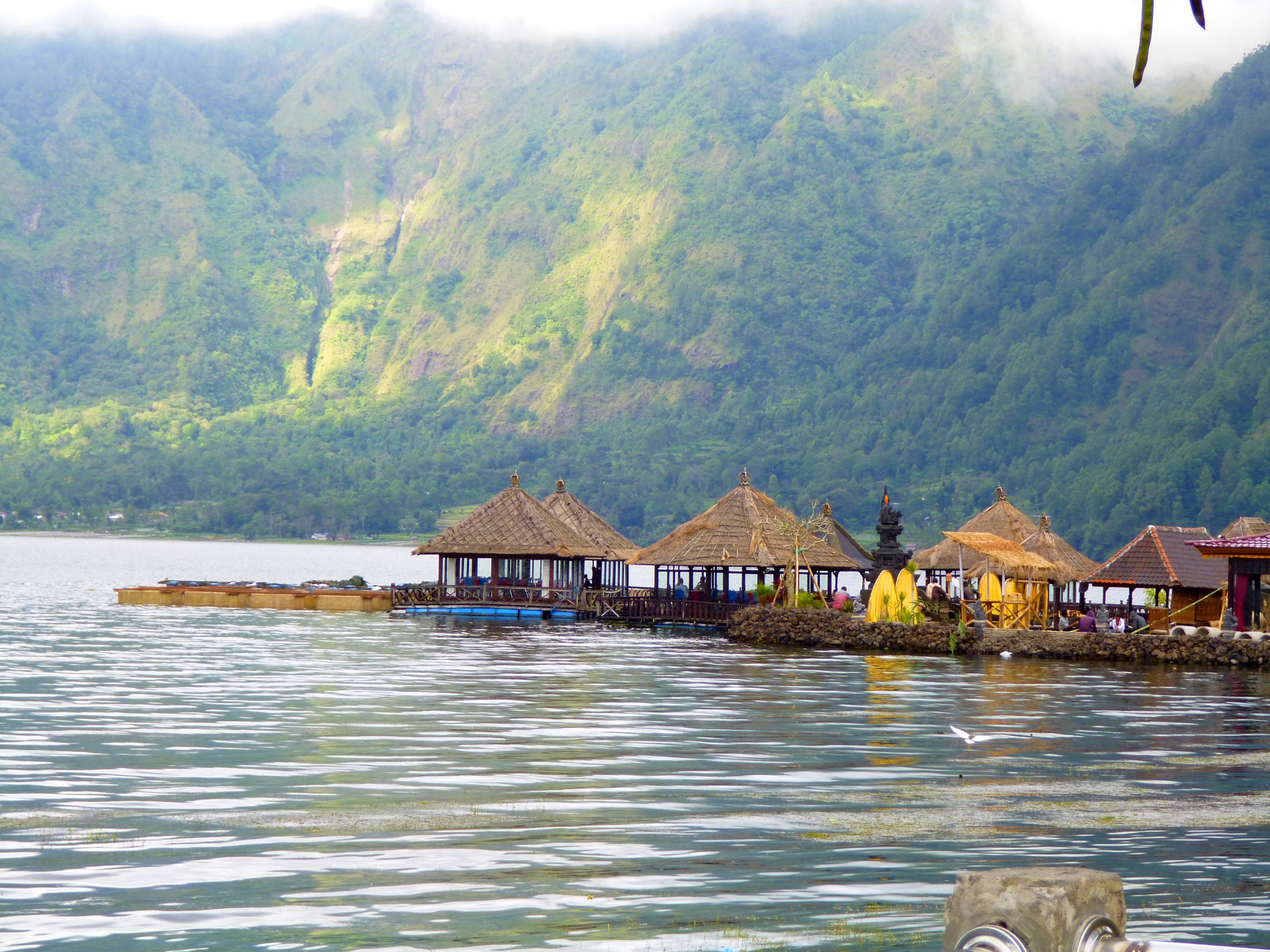
Wongayagede
A mountain village in Tabanan district, Wongayagede is the gateway to Pura Luhur Batukaru, one of Bali's six directional temples, surrounded by primary forest and terraced rice paddies.
Wongayagede is a mountain village located in Tabanan district, in the heart of Bali. It is best known for being home to the Pura Luhur Batukaru, one of the six major directional temples of Bali, nestled in dense tropical forest on the slopes of Mount Batukaru. Far from the bustle of the island's south, the village offers a peaceful atmosphere, lush vegetation, and privileged access to one of Bali's most authentic spiritual sites.
Quick Practical Information
- Access: by car or scooter from Tabanan (approximately 30 km north) or from Ubud via the mountain road.
- Dress code: sarong and sash required to enter the temple; available on site.
- Entrance: temple fee requested at the entrance to Pura Luhur Batukaru.
- Recommended duration: 1 to 2 hours for the temple and immediate surroundings.
- Accessibility: partially paved path but sloped terrain; wheelchair access difficult.
What to See
The village itself is a patchwork of terraced rice paddies, gardens, and small traditional Balinese hamlets. The road leading there passes through plantations of coffee, cacao, and cloves. The central attraction remains the Pura Luhur Batukaru, surrounded by humid primary forest where bird calls echo and mist clings to the trees.
History and Context
Pura Luhur Batukaru is one of the sad kahyangan, the six cosmic temples that, according to Balinese tradition, protect the island in its cardinal directions. It is dedicated to the god of Mount Batukaru and to the spirits of the region's lakes and rivers. Less visited by tourists than Pura Besakih, it retains an atmosphere of intact devotion.
Highlights of Your Visit
Pura Luhur Batukaru
The temple complex spans several inner courtyards. The meru (tiered thatched towers) rise in the forest's shadow. Fresh offerings are placed each morning by local devotees. Ceremonies are frequent; respect spaces reserved for worshippers.
Rice Terraces and Mountain Landscape
The surroundings of the village offer views of rice terraces sculpted into the hillside, irrigated by the UNESCO-recognized subak system. A walk along the paths between the paddies allows you to observe traditional agricultural work.
Etiquette and Visit Guidelines
- Wear a sarong and sash; they are available at the temple entrance.
- Women during menstruation are not permitted to enter the sacred grounds, according to Balinese tradition.
- Speak quietly and do not disturb ceremonies in progress.
- Do not climb on temple altars or structures.
- Ask permission before photographing people at prayer.
Photography Tips
The morning light, before mist rises, is ideal for photographing the meru and surrounding vegetation. The rice terraces below the village are brighter mid-morning. Avoid using flash inside the temple courtyards.
Location and Access
Wongayagede is located in the highlands of Tabanan district, on the southern slopes of Mount Batukaru. The road from Tabanan is paved but winding. From Ubud, allow approximately one hour's drive. There is no regular public transport to the village; a rental scooter or private driver is recommended. Local agencies in Ubud or Tabanan offer excursions combining Batukaru and the Jatiluwih rice terraces.
Nearby Attractions
- Jatiluwih — UNESCO-listed terraced rice paddies, a few kilometers southeast, ideal for hiking between the paddies.
- Tabanan — bustling market town, logical starting point for exploring northwest Bali.
- Lake Bratan — crater lake with the floating temple Pura Ulun Danu Bratan, accessible by continuing north.
Frequently asked questions
The dry season (April to October) offers more passable roads and less persistent mist. During the rainy season, vegetation is greener but paths can be slippery.
Yes. A sarong and sash are mandatory. They are available at the entrance to Pura Luhur Batukaru if you don't have your own.
Yes, the two sites are close and easily visited on the same day. Start with the temple early in the morning, then head down to Jatiluwih for mid-morning light.
There is no direct public transport. The most common solution is to rent a scooter or book a private driver from Ubud or Tabanan.
Photography is generally tolerated in the outer courtyards. Avoid photographing ceremonies closely and always ask worshippers' permission before photographing them.
Want to discover this destination?
Our local advisors design your tailor-made trip.