Tulamben
Tulamben
Tulamben is a small fishing village on the northeast coast of Bali, facing the Lombok Strait. Its global reputation rests on a single wreck: the USAT Liberty, an American cargo ship sunk in 1942
Tulamben is a small fishing village on the northeast coast of Bali, facing the Lombok Strait. Its global reputation rests on a single wreck: the USAT Liberty, an American cargo ship sunk in 1942, today one of the most accessible dive sites in Southeast Asia. Experienced divers and beginners mingle here, drawn by seabeds rich in coral and marine life just meters from shore.
Practical Information at a Glance
Access: about 2 hours' drive from Kuta or Seminyak, 1 hour 30 minutes from Ubud via the east coast.
Wreck entry: access to open water from the pebble beach; local beach fees may apply.
Recommended duration: 1 to 2 days to combine multiple dives or snorkeling.
Clothing: light wetsuit recommended (water around 26–29°C depending on season).
Best period: dry season from April to October for optimal visibility.
What You'll See
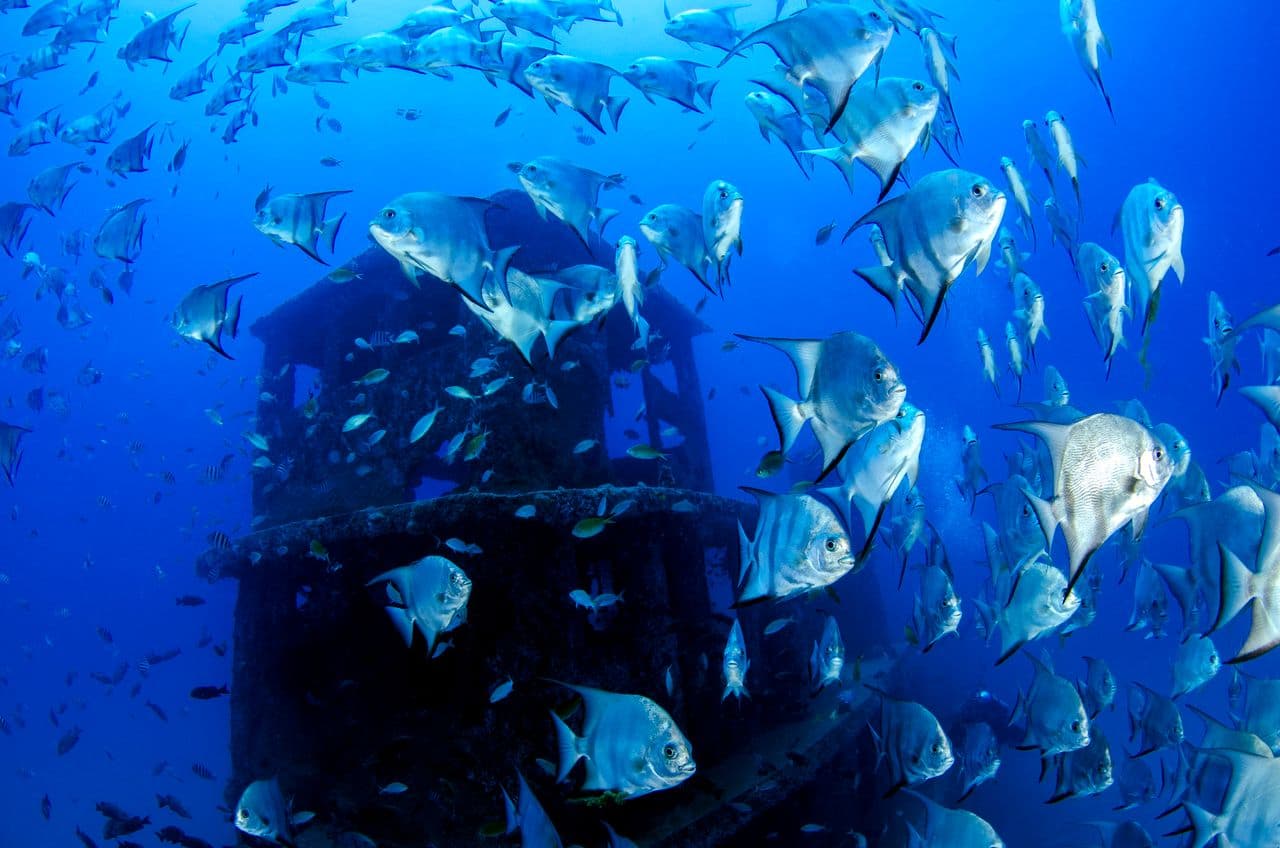
The USAT Liberty wreck rests between 3 and 30 meters deep, parallel to the shore. Its hull is entirely colonized by hard and soft corals, sponges, and gorgonians. Around it swim schools of fusiliers, lionfish, moray eels, green sea turtles, and—at night—octopuses and mantis shrimp.
Beyond the wreck, the Drop-Off site offers a vertical wall covered in coral a few hundred meters to the east. The village itself remains understated: a few warungs, dive centers lined along the main road, and a beach of black volcanic pebbles.
History and Context
The USAT Liberty was an American military transport cargo ship torpedoed by a Japanese submarine in January 1942 in the Lombok Strait. Towed to Tulamben, it was beached to offload its cargo. In 1963, the eruption of Mount Agung caused the wreck to slide into the sea, where it has rested ever since. Local divers began exploring it in the 1970s; the site is now protected.
Highlights of Your Visit
Diving the USAT Liberty Wreck
Accessible from beginner level in its upper sections (3–5 m), the wreck suits technical divers in its deeper zones. The bow and stern are the best-preserved sections. Night diving reveals entirely different fauna.
Snorkeling from the Beach
The upper part of the wreck is visible while freediving. It is one of the few dive sites in the world where you can snorkel directly over a war wreck without a boat.
The Drop-Off and Wall
This coral wall to the east of the village attracts intermediate and advanced divers. Currents can sometimes be strong, but the density of marine life—reef sharks, rays, barracudas—rewards the effort.
Night Diving
Tulamben is renowned for its night dives. Mimetic octopuses, mantis shrimp, nudibranchs, and scorpionfish emerge after sunset. Most dive centers organize evening excursions.
Photography Tips
Natural light penetrates well into the upper part of the wreck mid-morning. A flash or underwater torch is essential in deeper zones and cargo holds. For surface shots, sunrise over Mount Agung in the background offers a striking frame from the pebble beach.
Location and Access
Tulamben lies on the northeast coastal road of Bali (Route 1), between Amed to the west and Singaraja to the west via the north coast. Most visitors arrive by private car or scooter from Amed (about 20 minutes) or from Candidasa (about 1 hour). No direct public transport serves the area. Dive centers often arrange transfers from Kuta, Ubud, or Amed.
Nearby places accessible by car:
Amed — fishing village and varied dive sites, about 20 minutes to the west.
Mount Agung — Bali's sacred volcano, visible from Tulamben, accessible for trekking from Besakih or Pura Pasar Agung.
Pura Besakih — Bali's largest temple complex, about 1 hour 30 minutes by car.
Nearby Attractions
Amed — a string of fishing villages with less-crowded dive sites and a more local atmosphere.
Mount Agung — a demanding ascent to Bali's sacred summit, with views across the entire island on clear days.
Pura Besakih — a complex of 23 temples on the slopes of Mount Agung, the spiritual heart of Balinese Hinduism.
Candidasa — a quiet beach resort on the east coast, departure point for the Nusa Penida and Lombok islands.
Frequently Asked Questions
Frequently asked questions
No. The upper part of the wreck is accessible by snorkeling from the beach. Dive centers also offer discover dives for non-certified divers. Certified divers can access the entire wreck and deeper sites.
The dry season, from April to October, offers the best underwater visibility. The rainy season (November to March) remains diveable, but visibility may be reduced and roads occasionally difficult.
Yes. The two sites are about 20 minutes apart. A single day is enough to dive at Tulamben in the morning and explore Amed's sites in the afternoon, or vice versa.
Yes. Tulamben has several guesthouses and small hotels, often run by dive centers. Staying on-site allows you to dive early in the morning, before tour groups arrive.
Yes, underwater photography is allowed. However, it is forbidden to touch the wreck, collect coral, or remove any objects. Some dive centers rent underwater cameras or torches.
How do I get to Tulamben from Ubud?
Want to discover this destination?
Our local advisors design your tailor-made trip.