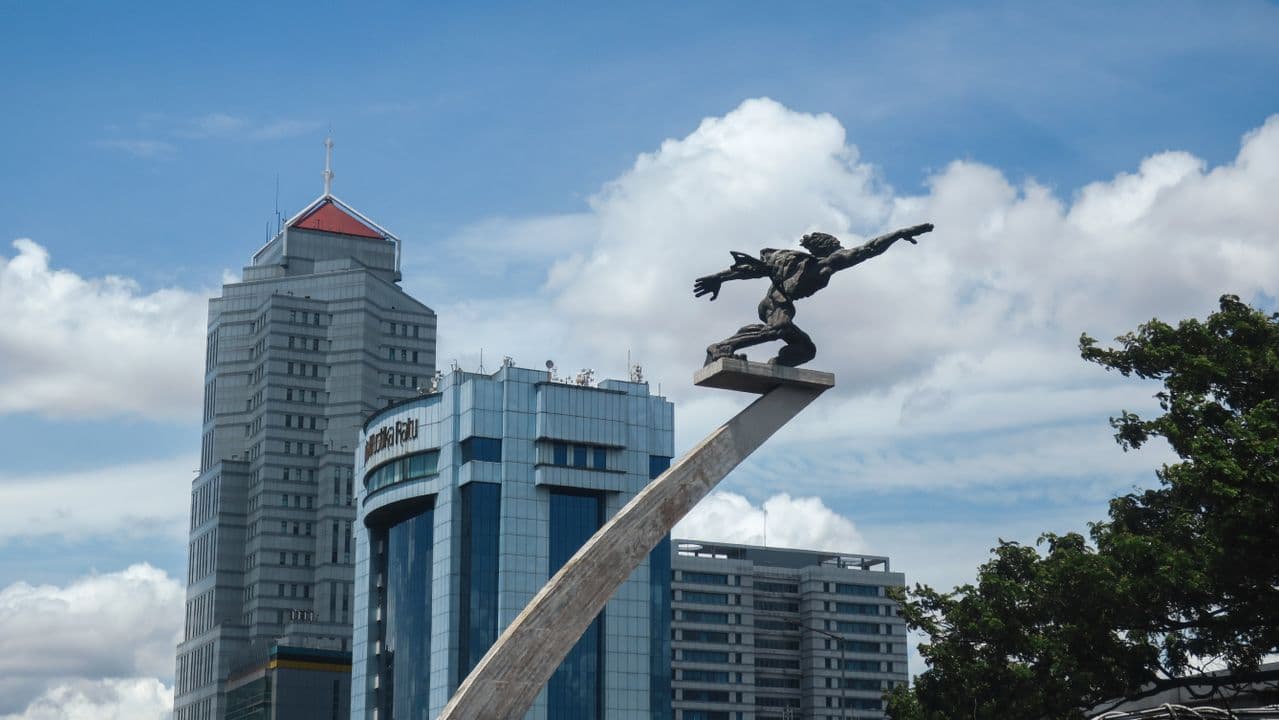
Surabaya
Surabaya
Surabaya is Indonesia's second-largest city and capital of East Java province. A major industrial and commercial port, it blends Dutch colonial quarters, Chinese temples, historic mosques and bustling markets. Less touristy than Yogyakarta or Bali, it offers a direct window into Javanese urban life, between memories of independence and rapidly expanding modernity.
Surabaya is Indonesia's second-largest city and capital of East Java province. A major industrial and commercial port, it blends Dutch colonial quarters, Chinese temples, historic mosques and bustling markets. Less touristy than Yogyakarta or Bali, it offers a direct window into Javanese urban life, between memories of independence and rapidly expanding modernity.
Practical Information at a Glance
Access: Juanda international airport, approximately 20 km south of the city center; direct connections from Jakarta, Bali, Kuala Lumpur, Singapore.
Urban Transport: Suroboyo Bus (expanding network), online ojek (Gojek, Grab), Bluebird taxi.
Dress Code: Covered clothing recommended for mosques and temples.
Recommended Duration: 2 to 3 days to cover historic quarters and surrounding areas.
Language: Indonesian; English is understood in hotels and tourist restaurants.
What to See
Surabaya is best explored neighborhood by neighborhood. The Kota Lama (old city) preserves Dutch warehouses and buildings from the 17th-19th centuries along the Kalimas River. The Arab quarter of Ampel is home to Ampel Mosque and the tomb of Sunan Ampel, one of the nine saints of Javanese Islam. The Chinese quarter of Kembang Jepun lines temples, shops and houses with colorful façades.
History and Context
Surabaya is mentioned in 14th-century inscriptions from the reign of Majapahit. Under Dutch rule from the 17th century, it became the VOC's main port in East Java. November 10, 1945 saw the most symbolic battle of the Indonesian revolution: thousands of local fighters confronted British troops. This date is commemorated annually as Hari Pahlawan (Heroes' Day), and Surabaya bears the title Kota Pahlawan — the City of Heroes.
Highlights of Your Visit
Ampel Mosque and Arab Quarter
Ampel Mosque, founded in the 15th century, is one of Java's most venerated Islamic sites. The surrounding quarter sells incense, dates, perfumes and textiles. The atmosphere is vibrant, particularly on Fridays and during Ramadan.
House of Sampoerna
Located in an early 20th-century colonial complex, this former kretek factory (cigarettes with cloves) houses a museum tracing the history of the Sampoerna family and Indonesian tobacco industry. Admission is free.
Heroes Monument (Tugu Pahlawan)
A 41-meter obelisk erected in 1952, it marks the site of the former Dutch residence. An underground museum features dioramas and archives on the November 1945 battle.
Surabaya Zoo (Kebun Binatang Surabaya)
One of the oldest and largest zoos in Southeast Asia, founded in 1916. It houses endemic Indonesian species: Komodo dragons, orangutans, babirusa. Its management has drawn criticism, but it remains a frequent visit for local families.
Chinese Quarter of Kembang Jepun
A historic commercial thoroughfare lined with Taoist and Buddhist temples. The Hok An Kiong temple and Boen Bio temple are among the city's oldest. Activity is at its peak early in the morning.
Etiquette and Visiting Rules
At Ampel Mosque: shoulders and knees must be covered; sarongs are sometimes provided at the entrance.
In Chinese temples: respectful silence, do not disturb worshippers in prayer.
Remove shoes before entering prayer areas.
Photography Tips
The Ampel quarter is most photogenic early in the morning, before visitor crowds arrive.
Golden late-afternoon light enhances the colonial façades of Kota Lama.
Always ask permission before photographing worshippers in prayer.
Tugu Pahlawan photographs well from the esplanade, facing north, in the morning.
Location and Access
Surabaya occupies northeastern Java, overlooking the Madura Strait. Juanda Airport is connected to the city center by taxi or shuttle. Surabaya Gubeng station serves Jakarta (overnight train), Yogyakarta and Malang. Surabaya is the natural starting point for Mount Bromo and Ijen crater.
Nearby
Mount Bromo — iconic active volcano in East Java, accessible within hours from Surabaya.
Ijen Crater — turquoise acidic lake and sulfurous blue flame at Java's eastern tip.
Malang — cool and lively colonial town approximately 90 km south, with its Hindu temples at Singosari.
Madura Island — connected by the Suramadu bridge, known for bull racing (karapan sapi).
Frequently Asked Questions
Frequently asked questions
The dry season (May to October) is most pleasant. The rainy season (November to April) doesn't prevent a visit, but downpours can be intense in January-February.
Two days suffice for the main historic quarters. Three days allow you to add an excursion to Madura or a first leg toward Bromo.
Yes, this is the classic East Java circuit. Surabaya serves as a logistics base before heading to Bromo, then continuing to Ijen crater and Banyuwangi.
Museum admission is free. Guided tours of the colonial quarter by vintage bus depart from the site for a fee to be confirmed on-site.
Rawon (black beef and keluak soup), lontong balap (compressed rice, tofu, bean sprouts) and rujak cingur (salad with beef snout) are the city's signature dishes.
Suroboyo Bus covers main routes at modest fares. For more flexibility, Gojek and Grab (motorbike or car) are available everywhere and remain inexpensive.
Want to discover this destination?
Our local advisors design your tailor-made trip.