Jimbaran
Jimbaran
Jimbaran is a fishing village turned one of South Bali's most coveted destinations. Wedged between Ngurah Rai International Airport and the Bukit peninsula, it combines a sheltered sandy bay,
Jimbaran is a fishing village turned one of South Bali's most coveted destinations. Wedged between Ngurah Rai International Airport and the Bukit peninsula, it combines a sheltered sandy bay, a lively fish market buzzing at dawn, and a row of seafood restaurants with their feet in the sand. Without Kuta's hustle, it offers a more laid-back rhythm while remaining accessible from the island's main tourist hubs.
Practical Information at a Glance
Access: about 5 km south of Ngurah Rai Airport; taxi, ojek, or scooter rental from Kuta or Seminyak.
Recommended duration: half a day to a full day, or an evening for beachside dinner.
Fish market: active early morning (before 8 a.m.); prefer a dawn visit to watch fishermen unload their catch.
Dress code: casual; sarong required if visiting Pura Ulun Siwi temple.
Currency: Indonesian rupiah (IDR); few establishments accept cards at the market.
What to See
Jimbaran Bay stretches for several kilometers of grey-golden sand, relatively calm thanks to natural protection. Along the beach, dozens of warungs and restaurants set up tables and chairs directly on the sand from late afternoon onward. The fish market (Pasar Ikan Jimbaran) remains the village's beating heart: tuna, lobster, squid, and parrotfish are auctioned in a lively atmosphere.
History and Context
Until the 1980s, Jimbaran was an ordinary Balinese fishing village, organized around its banjars (communal neighborhoods) and temples. The opening of large luxury hotels on the Bukit heights and Bali's tourism boom gradually transformed its beach into a gastronomic destination. Artisanal fishing traditions persist nonetheless: colorful jukung (outrigger canoes) still beach themselves on the sand each morning.
Highlights of Your Visit
Seafood Dinner on the Beach
This is Jimbaran's signature experience. You choose your fish and crustaceans directly from iced bins, they're grilled over charcoal, and served with sambal matah, rice, and sautéed vegetables. The sunset over the bay naturally accompanies the meal.
The Fish Market at Dawn
Arriving before sunrise lets you observe wholesale trading: fishermen, wholesalers, and restaurant owners gather in a noisy, pungent atmosphere. It's one of South Bali's most active fish markets.
Pura Ulun Siwi
This Hindu Balinese temple, located in the village center, is dedicated to Sri, the rice goddess. It's particularly lively on ceremony days; the flowered offerings and processions offer an authentic glimpse into local religious life.
The Bay at Sunset
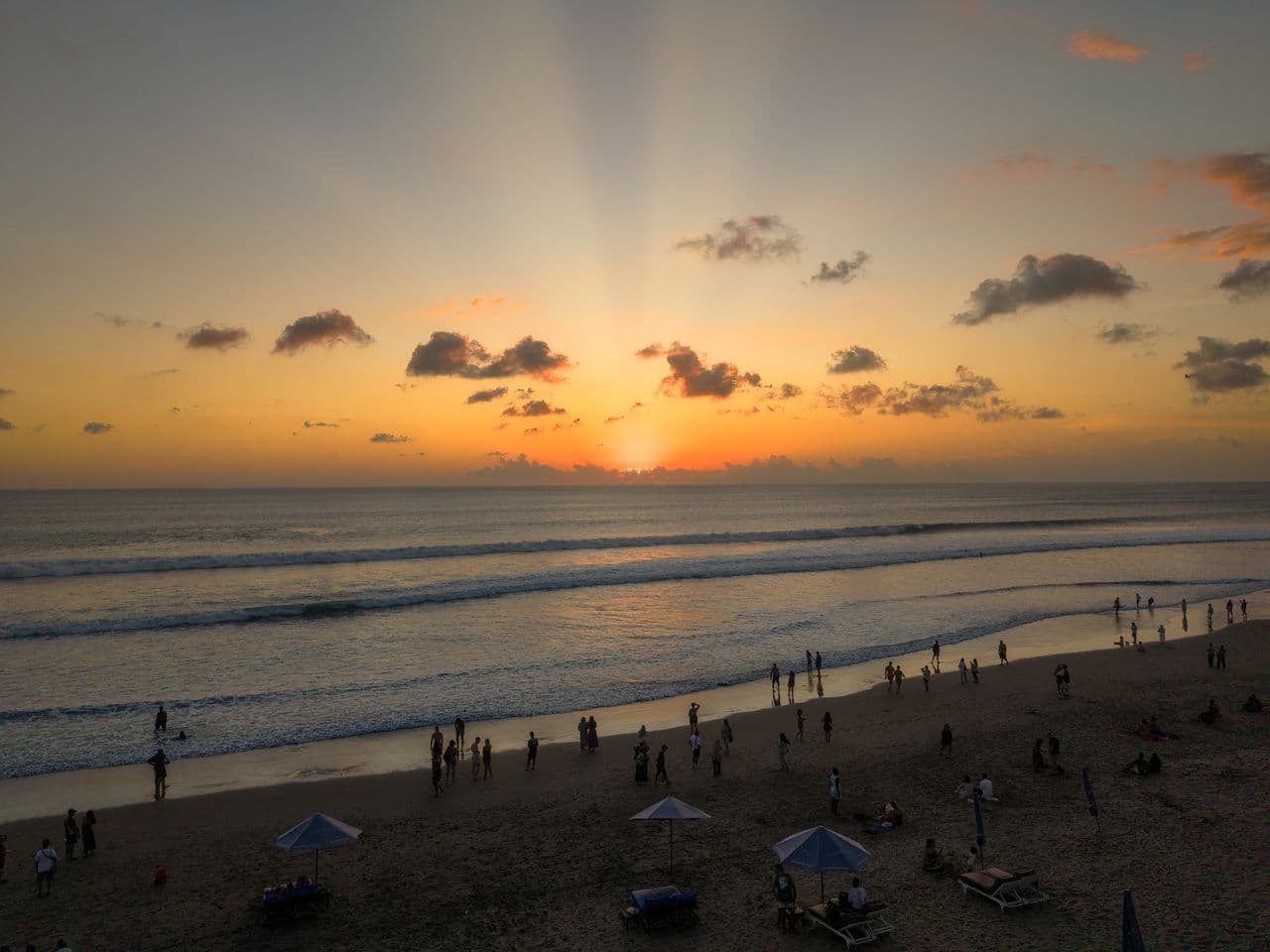
Facing west, the bay offers unobstructed sunsets over the Indian Ocean. The silhouettes of jukung pulled onto the sand create a natural photographic foreground.
Etiquette and Visit Guidelines
Wear a sarong and cover your shoulders when entering Pura Ulun Siwi.
Don't disrupt ceremonies in progress; ask before photographing worshippers.
On the beach, respect fishermen's space as they work in the early morning.
Photography Tips
The golden light at sunset (between 5:30 p.m. and 7 p.m. depending on season) is ideal for photographing the bay and restaurants on the sand. In the morning, light mist and colorful boats offer authentic scenes. Avoid flash in temple ceremony areas.
Location and Access
Jimbaran is in South Bali, at the junction between the Kuta plain and Bukit Badung peninsula. Ngurah Rai Airport is the nearest entry point. From Kuta or Seminyak, allow about twenty minutes by taxi depending on traffic. The road to Uluwatu passes through Jimbaran, making it easy to combine both stops in one day.
No regular public transport; conventional taxi, ride-sharing apps (Grab, Gojek), or scooter rental remain the most practical options. Wheelchair access to the beach is limited due to soft sand.
Nearby
Uluwatu Temple — cliffside temple at the southern tip of Bukit, with kecak dance performance at sunset.
Kuta — lively beach and commercial hub of South Bali, a few kilometers north.
Seminyak — neighborhood of boutiques, trendy restaurants, and beach clubs, north of Kuta.
Nusa Dua — luxury resort enclave with calm beaches, east of Bukit peninsula.
Padang Padang Beach — small sheltered cove on Bukit's west coast, popular with surfers.
Frequently Asked Questions
Frequently asked questions
The dry season (April to October) offers rain-free beach evenings. During the rainy season (November to March), showers are often brief and evenings remain pleasant, though the sea can be rougher.
During high season (July-August, December), a reservation is recommended for the most sought-after beachfront tables. Outside these periods, you'll generally find seating by showing up directly.
Yes, it's a classic itinerary: fish market in the morning at Jimbaran, Uluwatu temple visit in late afternoon with kecak performance at sunset, then return to Jimbaran for beach dinner.
The bay is relatively protected and waves are moderate, making it safer for swimming than exposed beaches like Kuta or Uluwatu. Still, check local conditions, especially during the rainy season.
Photography is generally tolerated in the temple's outdoor areas, but ask permission before photographing ceremonies or worshippers. Avoid pointing cameras at altars during rituals.
Ngurah Rai Airport is the closest. A conventional taxi or an app like Grab can get you to Jimbaran in less than 15 minutes outside of traffic jams. Negotiate the price in advance with non-metered taxis or use an app to avoid price surprises.
Want to discover this destination?
Our local advisors design your tailor-made trip.