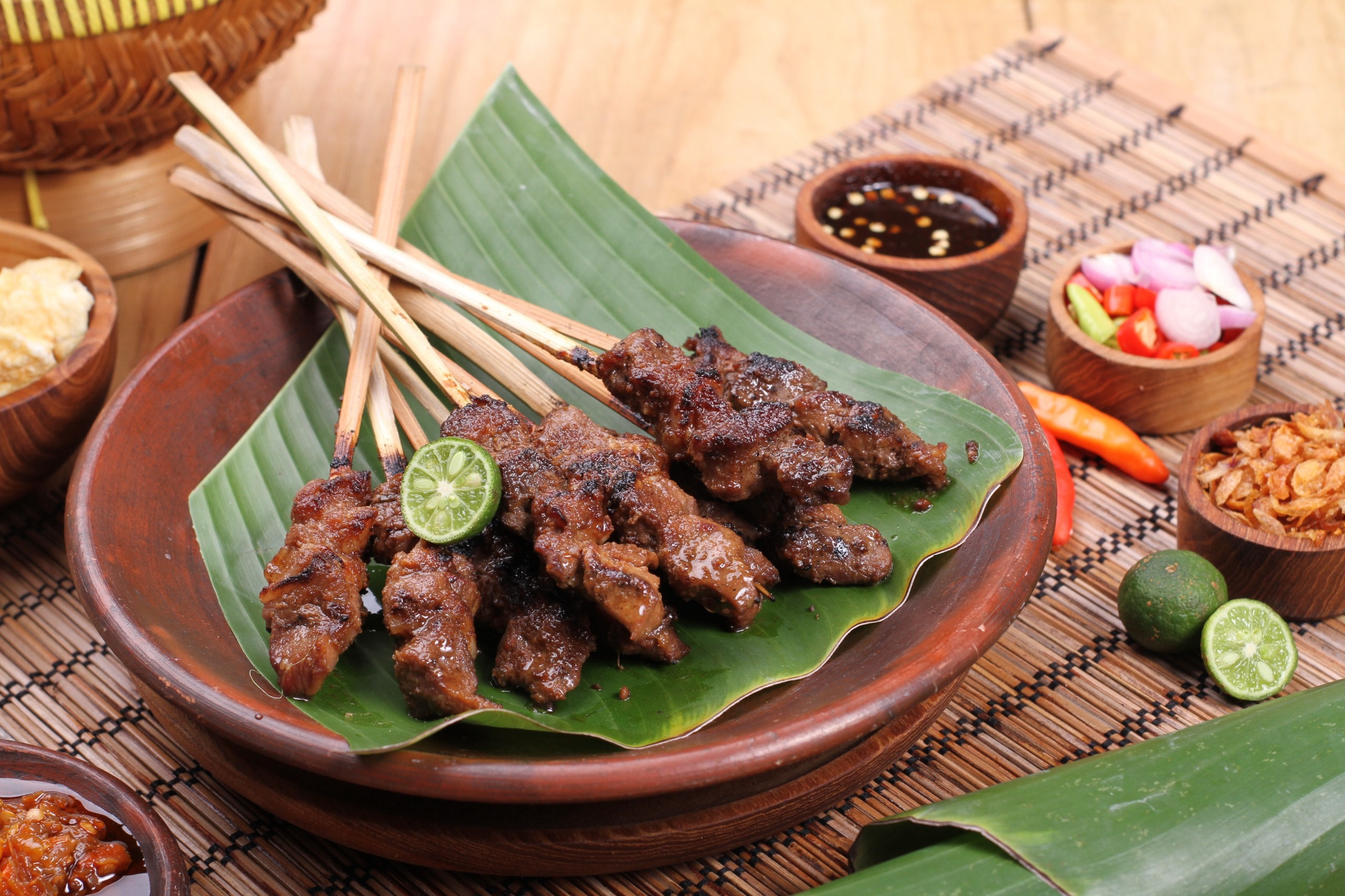
A Deep Dive into Indonesian Cuisine
Traveling to Indonésie is an opportunity to discover new flavors! Indonesian cuisine is rich, varied, and delicious. The unique taste of local specialties results from a blend of
Traveling to Indonésie is an opportunity to discover new flavors! Indonesian cuisine is rich, varied, and delicious. The unique taste of local specialties stems from a blend of Chinese, Indian, Arab, and even European cooking traditions. A true culinary fusion, you won't be disappointed by this savory gastronomic adventure!
The foundations of Indonesian cooking
The richness of Indonesian cuisine can be explained by its diverse origins: China, India, Malaysia, the Middle East, Europe, and more. As in most Asian countries, rice (nasi) and noodles (mie) remain the staple foods of the archipelago. All traditional local recipes feature spices to enhance their flavor, particularly turmeric and curry.
For accompaniments, various ingredients add extra taste: seafood (fish, shellfish, etc.), meats (chicken, lamb, beef, or pork), vegetables, and more.
Starches and tubers are also frequently prepared to vary the flavors. Take advantage of your stay in Indonésie to try dishes made with sweet potatoes, corn, or cassava.
Indonesian specialties
Indonesian specialties are equally delicious. Here's a selection of must-try dishes for food lovers:
The nasi goreng

Nasi goreng dish photo © by Bvlena via Shutterstock
Nasi goreng, or fried rice, is the most widespread dish in Indonésie. Its preparation varies by region, but generally consists of fried rice mixed with various ingredients: chicken pieces, vegetables, crispy onions, fried or scrambled eggs, and more.
The mie goreng
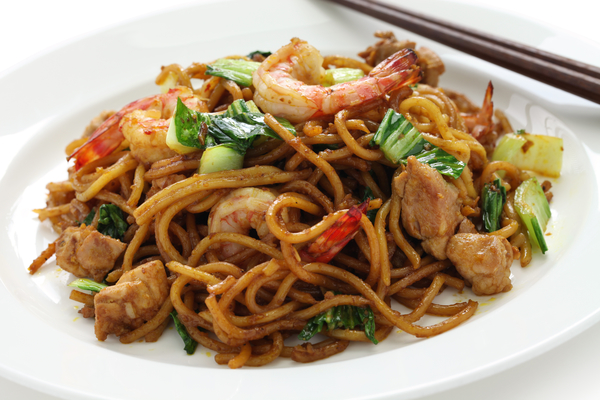
Mie goreng dish photo © by bonchan via Shutterstock
Mie goreng, or fried noodles, is the second most popular specialty in the archipelago. It's cooked in the same manner as nasi goreng, except that noodles replace the rice.
The gado gado
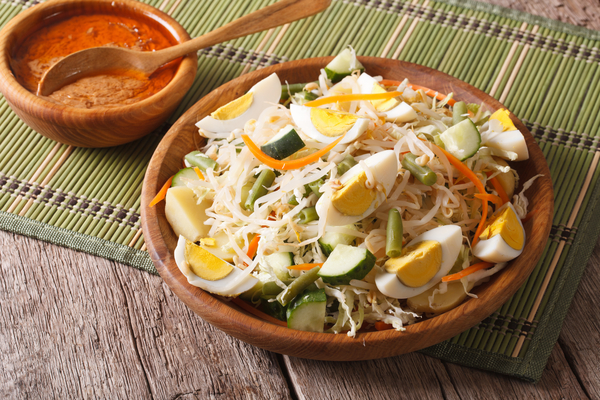
Gado gado dish photo © by AS Food Studio via Shutterstock
Gado gado is perfect for those who enjoy vegetarian dishes and will always find something delicious in Indonésie! It's a salad of cooked vegetables, typically bean sprouts and cabbage, enhanced with a peanut-based sauce. Since this dish is often quite spicy, local cooks typically serve it with lontong (very compact rice) to mellow out the seasoning.
The sate
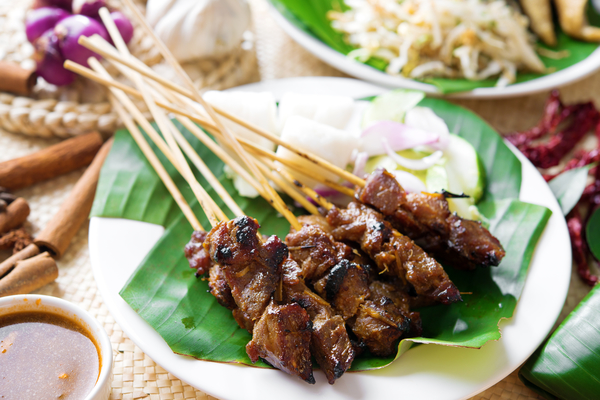
Sate, photo © by szefei via Shutterstock
Barbecue lovers will certainly enjoy sate. These are meat skewers (usually chicken) grilled to perfection, often served with a peanut or soy sauce to enhance their flavor. As always, rice and fresh vegetables can accompany these skewers.
The babi kecap

Babi kecap dish, photo © by Fanfo via Shutterstock
Babi kecap ranks among the most hearty Balinese dishes. It's a pork filet drizzled with « kecap » sauce. This sauce is described as a thick soy sauce that's moderately spiced and sweetened. Its taste is comparable to Japanese sweet soy sauce.
The babi guling
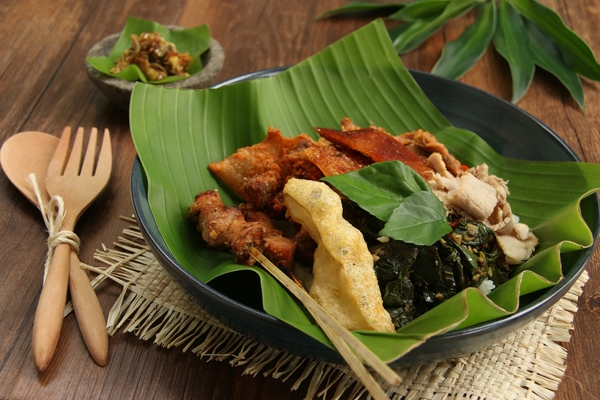
Babi guling dish, photo © by Ariyani Tedjo via Shutterstock
Babi guling claims the title of best Balinese dish, and is also one of the priciest. It's a roasted suckling pig served with nasi goreng. This dish is quite rare as Balinese cooks prepare it only for celebrations or important occasions.
A few beverages to try in Indonésie
Indonésie also offers a wide selection of hot and cold beverages, both alcoholic and non-alcoholic.
Alcoholic beverages
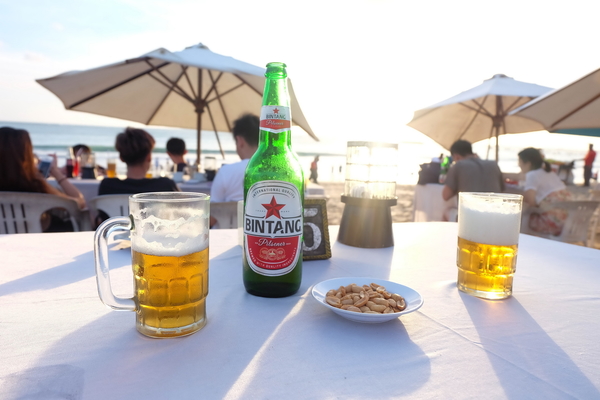
A Bintang on the beach, photo ©by Hayachanta via Shutterstock
The archipelago holds plenty of surprises for those wishing to try new alcoholic flavors. Various beer brands exist and are available in Indonésie: Bintang, Bali Hai, Anker, and more. Wine enthusiasts, try brem. It's a rice wine made locally or distributed in bottles under the Bali Brem brand. Also discover Australian wines and Balinese wine in Bali's restaurants.
Other beverages
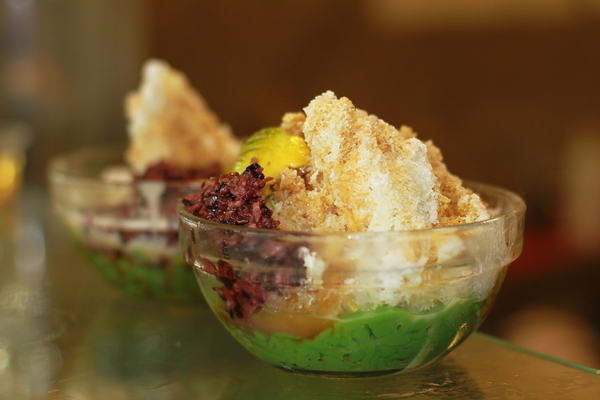
Traditional Indonesian dessert, photo © by Erika Kusuma Wardani via Shutterstock
Local beverages are plentiful! In Indonésie, with the ever-present heat, fruits are blended individually or in assortments to produce refreshing juices. Avocado juice (apokat) mixed with chocolate powder is the most popular cocktail. Be sure to also try es campur, a beverage made with mixed fruits combined with jelly and crushed ice. If you prefer soft drinks, taste Green Sands, which blends apple and lemon flavors with a low alcohol content.
As you can see, you'll always find delicious dishes to savor in Indonésie!